



























































The ICJ Verdict and Bangladesh's Unfinished Rohingya Crisis
A bilateral agreement with authorities that lack effective control over the relevant territories may produce diplomatic progress on paper without ensuring safety in practice. This is why Bangladesh needs to connect its diplomatic initiatives with a realistic assessment of political and security developments inside Myanmar.

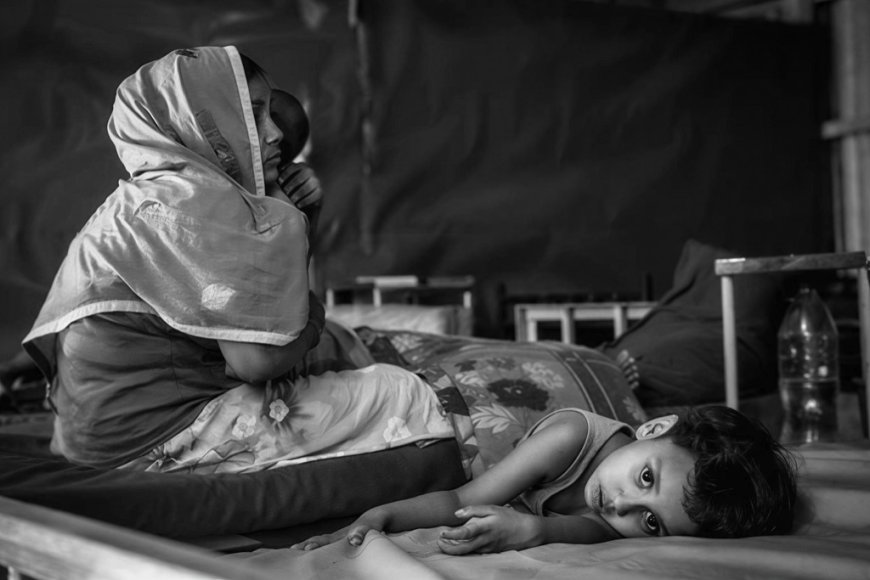
The International Court of Justice's ruling on Myanmar's genocide against the Rohingya marks an important moment in the long struggle for justice for one of the world's most persecuted communities.
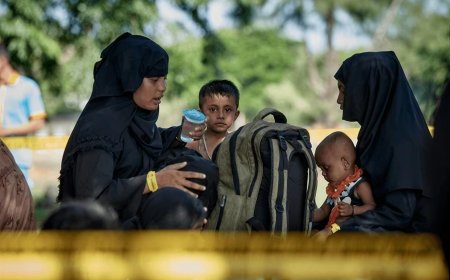
For Bangladesh, which has sheltered more than 1.2 million forcibly displaced Rohingya for nearly a decade, the verdict carries significance beyond international law. It offers diplomatic leverage, reinforces the legitimacy of Bangladesh's position and places renewed responsibility on the international community.
Yet, celebrating the legal recognition of genocide without examining what it can realistically deliver would be premature. The central question for Bangladesh is not simply whether Myanmar has been held accountable, but whether this judicial development can eventually transform the circumstances that made the Rohingya refugees in the first place.
For years, Bangladesh has carried a humanitarian responsibility that was never supposed to become a permanent national obligation. Since August 2017, when more than 700,000 Rohingya fled Myanmar's military operations, the country has accommodated an enormous displaced population despite its own economic limitations, institutional pressures and development challenges. The refugee population has since exceeded 1.2 million.
What initially emerged as an extraordinary humanitarian response has gradually become a prolonged political, economic and security challenge. The international community has repeatedly expressed solidarity, organised conferences and promised assistance, but the fundamental question of repatriation remains unresolved.
The ICJ verdict therefore arrives at a moment when Bangladesh needs more than diplomatic sympathy. It needs a credible pathway towards a sustainable solution.
The immediate importance of the ruling lies in the transformation of the international legal and diplomatic environment. Myanmar can no longer treat the allegations of genocide as merely competing political narratives or dismiss them as accusations originating from Bangladesh and international human rights organizations.
The proceedings initiated by The Gambia have established an international legal framework for addressing the atrocities committed against the Rohingya. This strengthens the legitimacy of demands for accountability, protection and the restoration of rights. More importantly, it provides Bangladesh with an authoritative international reference point when raising the issue in bilateral negotiations and multilateral institutions.
However, legal recognition and political implementation are two different realities. International courts can establish legal obligations, but their ability to enforce compliance is limited. The International Court of Justice does not possess an independent enforcement mechanism capable of compelling a sovereign state to implement its decisions.
Under the United Nations Charter, a party seeking action over non-compliance may approach the Security Council, where political considerations frequently determine the outcome. In Myanmar's case, this creates a particularly difficult situation because the geopolitical interests of powerful countries are deeply entangled with the country's political and military future.
China's position is especially consequential. Beijing maintains considerable economic, strategic and diplomatic influence over Myanmar. Its interests include infrastructure development, regional connectivity, energy security and access to the Indian Ocean. Russia, meanwhile, has strengthened its military relationship with Myanmar's armed forces.
These relationships make it difficult to assume that international legal pressure will automatically translate into political concessions from Myanmar.
A Security Council initiative could encounter resistance, particularly if powerful members believe that stronger action would undermine their strategic interests. Consequently, Bangladesh must recognize that the legal strength of the verdict does not necessarily correspond to the political strength of the coalition required to implement it.
This is where Bangladesh's diplomatic strategy needs a more sophisticated approach. For too long, the Rohingya crisis has been discussed primarily as a humanitarian problem requiring international assistance and Myanmar's cooperation.
That approach has produced some financial support but little progress towards repatriation. Bangladesh now needs to reposition the issue as a matter of regional stability, international legal responsibility and long-term geopolitical interest. The objective should be to convince influential countries that an unresolved Rohingya crisis is not simply Bangladesh's burden but a continuing source of instability with consequences extending beyond its borders.
China deserves particular diplomatic attention in this regard. Bangladesh cannot afford to approach Beijing merely through moral appeals or demands for political pressure on Myanmar. It must identify areas where Chinese strategic interests and Bangladesh's objectives can converge. Regional connectivity, border stability, infrastructure security and economic cooperation could provide opportunities for constructive engagement.
Rather than expecting China to abandon its relationship with Myanmar, Dhaka should attempt to persuade Beijing that facilitating a credible repatriation process would serve its own long-term interests. This requires consistent diplomatic engagement rather than occasional high-level appeals whenever the crisis reaches another international milestone.
At the same time, Bangladesh should use the ICJ verdict to build a broader international coalition. The Gambia's initiative, supported by countries including Canada, the United Kingdom and France, demonstrates that the Rohingya issue has already attracted international legal and political attention.
Bangladesh could coordinate with these countries and other supportive partners to pursue a resolution at the United Nations General Assembly. Such an initiative would not independently compel Myanmar to accept repatriation, but it could strengthen international consensus and create sustained diplomatic pressure.
Bangladesh should also explore opportunities to engage the countries capable of influencing Myanmar through bilateral relationships, economic cooperation and security partnerships.
Nevertheless, diplomacy must not become an exercise in generating resolutions that have little connection with developments on the ground. The greatest danger is that the ICJ verdict will create another moment of international optimism followed by years of institutional inactivity. Bangladesh has experienced this pattern repeatedly.
International conferences have recognized the urgency of the crisis, donor governments have announced commitments and diplomatic representatives have visited refugee camps.
Yet, the Rohingya remain unable to return to their homeland with meaningful guarantees of safety, citizenship and dignity. Another declaration of international solidarity will mean little if the structural conditions behind their displacement remain unchanged.
The question of citizenship is particularly important. Repatriation cannot be measured simply by the physical movement of refugees across an international border. Returning people to a country where they remain stateless, politically excluded and vulnerable to renewed persecution would not constitute a durable solution.
The Rohingya must be able to return as rights-bearing members of Myanmar's society, not as a population temporarily permitted to occupy designated spaces under restrictive conditions. Their freedom of movement, access to education, healthcare, employment and legal protection must be integral to any repatriation arrangement. Without these guarantees, the process could become another cycle of displacement waiting to happen.
Bangladesh must also reconsider how the voices of Rohingya refugees are incorporated into diplomatic discussions. International negotiations often revolve around governments, diplomats and strategic calculations, while the people most directly affected remain peripheral. Their concerns about security, citizenship, livelihoods and freedom cannot be treated as secondary considerations.
Any sustainable arrangement must involve meaningful consultation with Rohingya representatives and ensure that return is voluntary, informed and safe. Otherwise, repatriation risks becoming an administrative achievement rather than a genuine resolution of the crisis.
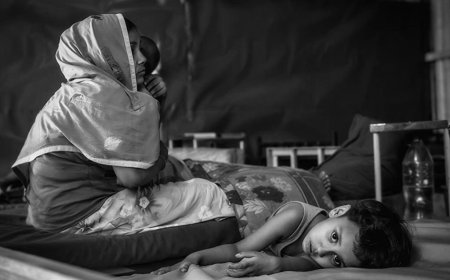
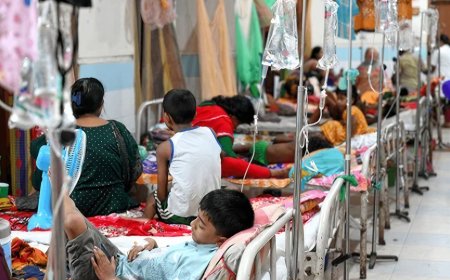
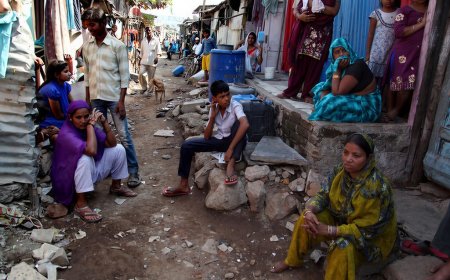
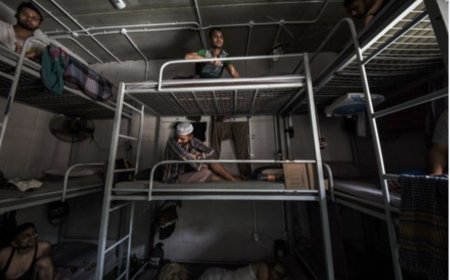
There is also a domestic dimension that Bangladesh cannot continue to overlook. The prolonged presence of more than 1.2 million refugees has placed considerable pressure on the environment, local infrastructure, employment opportunities and public services in Cox's Bazar.
Host communities have also experienced economic and social consequences, while humanitarian assistance has become increasingly dependent on international funding. As donor fatigue grows and competing global crises attract attention, Bangladesh faces the possibility of having to manage an increasingly expensive responsibility with diminishing external support. The government must therefore strengthen the protection of refugee rights while ensuring that the interests of local communities are not neglected.
The changing political situation in Myanmar adds another layer of uncertainty. The military's continued influence, the country's internal conflict and the fragmented nature of political authority complicate any negotiation over repatriation.
Even if international pressure becomes stronger, Bangladesh must identify who can provide credible security guarantees and whether those guarantees can be sustained.
A bilateral agreement with authorities that lack effective control over the relevant territories may produce diplomatic progress on paper without ensuring safety in practice. This is why Bangladesh needs to connect its diplomatic initiatives with a realistic assessment of political and security developments inside Myanmar.
H. M. Nazmul Alam is an Academic, Journalist, and Political Analyst based in Dhaka, Bangladesh. Currently he is teaching at IUBAT. He can be reached at [email protected]