


























































Vaccines Are Not the Place to Save Money
Every child in Bangladesh has an inalienable right to receive vaccines that are as safe, effective, and reliable as those administered to children in developed countries. The dismal findings of the recent measles antibody survey leave zero room for complacency.

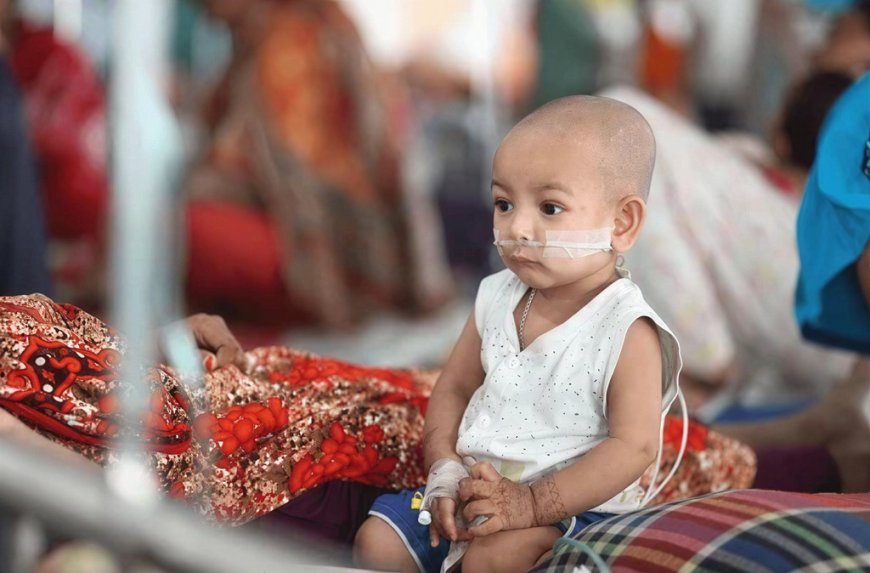
Amidst the ongoing outbreak, we are deeply concerned by a recent report highlighting the inadequate efficacy of the measles vaccine.
Since the COVID-19 pandemic, we have consistently published scientific and regulatory analyses in the mainstream media to ensure public awareness regarding vaccine quality and efficacy.
Notably, we were the first to publicly expose the scientific uncertainties and futility surrounding the much-discussed 'Bangavax' COVID-19 vaccine.
Building on this, in 2025, we published a detailed analysis outlining our concerns over the quality and efficacy of a typhoid vaccine -- imported from India -- administered to 50 million children in Bangladesh.
The decision to introduce a new vaccine while sidelining the most widely used typhoid vaccine globally raises a critical question: Is a vested interest group exploiting this vaccine for commercial gain?
Recently, an October 27 report in Prothom Alo, citing a study by the IEDCR on the measles vaccine, revealed that out of 309 vaccinated children, 85 (27.5%) tested negative for measles antibodies, while 6.8% yielded uncertain or borderline results. Only 65.7% of the children tested positive.
Conducted in September 2026 -- shortly after the national measles-rubella (MR) vaccination campaign in April and May -- this study brings a critical question to the forefront: Are we placing sufficient importance on the manufacturing quality, long-term efficacy, and international regulatory evaluation of vaccines procured for millions of Bangladeshi children.
It is now clearly apparent that relevant authorities have demonstrated extreme negligence in monitoring highly sensitive bio-technological products like vaccines.
What vaccines do children in Europe and the US receive?
In Bangladesh, the bivalent MR (Measles, Rubella) vaccine is routinely administered. Conversely, the US, the UK, and the European Union primarily utilize the trivalent MMR (Measles, Mumps, Rubella) or the quadrivalent MMRV vaccine (which includes varicella/chickenpox). In fact, the UK introduced MMRV into its routine childhood immunization schedule in January 2026.
US FDA-approved options include GSK’s PRIORIX and Merck’s M-M-R II and ProQuad.
In the EU, M-M-RVAXPRO and Priorix-Tetra are authorized. In contrast, the MR vaccines currently used in Bangladesh -- manufactured by India's Serum Institute of India (SII) and Biological E -- have received World Health Organization (WHO) Prequalification, but as of October 2026, they do not hold marketing authorization in the US, the EU, or the UK.
When the health of millions of children is at stake, there is a compelling scientific rationale to prioritize vaccines that have successfully navigated the stringent evaluation pathways of the FDA or the European Medicines Agency (EMA).
If the sole objective is to provide “cheap” vaccines, the public must be informed that these vaccines may not always deliver the promised protection.
Past clinical trials versus current reality
Icddr,b has previously conducted multiple studies on SII’s MR vaccine. While a 2016 study in the Journal of Infectious Diseases noted some variance in antibody levels, a 2025 publication in The Lancet Child & Adolescent Health (reporting on a 2017–2018 trial) demonstrated extraordinary efficacy. In that study, nearly 100% of the 292 infants who received their first dose at 9 months of age successfully seroconverted (developed antibodies).
Yet, in the recent 2026 IEDCR survey, this success rate fell to a deeply alarming 65.7%. The fundamental lesson here could be: a successful clinical trial does not automatically guarantee that a vaccine will maintain consistent manufacturing quality and efficacy year after year.
Why is maintaining vaccine quality so difficult?
A measles vaccine is not a conventional chemical drug; it is a highly sensitive biotechnological product formulated with a live attenuated virus. Even minor deviations in cell line characteristics, raw material quality, manufacturing environments, or freeze-drying parameters can drastically alter the final product's efficacy.
This is where "batch-to-batch consistency" becomes paramount. Producing a few successful batches for a clinical trial is insufficient; a manufacturer must guarantee the identical quality and biological potency of every single batch for decades.
This is precisely why stringent regulatory authorities like the FDA and EMA place equal, if not greater, emphasis on Chemistry, Manufacturing, and Controls (CMC/Quality) as they do on clinical research.
Are these valid excuses?
In the aforementioned 2017-2018 MR vaccine trial in Bangladesh, 10% and 12% of the children in the two respective study arms suffered from stunting, while 5% and 4% suffered from wasting.
Despite this underlying malnutrition, approximately 99-100% of the cohort achieved seroconversion against measles after completing the vaccination schedule.
Remarkably, even when the first dose was administered at just six months of age, 94% of the infants developed antibodies.
While specific subset data for malnourished children was not isolated in the publication, the study unequivocally demonstrates that high protective antibody titers can be achieved in a demographic like Bangladesh, regardless of early age and nutritional deficiencies. Therefore, scapegoating age or malnutrition as the primary drivers of the recent vaccine failure is scientifically indefensible.
Furthermore, Bangladesh’s Expanded Program on Immunization (EPI) has maintained a robust cold chain system since its establishment in 1979. According to a 2025 UNICEF report, the central EPI storage facility in Mohakhali, Dhaka, has 38 cold and freezer rooms with a capacity of approximately 29 million doses.
Blaming cold chain failures without concrete, documented evidence of a temperature excursion is a convenient distraction. If a vaccine lacks adequate biological potency from the outset, even the best cold chain in the world cannot restore its efficacy.
Why are FDA and EMA standards so crucial?
The FDA and EMA continuously monitor and audit vaccine quality, including Chemistry, Manufacturing, and Controls (CMC), batch-to-batch consistency, and manufacturing facilities.
The EU also enforces an independent governmental batch-control system known as OCABR (Official Control Authority Batch Release), under which batches are independently tested in state laboratories before being released to the market. Although WHO Prequalification is an important quality benchmark for developing countries, it does not substitute for FDA or EU regulatory approval.
The assessments conducted by the FDA and EMA for marketing authorization are substantially more comprehensive and rigorous than the WHO Prequalification process. Consequently, Bangladesh must begin treating FDA or EMA approval, alongside WHO Prequalification, as a non-negotiable benchmark for quality assurance.
India has a 125-year history of vaccine manufacturing, and the Serum Institute of India (SII) has undoubtedly contributed to global public health by supplying affordable vaccines.
However, a significant regulatory fact remains: as of October 2026, no vaccine developed entirely through India’s indigenous research and development has secured marketing authorization from the FDA or EMA.
Bangladesh must therefore critically reassess the manufacturing quality and international regulatory evidence supporting the measles-rubella (MR) vaccines procured for its children.
Vaccine selection and procurement must be independent and transparent
Bangladesh must prioritize the procurement of MMR vaccines approved by the FDA and EMA. Although these vaccines are generally administered at 12 months of age, or at 9 months in certain epidemiological settings in Europe, their off-label use during emergency outbreaks should be urgently discussed by national regulatory authorities, clinicians, public health experts, UNICEF, and manufacturers.
To ensure transparency, scientists or officials involved in a particular company's research or clinical trials must be excluded from vaccine selection and national procurement committees to prevent conflicts of interest.
Procurement decisions must be based solely on independent, evidence-based regulatory evaluations of Chemistry, Manufacturing, and Controls (CMC/Quality), nonclinical, and clinical data, free from institutional or individual vested interests.
For example, the ongoing tendency to overlook permanent infrastructure solutions for providing clean drinking water in Bangladesh while focusing primarily on cholera vaccines raises serious concerns. Such an approach may be influenced by lucrative foreign funding and financial incentives associated with conducting clinical trials. This practice is fundamentally unethical and contrary to the public interest.
Every child in Bangladesh has an inalienable right to receive vaccines that are as safe, effective, and reliable as those administered to children in developed countries. The dismal findings of the recent measles antibody survey leave zero room for complacency.
When procuring vaccines, we must look beyond the number of doses and the lowest possible price. Instead, we must demand robust scientific evidence of the biological potency and manufacturing quality of every vaccine.
When children’s lives are at stake, compromising vaccine regulatory standards is simply not an option.
Dr Rezaul Karim is an immunologist based in the Netherlands, specializing in the development and evaluation of biologics and vaccines.
Dr Jubayer Rahman is an immunologist based in the US.
Dr. Mohammad Sorowar Hossain is a former senior manager (R&D), Biotech Division, Incepta Pharmaceutical Ltd, and president of the Biomedical Research Foundation, Bangladesh.