























































Why Doesn’t Bangladesh Produce More Breakthroughs?
A country becomes innovative not when its officials announce innovation, but when its inventors no longer need to beg them for the right to build.

We are the heirs of Jagadish Chandra Bose, Acharya Prafulla Chandra Ray, Qudrat-i-Khuda and Munier Chowdhury. At least that is what we like to tell ourselves.
The more uncomfortable question is whether, when one looks at Bangladesh today, our public life and institutions resemble the inheritance of those great scientists, inventors, and intellectuals at all.
Technology is not a decorative word for speeches and seminars. It is the kind of thing that can alter daily life almost overnight: the electric light, the mobile phone, artificial intelligence. Technology comes from inventors and discoverers. The path they take to bring it into the world is innovation.
Consider some of the most consequential innovations of recent years: CRISPR gene editing, artificial intelligence, electric vehicles, 5G, immunotherapy and quantum computing, the field in which I work. What do they have in common? None came from Bangladesh.
That fact should trouble us. Bangladesh is one of the most populous countries on earth. Surely some of the world’s finest minds are hidden among our street children, rickshaw pullers, farmers, factory workers, and students. Why have those minds not been allowed to flower?
Technology is not the spectacle of driving a “fuel-free car” before a crowd of reporters. Tinkering with machinery and creating technology are not the same thing. A real technology solves a serious problem in the lives of a great many people.
After independence, the freedom fighter Nurul Quader Khan, who reportedly shortened his own surname in disgust at the brutality of the Pakistani occupation army in 1971, helped create a commercial financial mechanism around the letter of credit.
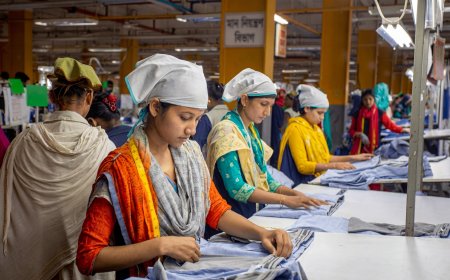
That innovation made possible one of Bangladesh’s largest industries: export-oriented garments. It was not glamorous. It did not need a slogan. It changed the economy.
Inventors often decide to protect their work through patents, which is entirely reasonable. A patent is society’s bargain with an inventor: If you are first, you receive the right, for a limited number of years and in specified jurisdictions, to benefit financially from what you have made.
Bangladesh has its own example in former minister Mostafa Jabbar’s patent for the Bijoy keyboard. The controversy around that patent, in my view, has had less to do with its intellectual merit than with the condescending attitude he often showed toward younger technologists.
Technology and basic scientific research are siblings. A society that does little fundamental science rarely produces much technological innovation.
The reverse is also true: A society without a technological culture struggles to sustain deep research. I began with the observation that the great innovations of the past decade did not come from Bangladesh.
There is another uncomfortable similarity: The highest honors in science and mathematics have not come here either. In a country that could not properly use scholars such as Professor Jamal Nazrul Islam or Professor Muhammed Zafar Iqbal, both of whom left foreign opportunities to return home, this should not surprise us.
Patent data tell the same story

From Bangladesh’s birth to the present, the number of patent applications and approvals has fluctuated, but the number of homegrown, registered inventions has not grown in any sustained way. Apart from a small rise soon after independence, the curve is stubbornly flat. Even the government’s own innovation apparatus, Aspire to Innovate, or a2i, has not changed that trajectory.
A second look is even more painful.

Among recently approved patents, the largest number went to India. Patents are expensive. Why would another country’s innovators spend money registering their technology in Bangladesh? Because they see a market here. And in the competition to serve that market, we have lost.
There is a third lesson in the patent record.

In most advanced economies, a large share of patents comes from software and the semiconductor industry. Bangladesh’s pattern does not look like that.
The same pattern can be seen, more or less, in previous years. The conclusion is hard to avoid: The government’s decade-plus investment in the information technology sector has not reached genuine innovators. Too much of it has been absorbed by bureaucrats, donor-agency consultants and favoured business interests.
I do not expect a bureaucracy that has failed to build a serious culture of invention and research over 50 years to suddenly produce wonders without a revolutionary change in how it works.
After the Liberation War, in a devastated country with almost nothing, Nurul Quader Khan created a financial technology that helped give birth to an industry. Bangladesh now needs not one such person, but many: Inventors and builders who will not wait for permission.
Jamal Nazrul Islam did not wait for the government of Bangladesh. He left everything behind and began a physical sciences research laboratory in a corner of Chittagong. Muhammed Zafar Iqbal did not wait either.
He returned to the rain-soaked city of Sylhet and, within two decades, helped give the country one of its best computer science departments.
I am waiting for those unyielding scientists and innovators -- the ones who will one day point a finger at the ministers and secretaries of the Ministry of Science and Technology and make them understand a simple truth: They are not the most important people in their institutions. The most important people are the scientists and technologists whose applications they have kept pending for years.
A country becomes innovative not when its officials announce innovation, but when its inventors no longer need to beg them for the right to build.
Omar Shehab is a theoretical quantum computer scientist. He is currently bootstrapping a stealth startup.