





















































Washington Has Voted. Dhaka Must Now Read the Fine Print
A Democratic Congress will not rewrite American foreign policy overnight. But it may reshape the trade deal Bangladesh signed in February, change how Washington approaches the US-China-India rivalry, and raise the cost of Trump's wars. Each of these reaches Dhaka directly.


From the fuel pump to the factory floor
For most Bangladeshis, the American midterm elections of November 3 were a distant spectacle. They should not be. Over the past nine months, two decisions made in Washington have reached into daily life in this country more directly than most foreign events ever do.
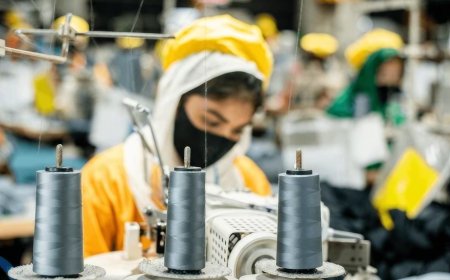
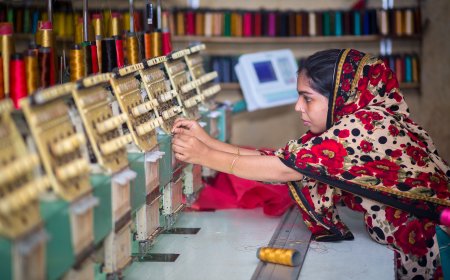
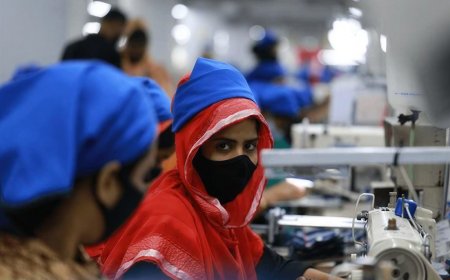
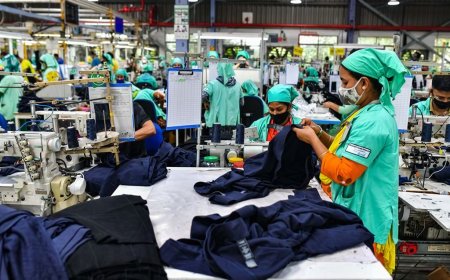
The first was the war on Iran, launched on February 28. When shipping through the Strait of Hormuz was disrupted, the cost reached Dhaka through diesel, LNG cargoes, freight bills and the price of rice and lentils in the kitchen market. The second was trade. For more than a year, garment exporters in Gazipur, Narayanganj and Chattogram have not known with any certainty what tariff their goods would face at an American port.
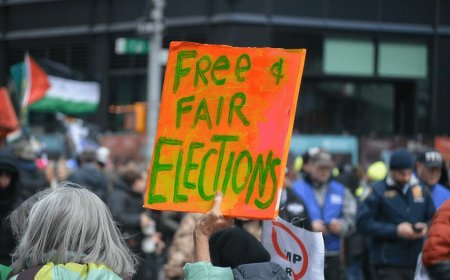
Now American voters have handed the Democrats control of both the House of Representatives and the Senate. That result will change the incentives in Washington. It will not, by itself, change American policy. The task for Dhaka is to understand the difference, and to prepare for what Washington actually does rather than for what its voters appeared to want.
What happened on November 3, and what Congress can actually do
Democrats won both chambers of Congress, leaving President Donald Trump with a divided government for the final two years of his term. The new Congress takes its seats in January 2027. Until then, the outgoing Republican majorities remain in place.
It would be a mistake to read the result as a single-issue referendum. American voters were judging many things at once: the cost of groceries and fuel, stubborn inflation, the conduct of government, and a war whose purpose many struggled to explain. The war mattered, not least because its costs showed up at the petrol pump. But it was one thread in a broader rebuke, not the whole cloth.
What does a Democratic Congress gain? It gains the power to hold hearings and launch investigations, which can force officials to explain objectives, costs and legal justifications in public. It gains control of appropriations, the money that funds government, including military operations and foreign aid. It gains closer scrutiny of arms transfers and more leverage over the confirmation of senior officials. Most relevant to Bangladesh, it gains a firmer voice on trade.
Under the American Constitution, the power to set tariffs and regulate foreign commerce belongs to Congress, not to the president.
What Congress does not gain is command. The president remains commander-in-chief, keeps wide authority over diplomacy and can veto legislation. Overriding a veto requires two-thirds of both chambers, a threshold the Democrats do not have. Congress can raise the political and financial price of a policy. It cannot simply order that policy to end.
For partners such as Bangladesh, the most immediate consequence is therefore not an American retreat. It is reduced predictability. When the White House, Congress and the courts pull in different directions, a tariff announced in one month may be overturned the next, and a commitment made by the executive may be questioned by the legislature. Bangladesh has already lived through one such reversal this year, in trade. It should expect more.
The Iran war: A political liability with no clear exit
The joint American and Israeli war on Iran was presented as a decisive stroke that would redraw the map of the Middle East. Its costs arrived quickly: disruption in the Strait of Hormuz, a surge in global energy prices and a deep sense of insecurity across the Gulf.
Wars, however, are not measured by the number of targets struck. They are measured by the political facts they leave behind. By that standard, the record is thin. Iran was hit hard, but its government survived and returned to negotiations.
The fighting gave way to a ceasefire and a memorandum, not a surrender. The nuclear question, the security of shipping lanes and the wider regional rivalry all remain unresolved. Destruction is not the same thing as victory, and American voters seem to have sensed the difference.
What will Trump do now? Three paths are plausible, and none is certain.
The first is negotiation. Facing a hostile Congress and an electorate weary of high prices, the president may seek a durable settlement he can present as a win. The second is a holding pattern: sanctions, naval pressure and the occasional strike, with neither escalation nor resolution. The third is escalation. A weakened leader sometimes seeks to project strength abroad, and a president who sees the conflict as central to his legacy may find it harder, not easier, to step back.
For Bangladesh, the lesson is not to bet on any one of these. Political weakness in Washington changes incentives. It does not determine decisions. Dhaka's planning for energy, shipping and the welfare of its workers in the Gulf must assume that each path remains open until one is clearly taken.
There is also a quieter risk. A region that is neither at war nor at peace keeps insurance premiums high, keeps shipping lines cautious and keeps oil markets nervous. Bangladesh has felt this before.
During the Red Sea crisis of 2024, exporters here paid more for freight and waited longer for shipments to reach Europe. A prolonged stand-off in the Gulf would impose a similar tax, quietly and indefinitely.
Palestine becomes an American domestic issue
For decades, support for Israel was among the most reliable points of consensus in American politics. These midterms suggest that consensus is fraying.
Pro-Israel lobbying groups, led by AIPAC and its allies, reportedly spent more than 84 million dollars in this election cycle. By published estimates, around 55 million of it went to candidates who lost.
In Michigan alone, roughly 32 million dollars was spent trying to defeat Abdul El-Sayed. He won anyway. Several candidates who refused such support also won, on far smaller budgets.
Behind these results lies a generational shift. Younger Americans, including many Democrats, increasingly see Gaza through the lens of human rights and the use of American weapons. Campus debate, community organizing and new voting coalitions have turned Palestine into a domestic political question, not only a foreign one.
Bangladeshi readers should be careful, though, not to confuse public opinion with policy. A Democratic Congress can hold hearings on civilian harm, demand reporting on how American weapons are used and debate conditions on military aid. But strategic ties, defense cooperation and institutional habit run deep, and many Democratic leaders remain close to the same donors. The likely result is more conditional American support for Israel, not a break.
For Dhaka, which has backed Palestinian self-determination since independence, that distinction matters. The test of change will be concrete: conditions on arms transfers, humanitarian access to Gaza and support for a credible political process. Speeches alone will not count.
Bangladesh also has a stake in how this debate is framed. Its voice at the United Nations and the Organization of Islamic Cooperation carries more weight when it is consistent. The standards of civilian protection and international law that Dhaka asks of others in Gaza are the same ones it asks the world to apply to Myanmar's treatment of the Rohingya.
The Israeli echo
The American vote did not happen in isolation. One week earlier, on October 27, Israelis also went to the polls. Prime Minister Benjamin Netanyahu's bloc won 53 seats, eight short of a majority in the 120-seat Knesset. Likud remains the largest party, and Netanyahu stays on as caretaker while coalition talks continue.
The parallel is striking. The two leaders who launched the war on Iran have each suffered a political setback within days of each other. Israelis were promised total victory and a new regional order. They received prolonged war and growing international isolation.
Two qualifications are needed. First, Netanyahu's support among Jewish Israeli voters held up better than many expected, so his setback is a loss of majority, not a collapse. Second, his main rivals, including Gadi Eisenkot and Yair Lapid, have largely criticized how the carnage was carried out rather than why. If they inherit power but keep the occupation, the settlements and the siege, only the faces will change.
For Washington, the implication is that its closest partner in the genocide is also politically weakened. That may open space for diplomacy. It may equally produce a period of drift in both capitals.
The February trade deal
Of all the ways the midterms touch Bangladesh, trade is the most direct. And here the story begins not in November but in February.
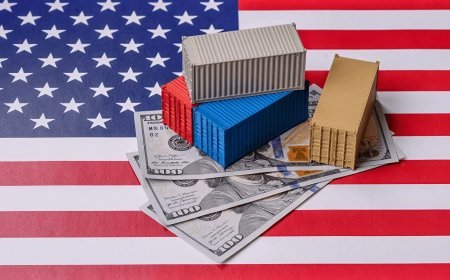
On 9 February, days before the national election, the interim government signed an Agreement on Reciprocal Trade with the United States. It was negotiated under a non-disclosure arrangement, with little public or parliamentary scrutiny. Washington agreed to cut its so-called reciprocal tariff on Bangladeshi goods, once threatened at 37 per cent, to 19 per cent. It also promised a duty-free lane, capped by volume, for garments made with American cotton or man-made fibre.
In return, Bangladesh made sweeping commitments. They include buying 14 Boeing aircraft, around 15 billion dollars' worth of American energy, including LNG, over 15 years, and large volumes of American wheat, soybeans and cotton.
Dhaka agreed to accept American vehicle and pharmaceutical standards, to phase out tariffs on most American imports, and to avoid certain defense and nuclear purchases from what the agreement calls non-market economies, a clause widely read as aimed at China. It also agreed to stay out of digital trade agreements.
Eleven days later, the ground shifted. On 20 February, the US Supreme Court ruled that the emergency law Trump had used to impose reciprocal tariffs did not authorize them. The administration replaced them first with a temporary across-the-board tariff of 10 per cent and then, from late July, with new tariffs under a different trade law that apply to most countries at similar rates. The result is uncomfortable.
Bangladesh's tariff advantage has largely disappeared, because almost everyone now pays roughly the same. Its commitments, however, remain on paper. Garments still pay the ordinary American duty of around 15 per cent on top. The elected BNP government said in May that it was reviewing the deal.
This is where the midterms matter. Agreements of this kind were made by the executive alone, without a vote in Congress. A Democratic Congress may try to reclaim its authority over tariffs, question deals that bypassed it, or demand labor and human rights provisions. For Bangladesh, that last possibility recalls the suspension of American trade preferences after the Rana Plaza collapse in 2013.
Three scenarios follow. The deal could survive as it stands. It could be hollowed out, leaving Dhaka with obligations but few benefits. Or it could be renegotiated, with labor conditions attached. Dhaka should prepare for all three.
The four-way puzzle
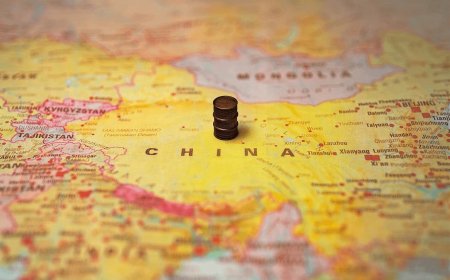
The midterms will not end American competition with China. On this, Republicans and Democrats largely agree. A Democratic Congress may criticize Trump's tariffs, his unilateral bargaining and his treatment of allies, but it shares the broad view that China is America's principal strategic rival. The tone may change. The rivalry will not. The tariff truce between Washington and Beijing, agreed a year ago, now comes up for renewal, and its fate will shape the trade environment Bangladesh faces next year.
For Dhaka, this creates a direct tension with the February deal. China is Bangladesh's largest source of imports and a major partner in infrastructure and industrial inputs. Beijing has extended duty-free access for most Bangladeshi exports through 2028 and is discussing a bilateral free trade agreement.
Bangladesh also hopes to join the Regional Comprehensive Economic Partnership, which would require trade arrangements with every member, China included. Chinese involvement in the Teesta-river restoration project and in the modernization of Chattogram port adds further weight. A clause that lets American law decide which countries count as non-market economies sits uneasily beside all of this.
India adds another layer. New Delhi secured its own deal with Washington in February, at a tariff of 18 per cent, slightly below Bangladesh's. India is both a garment competitor and Washington's most important partner in South Asia.
Since taking office on 17 February, Prime Minister Tarique Rahman has sought to reset relations with New Delhi. His foreign minister visited Delhi in April for talks on energy, water, border management and trade. Yet hard issues remain unresolved: Sheikh Hasina's continued presence in India, killings along the border, and the future of the Ganges water-sharing treaty, which expires in December.
The risk for Bangladesh is that Washington sees it through one of two narrow lenses -- as a country to be understood through New Delhi, or as a China problem to be managed. Neither serves Dhaka's interests.
A Democratic Congress could cut both ways. It is likely to take a stronger interest in democracy, labor rights and human rights in South Asia, which may bring closer scrutiny of Bangladesh's own governance.
But it may also be more open to engaging Bangladesh on its own terms, as a democracy of more than 170 million people with interests of its own, rather than as a piece in someone else's strategy. Which outcome prevails depends partly on whether Dhaka makes its case directly in Washington.
Defense is a further sensitive point. Bangladesh's armed forces rely heavily on Chinese equipment, and the February deal's restrictions on purchases from non-market economies could, if applied strictly, complicate future procurement. Dhaka will need to explain to Washington why diversification takes time, and to Beijing why its commitments to Washington are not directed against it.
The other channels
Trade and geo-politics are not the only routes by which American politics reaches Bangladesh. The Iran war travels here through at least four more.
The first is energy. Bangladesh buys much of its LNG from Qatar and Oman, and Qatari cargoes must pass through the Strait of Hormuz. Any renewed disruption raises the price of each cargo and the cost of insuring the ships that carry it. Higher import bills, in turn, strain foreign exchange reserves and the government's subsidy budget.
The February commitment to buy American LNG adds another dimension -- it diversifies supply, but at what price, and on what terms, remains an open question.
The second is remittances. Bangladeshi workers sent home around 30 billion dollars last fiscal year, and the largest share came from the Gulf. Not every Gulf economy responds to instability in the same way, and remittances have proved resilient before. But a prolonged conflict could weaken labor demand, slow new recruitment and threaten the safety of workers in the most exposed countries.
The third is inflation and competitiveness. Higher fuel and freight costs feed into food prices, electricity tariffs and the cost of running a garment factory. Households lose purchasing power. Bangladesh Bank faces harder choices on interest rates.
Exporters, already squeezed by buyers, find it harder to deliver on time and on price. For an economy that has only recently brought inflation down from the double digits of 2024, a fresh imported price shock would be especially unwelcome.
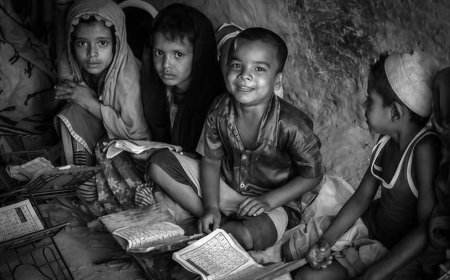
The fourth is the Rohingya. More than a million refugees remain in Cox's Bazar, and international funding has fallen sharply since American aid was cut last year. A Democratic Congress may push to restore humanitarian funding and to tighten pressure on Myanmar's military.
But there is no guarantee. Budget fights and competing priorities could easily push the Rohingya down the list. Dhaka should press its case rather than assume that a change in congressional control will bring attention on its own.
What Dhaka should do now
The right response to the midterms is neither excitement nor indifference. It is preparation. Several steps follow from the analysis above.
Review the trade deal, clause by clause. Parliament should examine every commitment, separating those tied to tariffs that no longer exist from those that remain in Bangladesh's interest. Where the balance has shifted, Dhaka should seek to renegotiate before the obligations harden.
Engage Congress, not only the White House. Bangladesh's diplomacy in Washington has long focused on the executive branch. It should now build relationships with the congressional committees that handle trade and foreign affairs, with members of both parties, and with labor, business and diaspora groups. A credible record on workers' rights will be its strongest argument.
Keep China options open without breaching commitments. Dhaka should pursue RCEP membership and trade talks with Beijing transparently, and seek clarity from Washington on how the non-market economy clause will be applied.
Separate the India agenda from the great-power contest. Water sharing, energy trade and border management with India are bilateral necessities. They should not become hostage to American or Chinese strategic calculations.
Plan for several energy scenarios. Diversify LNG suppliers where feasible, review shipping and insurance arrangements, and hold enough reserves to absorb a price shock.
Judge everything against LDC graduation. Whatever the final decision on the requested deferral, Bangladesh is approaching the loss of trade preferences it has long relied on. Every trade commitment made now should be weighed against that horizon.
None of these steps depends on predicting what Washington will do. Each makes Bangladesh more resilient whatever it does.
Read Washington, strengthen Dhaka
American voters have spoken, and so, a week earlier, did the voters of Israel. Both delivered a verdict on the idea that force alone can create lasting political facts. Whether those who now hold more power in Washington will learn from it remains to be seen. A change of party does not guarantee a change of policy.
Bangladesh cannot afford to wait and find out. The price of diesel in Dhaka, the tariff on a shirt from Gazipur, and the safety of a worker in Riyadh will not pause while American politics settles. Dhaka's priorities are clear: Avoid being bound by commitments whose benefits have vanished, avoid being forced to choose between Washington, Beijing, and New Delhi, and build the domestic strength that makes such choices less painful.
Washington has voted. Dhaka must now read the fine print, and then write its own.
Simon Mohsin is a political and international affairs analyst and a research fellow at Bangladesh Neeti Gobeshona Kendra.