


















































My South Asia, My Dream
Given the political and logistical constraints only Bangladesh, Nepal and Sri Lanka are the possible venues for regional scholarly exchanges. India are Pakistan are virtually ruled out because of mutual visa restrictions. India is particularly responsible for this.
Article 1: Introduction
The Idea: The idea of writing this assortment of essays, altogether 10, is to share my long-held belief that man is basically simple-minded (opposite of the Hobbesian notion of man being ‘solitary, poor, nasty, brutish and short’) with sympathy for one another’s owes and anxieties (exceptions prove the rule) and is willing to solve each other’s problems through mutual give and take.
Had it not been so the world would have collapsed long ago.
With this broad hypothesis, I attribute the failure of the South Asian Association for Regional Cooperation (SAARC) essentially to the lack of South Asian people’s participation in the venture. The process has been erroneously conceptualised as a top-down exercise, not a bottom-up one.
As such, mine is an advocacy for knowing each other better before fancying the larger goal SAARC.
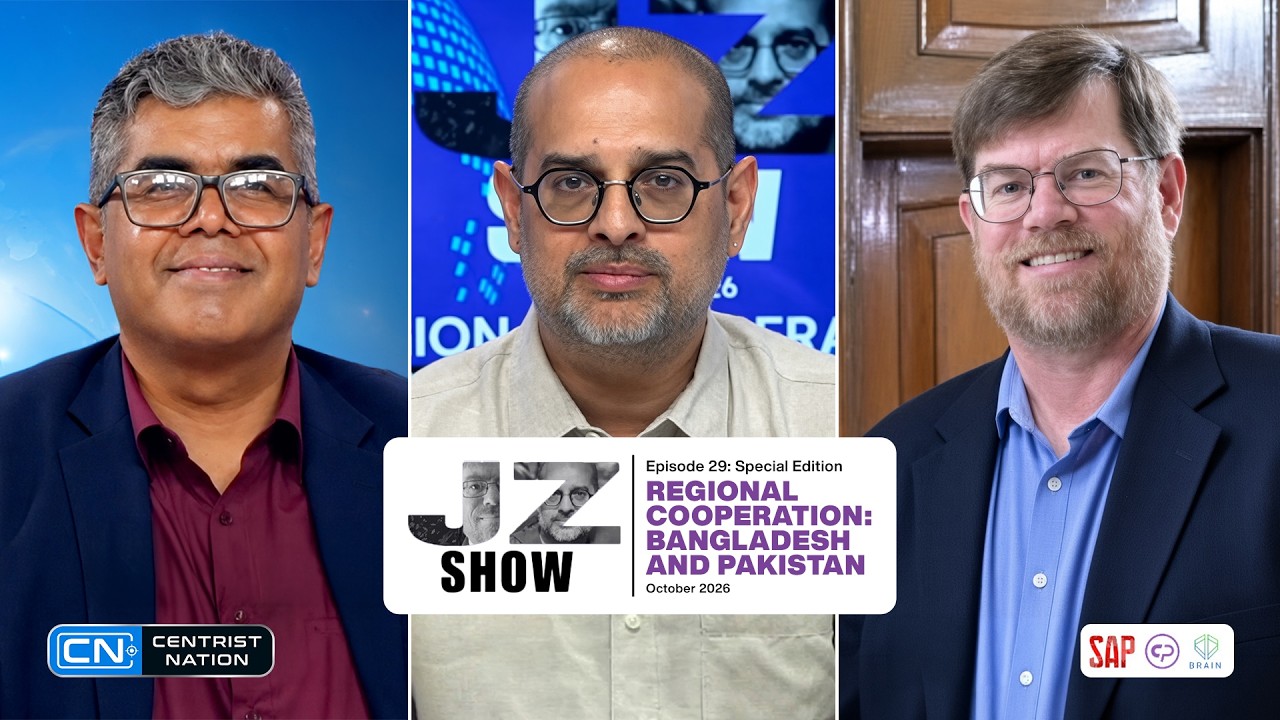
My immediate inspiration was the Counterpoint’s feature called J-Z Show, Episode No. 29, which was broadcast on October 25. Its theme was ‘Regional Cooperation: Bangladesh and Pakistan.’ The discussion had three participants, two Bangladeshi, one American, namely, Zafar Sobhan, Fahim Mashroor, and Jon Danilowicz (former Deputy Chief, American mission, Dhaka).
The discussion concentrated on the future of Bangladesh-Pakistan relations in the light of the two Bangladeshis’ recent visits to Pakistan, second time for each.
Without going into the economic and technological cooperation between the two countries that they discussed, my point is to emphasise the importance of field visits as necessary supplement to our academic knowledge.
I am saying so from my experience. To know contemporary Pakistan better more Bangladeshis should visit the country. That is the point I am sharing here through my essays. South Asian regional consciousness would not germinate otherwise.
Mutual unfamiliarity: Billions of words have been spoken, written and broadcast about South Asia but an average South Asian knows very little about the region. Their knowledge ends with their immediate neighbouring country, that too superficially.
Since India borders every other South Asian country, but no two other South Asian countries border each another (except Afghanistan and Pakistan) Indians have a given advantage of familiarity of them, however rudimentary.
Still, other than Bangladesh, Nepal and Pakistan, with whom Indians have historical, ethnic and cultural links, their knowledge about the rest is basic.
The people of Tamil Nadu probably know Sri Lanka better because of historical and geographical factors but their knowledge is limited primarily to Sri Lanka’s north-east and the Nuwara Eliya tea plantation regions, the respective homes of Sri Lanka Tamils and Indian Tamils.
Afghanistan, Bhutan and Maldives are virtually alien to most South Asians barring Pakistan which has a love-hate relationship with Afghanistan, though only hate lately.
This mutual ignorance is at the core of our failure to make South Asian regionalism work though the significance of strategic incongruity between India and Pakistan cannot be less emphasised.
The builders of SAARC were probably conscious of this lacuna and hence they launched the SAARC Audio-Visual Exchange (SAVE) programme but under the pressure of South Asia’s political-strategic dynamics it collapsed soon after taking its toddling steps.
Intra-South Asian tourism is virtually non-existent. Despite having a huge reservoir of natural, cultural, and spiritual appeals, the region accounts for only 1.25% of international arrivals. In glaring contrast, Southeast Asia has a thriving intra-regional travel flow. It accounts for almost 40% of the international arrivals.
While the contribution of ASEAN (Association of South East Asian Nations) is outstanding in this regard, that of SAARC is sheer pathetic. The European situation must be even more encouraging because of their successful experimentations with EU, Eurozone and Schengen. For sure, more South Asians have visited America or Europe than their neighbouring countries.
A personal statement: I have an interesting association with South Asia. We almost share our birth. We both were born during the critical days between the end of Second World War and the Partition of India.
It was the time when the Cold War was in the making. ‘South Asia’ as a geo-strategic concept emerged during the presidency of Harry Truman in the discussions of the American Cold Warriors. In 1959 the U.S. State Department officially adopted the term in its communications.
The Partition of India brought in its train the goriest Hindu-Muslim violence in which millions were killed, maimed, or displaced. It is etched in my childhood memories, mercifully though my native place, Bhagalpur (Bihar), had remained unscathed. But our neighbouring Tarapur saw it in massive scales.
It not only became the theatre of mass Muslim massacre, but the killings were lionized as ‘Noakhali ka badla’ (retribution for Noakhali). Just weeks ago Noakhali had been a witness to a dreadful massacre of Hindus. Noakhali could be calmed only through the intervention of Mahatma Gandhi who camped there for a month.
Much later in my life I elected South Asia as my area of academic curiosity after having traversed for several years into studying American history and foreign relations.
My first book on South Asia, Cooperation and Conflict in South Asia, appeared in 1989 (reprinted in 1995). Its argument was that besides India-Pakistan strategic incongruence domestic politics of the regional states would come in a big way to scuttle regional cooperation.
At the time of writing my book I had not visited any South Asian country. But in the following years I visited all except Afghanistan. This incompleteness was partly filled by my long friendship with a Mohmand Afghan from my JNU hostel days in the early seventies. He and his wife are now settled in America. Besides, there were some other personal contacts with Afghans during my long German stay.
Through all these contacts I have convinced myself that we all are South Asians, our individual nationalities notwithstanding. Our reflexes are carbon copies of one another. My complaint is that our respective governments have done precious little to tap this social capital through more people-to-people contacts. No wonder that intra-regional tourism is so abysmally low as we mentioned above.
Conceptualization: Historically there is no reference to South Asia. All references were pointing to India. In 326 BCE the Greek warrior Alexander had invaded India.
In 52 CE St. Thomas had arrived in Kerala which marked the beginning of Christianity in India. In ancient and medieval times, the Arabs traded in India’s western ports.
During the Renaissance, Christopher Columbus and Vasco da Gama searched for sea routes to India. In colonial India Indology thrived in a big way. India was the reference point to characterize new areas.
Thus, we had the Indian Ocean, West Indies, East Indies, and Indochina. The name Indonesia was derived from Indos Nesos, ‘Indian Island’.
The East India Company pioneered the British Empire in South and Southeast Asia. The Dutch company that traded in Indonesia was called the Dutch East India Company. In short, India influenced the geographic names.
It was in the aftermath of the Second World War that the notion of South Asia developed in the United States as an offshoot of Oriental Studies, the backbone of which was Indology.
The latter had a long academic tradition, which in the interwar period (1919-39) got a boost because of American missionaries. Many ‘scholar missionaries’ had ended up in American universities. After the war, more particularly after India’s independence, interest in India grew faster. Pakistan too attracted American attention because of the Cold War.
In this context let us talk about an amusing incident. John Foster Dulles, Secretary of State (1953-59, was such a pathological Cold Warrior that sometimes he did not check his facts properly. LOL to note the following conversation he had with journalist Walter Lippmann in 1954:
‘Look Walter ... I’ve got some real fighting men into the south of Asia. The only Asians who can really fight are the Pakistanis.... We could never get along without the Gorkhas.’ When Lippmann corrected him that the Gurkhas were Indian, not Pakistani, Dulles replied, ‘Well, they may not be Pakistanis, but they’re Moslems.’
Lippman once more corrected Dulles, saying, ‘No, I’m afraid they’re not Moslems either, they’re Hindus.’ Dulles merely replied, ‘No matter,’ and proceeded to sermon Lippmann for half an hour on how SEATO (Southeast Asia Treaty Organization) would plug like the dike against communism in Asia.
For the US academia, South Asia meant India; for the US strategic establishment, it meant Pakistan. If at all the phrase South Asia figured in strategic discussions it was more for geographical reasons. It was as late as 1991 that the State Department had clubbed South Asia with ‘Near East’, which received the lion’s share of attention although it had one third of South Asia’s population.
A Deputy Assistant Secretary four levels junior to the Secretary of State handled relations with India. The same arrangement held good for the National Security Council and the Central Intelligence Agency. It was only with the creation of the National Intelligence Agency in 2005 that a separate South Asia Bureau was created which directly reported to a director of the intelligence.
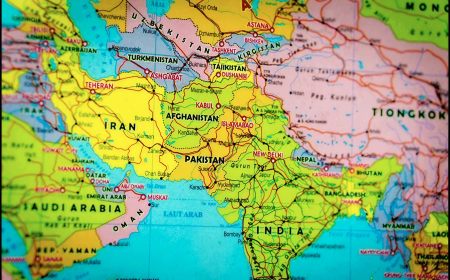
Institutionalization: Within the South Asian region, it qualified as a region only in institutional terms. The eight SAARC members constitute it. Till 2007 when Afghanistan was not in SAARC it was not considered South Asian. Logically, therefore, if a country quits the association it may cease to be called South Asian.
The idea of SAARC was the brainchild of Ziaur Rahman, President of Bangladesh (1977-81). Its endorsement by India and Pakistan, however, took some time. In 1985, SAARC was formalized in the Dhaka Summit. Its achievements, however, have been lacklustre, primarily because of the India-Pakistan mutual suspicions often culminating in conflicts.
For last ten years SAARC is virtually dead, surviving as a mere formality. Probably the only intra-regional connect now is Bollywood and the Hindi-Urdu songs.
Gross Imbalance: Unlike all other regions, south Asia is most imbalanced both population-wise and size-wise. See the Table below.
Population and Land Area of South Asia
| Country | Population | Percent to total South Asian Population | Land Area | Percent to total South Asian Land Area |
| India | 1480 million | 70% | 3.28 million sq. km. | 51.3 |
| Pakistan | 260.8 million | 11.84 | 881,913 sq. km. | 16.94 |
| Bangladesh | 175.7 million | 8.8 | 148,461 sq. km. | 2.85 |
| Sri Lanka | 232.2 million | 1.08 | 65,610 sq. km. | 1.26 |
| Nepal | 29.6 million | 1.29 | 147,181 sq. km | 2.82 |
| Bhutan | 0.8 million | 0.04 | 38,395 sq. km. | 0.74 |
| Maldives | 0.53 million | 0.0245 | 298 sq. km. | 0.0058 |
| Afghanistan | 42.7 million | 2.2 | 652,866 sq. km | 14.49 |
| Total | 2,013.3 million | … | 5,363,185 sq. km. | ... |
Academic Interaction: Given the political and logistical constraints only Bangladesh, Nepal and Sri Lanka are the possible venues for regional scholarly exchanges. India are Pakistan are virtually ruled out because of mutual visa restrictions. India is particularly responsible for this.
Ever since P. Chidambaram’s (Indian Home Minister, 2008-12) pushed the alarm bell about Pakistan's alleged anti-Indian activities on Indian soil all academic visits came to a total halt. There is no immediate hope for any change in the situation.
Our Framework: This series of essays has been structured in bilateral terms for clarity, starting with Bangladesh. They are primarily drawn from my personal interactions with all kinds of people in the region supplemented by my own academic inputs. But nothing serves better than common sense.
Lord Salisbury was right when he told Lord Lytton the following: ‘No lesson seems to be so deeply inculcated by the experience of life as that you should never trust experts ... They all require their strong wine diluted by a very large admixture of insipid common sense.’
After my Bangladesh article I will take up Pakistan, Nepal, Sri Lanka, Bhutan, Maldives and Afghanistan, in that order. The last two pieces will deal with larger overall regional questions such as religion, ideology, societal polarization, etc. I have named these articles as: South Asia: Perspective I, and South Asia: Perspective II.
Partha Ghosh retired as professor at JNU.