






























































Don Quixote, Gulliver and Bangladesh’s Unfinished Democratic Test
The fall of authoritarianism was a historic achievement. But a nation cannot move forward by forgetting its victims, excusing those responsible, or allowing a new political monopoly to emerge.

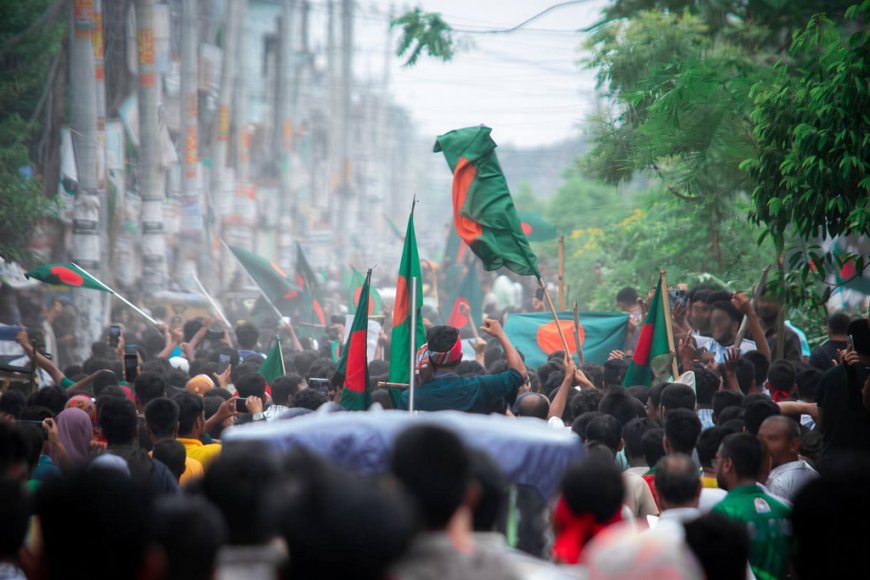
Bangladesh has crossed an extraordinary political threshold, but it has yet to reach its democratic destination.
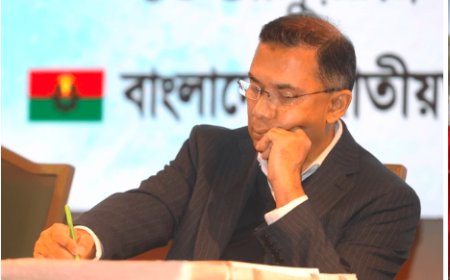
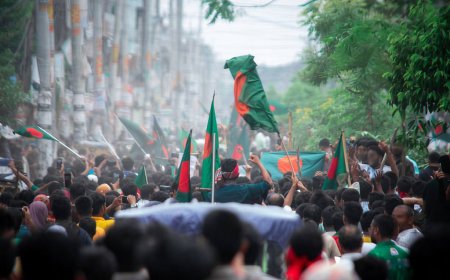
The fall of Sheikh Hasina’s government in August 2024, following the historic July-August mass uprising, and the general election of February 12 marked defining moments in the country’s political evolution. The BNP, led by Tarique Rahman, secured a parliamentary majority and formed a new government.
The referendum on the July National Charter also received popular endorsement, creating an opportunity to reshape the institutional foundations of the Republic.
Yet a change of government does not automatically amount to democratic consolidation. The real test is whether Bangladesh can establish a political order in which no individual, party or ruling coalition can monopolise the state, subordinate public institutions or confuse political authority with personal entitlement.
Equally important is whether the nation can reconcile with a political organization associated with extensive bloodshed and repression, particularly when convincing collective remorse remains absent.
Two enduring works of political satire -- Miguel de Cervantes’ Don Quixote and Jonathan Swift’s Gulliver’s Travels -- offer valuable insights into this moment. Their exploration of political delusion, vanity and the dangerous distance between power and reality provides a lens through which Bangladesh’s unfinished democratic transition can be understood.
Tilting at Windmills: Power without Legitimacy
In Cervantes’ Don Quixote, the self-appointed knight mistakes windmills for formidable giants. Armed with misplaced conviction and an exaggerated sense of his mission, he charges at them, only to be defeated by the reality he refuses to recognize.
The metaphor resonates with Bangladesh’s recent political experience. For years, electoral competition gradually became an exercise in political management. The elections of 2014, 2018 and 2024 became defining symbols of declining electoral credibility. Institutions lost independence, dissent encountered coercive restrictions, and democracy increasingly retained the appearance of public participation without its essential substance: genuine political choice.
Such a system may project stability, but stability without consent is inherently fragile. The July-August 2024 uprising exposed that fragility and demonstrated that a population denied meaningful political agency does not necessarily surrender its democratic aspirations. The lesson is clear: No government should mistake the absence of organised opposition for the presence of public consent.
Accountability before Political Rehabilitation
Perhaps the most difficult question confronting Bangladesh is the political future of the Awami League. For many Bangladeshis, this is not merely a matter of partisan competition; it concerns memory, justice, human dignity and the moral obligations of a political organisation that governed the country for more than a decade.
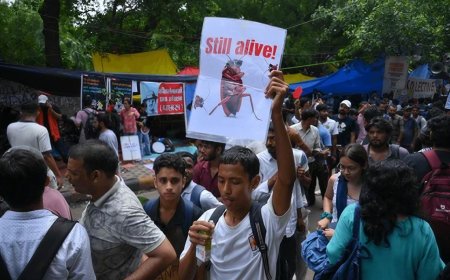
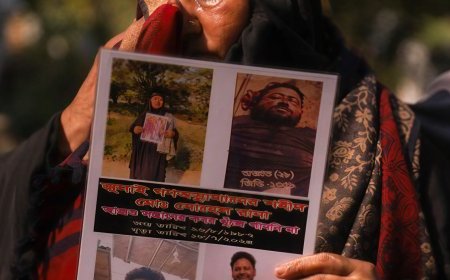
The OHCHR fact-finding report, published on February 12, 2025, estimated that as many as 1,400 people may have been killed between July 1 and August 15, 2024. It documented systematic repression and serious human rights violations involving the former government, security and intelligence apparatus, and violent elements associated with the Awami League. The report also raised grave concerns about possible crimes against humanity and called for further criminal investigations.
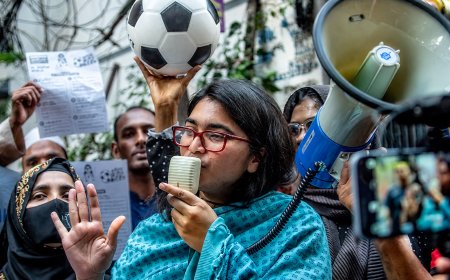
Behind these numbers were students, ordinary citizens, parents and children -- people with families, aspirations and futures. Many never returned home; others survived with permanent physical and psychological injuries. No argument about historical achievements, development projects or economic growth can erase their suffering.
The Awami League’s historical role in the emergence of Bangladesh is part of the country’s political history. But historical contribution cannot confer permanent immunity. The Liberation War cannot be invoked as an everlasting political shield against accountability for subsequent crimes.
What makes political rehabilitation particularly difficult is the apparent absence of unequivocal collective acknowledgment and genuine remorse for the atrocities committed during the uprising. Acknowledging unspecified mistakes is not the same as accepting responsibility for the killing of innocent citizens.
Bangladesh does not owe the Awami League political rehabilitation. The Awami League owes the people of Bangladesh an honest reckoning. Any organization seeking public acceptance must acknowledge the victims, confront its institutional failures and cooperate with credible processes of justice. It cannot expect the country to turn the page while refusing to acknowledge what is written on it in blood.
This, however, is not an argument for collective punishment. Individual criminal responsibility must be established through evidence, fair trials and due process. Concerns raised by international human rights organizations about procedural safeguards and trials in absentia must also be taken seriously. Justice must be credible and impartial; otherwise, it risks becoming another instrument of political power.
There is an essential distinction between reconciliation and impunity. Reconciliation cannot be demanded before truth and accountability, nor can it be imposed upon victims and families who have not received justice. The governing principle must remain consistent: Accountability before rehabilitation, justice before reconciliation, and the rule of law above partisan convenience.
Gulliver’s Warning
Swift’s Gulliver’s Travels offers another powerful lesson. In Lilliput, petty disputes, factional rivalries and absurd struggles for status consume the political establishment, subordinating the interests of the state to the vanity of competing groups. Nations can decline not only through a lack of resources or opportunity, but also when their leaders become preoccupied with possessing power rather than exercising it responsibly.
Bangladesh cannot afford another cycle in which electoral victory becomes an unrestricted mandate to dominate institutions, marginalize opponents or distribute state benefits among partisan constituencies. The removal of an entrenched ruling elite may create legitimate expectations of change, but it can also produce political triumphalism. Those who fought authoritarian practices must not begin to justify similar practices after acquiring authority. The language of liberation must not become the language of entitlement.
The new government must demonstrate that it intends to govern differently. Political opponents must retain lawful space to organize and compete; the media must be free to scrutinize those in office; and public institutions must serve the Republic rather than the party of the day. The true measure of democratic change is not whether the occupants of power have changed, but whether the relationship between power and accountability has changed.
From Political Victory to Democratic Responsibility
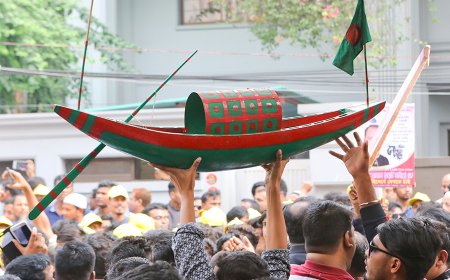
The February 2026 parliamentary election and the concurrent referendum on the July National Charter marked significant milestones in Bangladesh's post-uprising political transition. Held on 12 February 2026, the parliamentary election saw the BNP secure 210 of the 300 directly elected parliamentary seats, while Jamaat-e-Islami, with 68 seats, emerged as the principal opposition party.
In the accompanying referendum, approximately 68.59% of valid votes supported the proposed constitutional reforms. The result provided a popular mandate and an opportunity to translate the aspirations of the July 2024 uprising into meaningful institutional reform.
However, securing public approval was only the beginning; translating the Charter's commitments into constitutional and institutional changes remained a substantial political and legislative challenge.
The July Charter must not become another political document celebrated ceremonially but diluted in implementation. Its reform agenda should strengthen constitutional safeguards, institutional independence and parliamentary accountability. A constitution should not depend on the goodwill of whoever occupies the highest political office; it must protect citizens precisely when those in power are tempted to disregard their rights.
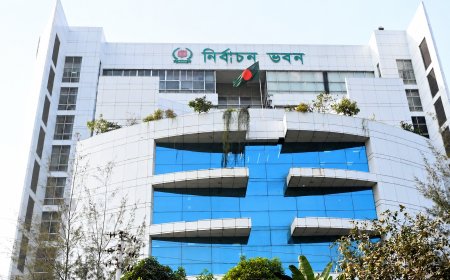
The responsibilities are shared. The governing party must understand that an electoral majority is a mandate to govern, not a licence to monopolize the state. The opposition must practise responsible competition rather than violence or institutional obstruction. The judiciary, Election Commission, law-enforcement agencies and civil administration must apply the law consistently, regardless of political identity. Media and civil society must scrutinise power without becoming instruments of partisan mobilization.
These are not merely institutional requirements. They are conditions for national development. Investors need predictable institutions, citizens need confidence in their rights, and Bangladesh’s strategic importance in the Bay of Bengal makes political stability a wider national imperative.
Can Bangladesh Break the Cycle?
The central question is no longer simply who won the February 2026 election. It is whether Bangladesh can build a political system in which future elections will not require another uprising to become credible. That demands constitutional reform, institutional restraint and a political culture that recognises the Republic as belonging to its citizens, not to any party or coalition.
Don Quixote reminds us of the folly of confusing illusion with reality; Gulliver’s Lilliputians warn against allowing petty rivalries and personal vanity to overwhelm national purpose. Bangladesh must resist two equally dangerous temptations: forgetting the atrocities of the past in the name of political expediency, and reproducing authoritarian practices in the name of political victory.
The victims of July–August 2024 deserve justice, not selective remembrance. Their families deserve acknowledgment, not indifference. Those responsible must face credible legal accountability, while those seeking political rehabilitation must understand that it is neither automatic nor owed to them. The moral authority of the uprising belongs not to any party, but to the people who stood against repression and demanded a different Republic.
Bangladesh has changed its government. The greater task is to change the political culture that made authoritarian government possible in the first place. The fall of authoritarianism was an event; establishing democracy is a continuing responsibility. Remembering the victims and securing justice are moral obligations. That is Bangladesh’s unfinished democratic test.
Syed Misbah Uddin Ahmad (Retd) is the Director General at Bangladesh Institute of Maritime Research and Development (BIMRAD).