
















































A Letter, a Request, a Humble Proposal to Tarique Rahman About Funding the Arts
When you fund the arts, you also fund scholarships. When you fund scholarship, you fund wisdom, empathy, and acceptance.

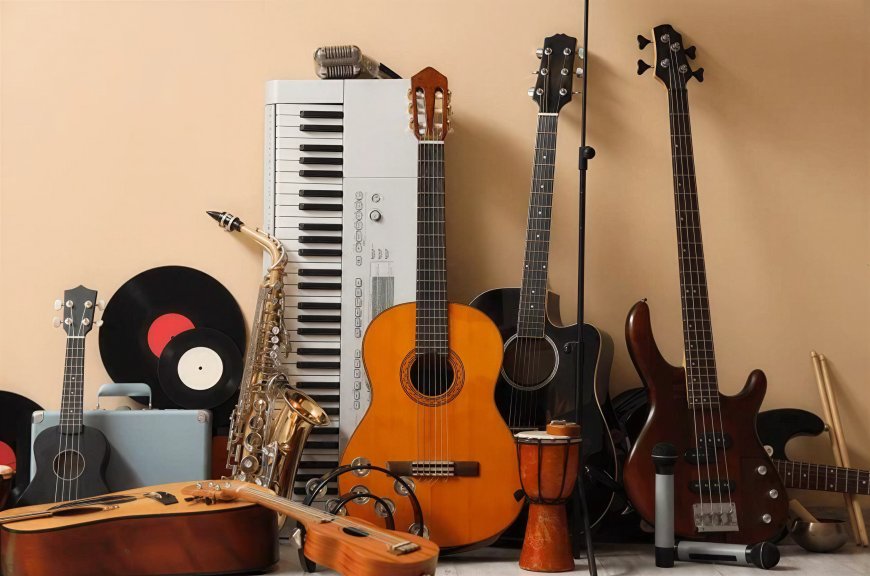
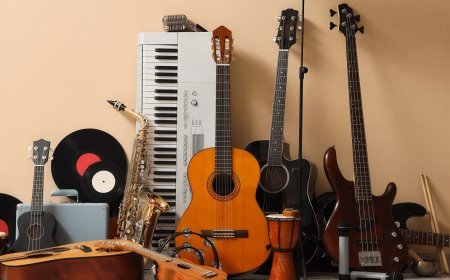
Tarique bhai, what’s your favorite Dire Straits album? Are you a Lennon or McCartney guy? When you wore out your fingertips practicing barre chords, did you want to be Ritchie Blackmore or Selim Haider? Close your eyes and let’s go back to 1980s Dhaka. Sing for us, O Maqsood!
উদাসী এই মনে আমি যা ভেবেছি
এত আশা নিয়ে এই মনে
আমি কি পেয়েছি
You were young, at the epicenter of a dozen paths branching out. Life could take you anywhere. The air was electric with possibility. This universal neuroplasticity came out in an expression of pure joy, all your neurons firing at once in a celebration of all of the faculties, abilities, and potentialities that lay ahead.
আশা হোক দরাশা ু
চাই কার মন পেতে
চাই কারো সুর হতে
That was before the maelstrom. Before the revolutions and the struggle and the crucible of the last two decades. We’re at the redemption arc now, bhai. Bangladesh is that young Tarique Rahman, a youthful population with the potential to grow into a million brilliant futures. I write to you about a legacy-defining opportunity. And it’s cheap.
Fund the arts. Give the kids a voice. Here are just some reasons why.
The arts are the most inclusive institution out there. Daron Acemoglu and James A Robinson argued in Why Nations Fail: The Origins of Power, Prosperity, and Poverty, that we need inclusive institutions for a nation to thrive: “Inclusive economic institutions require secure property rights and economic opportunities not just for the elite but for a broad cross-section of society.”
Essentially, the arts offer a true meritocracy in an economic system where nepotism and networking are the primary routes to success.
Furthermore, the arts offer acceptable social mobility. Most non-criminal pathways to economic success in Bangladesh require social or infrastructural safety nets that get exponentially more scarce the less actual wealth one’s family has.
Even sports, the other great meritocracy, needs equipment, training, a team working with professional trainers.
If nothing else, then ten willing participants to set up a five-a-side soccer game (though the distance between tennis ball five-a-side and FIFA remains unpassable). With the arts, one can create a universe with pen and paper.
Some doggerel rhymes made up in one’s head, turned into a song, and all of a sudden you’ve got the summer hit.
The arts -- I think of music, but all of the arts -- are the most inclusive, democratic institution we can have. They are a proven, benevolent path to greater social mobility.
ভাবনা নয় কোন যেতে চাই সুদরেূ
তুমি আমি যাব হারিয়ে দটিু হাত বাড়িয়ে
A greater arts scene also means more mobility, more money and talent flowing through the regional (i.e. within the country itself, outside Dhaka) and global Bangladeshi diaspora.
But a hop, skip, and jump from the Bangladeshi diaspora to the world. You know what comes with that? Tarique Bhai, what comes with Bangladeshi artists exporting their talent to the world is money. Foreign exchange!
We already have a massive Bangladeshi population abroad, so much so that a large portion of major artist income is in the form of international tours. Xefer at the BBC, Sanjoy at FIFA, all of the bands touring the global north. We have fans.
Simultaneously, every Bangladeshi artist is burdened with no governmental support abroad, nowhere to turn. Imagine Badhon going to Italy not just as a private citizen but as a representative of the country she fought for.
Imagine the thousands of Bangladeshis who crave Bangladeshi art, and imagine the government helping them maintain that sacred connection. And think of the foreign exchange.
Something else that’s almost as desirable as foreign exchange: Soft power. We have the talent already. For example, did you know that we recently had the first Bangladeshi sound engineer mixing and mastering an album for a Bollywood pop star?
We have the skill. We have the art. We have the love to make the world dance. This is harder to put into numbers but Bangladeshi art is now having its watershed moment where, all over the world, Bangladeshi artists are independently creating their own movements.
Bangladeshi female DJs touring north america mixing folk music with the freshest beats, hijab-clad rappers, Bangladeshis creating television shows and movies and writing books about the human experience filtered from the Bangladeshi point of view. Take these shooting stars and give them a tether. Let Bangladeshis brand Bangladesh. The world will applaud.
I am no mere idealist. The Swedish government saw ABBA’s success and formalized musical education. The French government saw the success of Asterix the Gaul and formalized education for animation and cartoons.
The Indian government formalized the education and practice of music, drama, and literature. And so Sweden gives us producers like Max Martin, who’s written the second highest number of Billboard Hot 100 charting songs. (More than Lennon, if you’re a Lennon guy.)
And come on now, let’s get real Tarique Bhai–don’t you find it infuriating, as I do, to see Indian and Pakistani acts perform in Bangladesh with our biggest artists acting as mere openers? Shouldn’t our artists enjoy that status?
There are two potential objections. I would argue they are the greatest strengths of all.
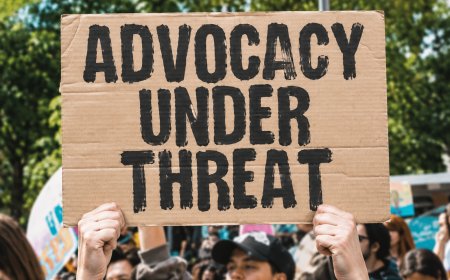
First objection: Funding the arts means allowing free speech, and that almost certainly guarantees more than seven, likely more than seven thousand, memes depicting you as a parrot. Make a mistake?
There’s gonna be a price in the form of images, videos, insults, songs, AI content, everything. As the head of state, you will be ridiculed, you will be abused, your family’s name will be dragged in the mud.
The meanest street urchin will be able to make songs about the way you give a thumbs up and people will crowd around them to listen. You will smile through it all. All of the people under you, they too will face insults, especially when they mess up. They will ask you for permission to hit back. You will regretfully decline.
This freedom of speech is the greatest gift you can give to Bangladesh. We are a land of weak men. Strong women and weak men, but it is the weak men that hold power. Weak men who are threatened by words and use violence, enacted in the safety of groups, to protect their fragility from the attack of an insulting word.
Tarique Bhai, I know you are surrounded by weak men, but I also know that you are decidedly not a weak man. You are not threatened by words, and you know that true robustness comes from consensus achieved through argument.
And, you may easily point out -- what’s the use of blocking free speech at home? Whatever you don’t allow someone to say inside of Bangladesh will be amplified a thousandfold by Bangladeshis who are beyond your reach.
Whatever you say or I say will be misinterpreted, twisted, refuted by anybody who really cares enough to do so.
Hasina couldn’t shut them up either. But if you choose to not shut them up, you become the indulgent leader who is busy serving his two hundred million bosses while the yappers yap.
This freedom of speech also has the power to defeat theocracy. Bangladesh is for Bangladeshis. Being a deeply religious people, not overburdened by media literacy or scholarship, we are often misled by holy charlatans.
The entire nation is burdened by the anti-human, anti-animal, anti-life demands of the Islamic extreme. They use religious orthodoxy as a cudgel.
But why can’t we give them what they want?
Establish a Bayt al-Hikmah! Invite liberal Islamic scholars to share their views of religion. Invite scholars from other religions too! Let’s have a respectful debate.
Why should Muslim religious practice dictate the life of every Bangladeshi, and why should Muslim religious practice be defined by the narrowest standard set by the most ignorant Wahhabi? When you fund the arts, you also fund scholarships. When you fund scholarship, you fund wisdom, empathy, and acceptance.
ভাবনা নয় কোন যেতে চাই সুদরেূ
তুমি আমি যাব হারিয়ে দটিু হাত বাড়িয়ে
জীবনের যা কথা কিছু নয় হতাশার
শুধুসুখ চাই আর ভালবাসা আশা হোক দরাশা ু
I’m sure you saw the role Bangladeshi rappers played in the July Revolution. Shezan’s “Kotha Ko” was the soundtrack of the movement. He did not fear fists or bullets. He was fearless! Rappers often are. They speak truth to power. They teach us another lesson, however, a much more important one, about a healthy society: Rappers resolve conflict through poetry.
Here’s the other thing. The genie is out of the bottle. The cat is out of the bag. We’ve already had our artistic revolution. It began in July 2024. It happened in spite of the previous government’s meager Joy Bangla annual concert with a static lineup of bands who were obligated to sing a patriotic song in return for being given that platform.
We’re past the parade and rock and roll show. The people know now that there are no institutions to rely on, and as a result, they are creating their own everywhere. We are in the middle of the artistic renaissance, and you can be our leader who nurtures this nascent movement and helps us conquer the world.
Besides, what else are we going to do? Exports are down. We’re entering a global recession, a phenomenon which is invariably unkind to Global South nations even when they aren’t reeling from the effects of 15 years of nationalized theft. When there’s no electricity, do you want people to dance or fight?
Tarique Bhai, Bangladesh has a young population. You are not a young man anymore, but in many ways your life represents the life of the average Bangladeshi. You are an orphan. For better or for worse, Bangladesh had a “father of the nation”, and now we have none. While the Sheikh family’s hagiography was propaganda, it also provided a narrative for the simpler among us to believe in.
15 years of constant repetition takes some time to recover from. You too had a decade and a half of exile, of being tested on the crucible. You have returned to redeem us, and by redeeming us, to be redeemed.
Being a fundamentally decent man at the head of a fundamentally indecent organization, you know how lonely it is at the top. But it doesn’t have to be -- you have two hundred million of us who want your dreams of an amazing Bangladesh as badly as you want it. We agree with you. Fund the arts. Fund the arts, Sir!
I will close with a quote in Bangla, from the movie Hothat: Friendship Is Music. I’m quoting my favorite author, me.
মনের যা কথা আছে বলেই ফেলো।গান, কবিতা, সাহিত্য, শিল্প সব তোমাদের, সব আমাদের । কেউ যদি কখনো বলে, এই গান করা তোমার মানা, সে ভুল বলছে। শিল্পচর্চা ঈশ্বরের উপহার। আমরা গান গাই কারণ আমাদের গান গাওয়ার ক্ষমতা আছে । আমরা গান গাই কারণ এই রহস্যময় আজব পৃথিবীতে একটুবাতাস নিয়ে আমাদের মনের সবচেয়ে গোপন কথা, সর্বজনীন আবেগ, দঃখু , ভালোবাসা, ক্ষোভ, আনন্দ সব প্রকাশ করতে পারি!
গুরু আজম খান বলেছিলেন, “ গান বাজনা যাই করো, হালকা করোনা ”।
গানটার নাম ছিলো “ডীস্কো নাচো গাও”।
ডিস্কো ডিস্কো নাচো গাও।
সব একসাথে সবাইকে জানাও!
Whatever’s in your mind: Say it. Music, poetry, literature, art, all of it belongs to you. All of it belongs to us. If someone tells you you cannot sing, they are wrong. The practice of art is a gift from the creator. We sing because we must. We sing because, in this strange, mysterious universe, a little bit of curved air can help us express our secret thoughts, our intense emotions, grief, love, loss, joy, we can sing it all out loud!
Guru Azam Khan said, “When you sing, do it seriously.”
The song is called “Dance the Disco”.
Dance and sing like you’re in a disco.
All together now. Tell everybody!
Arafat Kazi is a Bangladeshi musician.