
































































Building a Fairer Tax System
Bangladesh has inherited a tax system that leans hardest on those least able to bear it. That was decades in the making, and it will not be undone in a single budget. But change it must.

Last week, the heads of Bangladesh's largest microfinance institutions did something unusual. They wrote together. In a joint column in Prothom Alo, the chief executives of BRAC, ASA, Buro Bangladesh and others set out their concerns over a set of proposed regulatory changes to their sector.
Their piece covers a lot of ground, from interest rate caps to board appointments.
I want to focus on one issue they raised, because it points to a larger challenge the country has carried for decades: How we raise public money, and from whom.
The issue is a tax on the interest earned by microfinance savers, including claims for previous years with penalties.
Who is being taxed
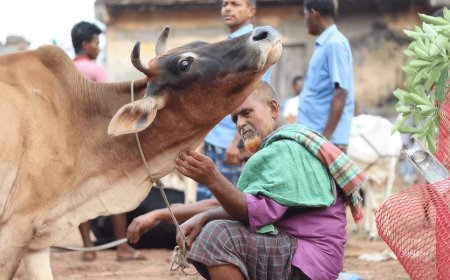
Consider who these savers are. Roughly 45 million people keep their savings with microfinance institutions. The average balance is under Tk 20,000. Most are rural women, small farmers and low-income workers in the informal economy. Many put aside fifty or a hundred taka a week, for a sick child or a failed harvest.
Most of them earn well below the income tax threshold. On paper, they owe nothing. But the tax is deducted at source, before the interest reaches them. To get it back, they would have to file a return. Very few do, and the process was never designed with them in mind. So for them, a tax meant to be provisional becomes final.
The revenue involved is small. The effect is not. People who owe nothing end up paying, while many who owe a great deal remain outside the net. No one intended that outcome. It is what the system produces.
How Bangladesh collects its taxes
To see how we got here, it helps to step back.
Governments collect tax in two broad ways. Direct taxes fall on income and profits: What individuals and companies earn. Indirect taxes fall on spending and transactions: VAT, import duties, supplementary duties.
Direct taxes can be matched to a person's ability to pay. Indirect taxes cannot. Everyone pays the same indirect tax on a mobile recharge, whatever their income.
In most economies, direct taxes carry the larger share. Let's look at a neighboring country, India. Last year, direct taxes made up nearly 60% of its tax revenue.
In Bangladesh, the ratio is almost exactly flipped. Over the same period, income tax brought in about 35% of what the NBR (National Board of Revenue) collected. The rest came from VAT and customs duties. Our overall tax revenue is also among the lowest in the world, at around 7% of GDP.
Even that 35% overstates the picture. A large share of what Bangladesh records as direct tax is withholding tax, deducted automatically from bank interest, salaries, contractor payments, and imports. The tax on microfinance savings falls into this category.
Legally, it is income tax. In practice, it behaves like an indirect tax. It is collected without assessing the individual taxpayer, and it reaches everyone in its path, whatever they earn.
Withholding tax is efficient at collecting money. It is not designed to ask whose money it is taking.
A path worn smooth
None of this is new, and none of it belongs to one government or one set of officials. The pattern has built up over decades, under governments of every stripe.
When revenue targets rise, any tax authority will lean on the tools that work fastest. Withholding tax and VAT are reliable. A rule is issued, institutions deduct the money, and collections follow.
Finding people and businesses who earn well but sit outside the tax net is slower and harder. It needs better data, more staff, and the patience to follow up. In an economy where much activity is informal, it also means reaching people the system has never touched.
The NBR has been doing real work on this. Online income tax returns passed 4.6 million by the end of June, a genuine milestone.
Collections grew by about 12% last year. These are steps in the right direction. But the structure they operate within still pulls toward the quicker path, and the microfinance savers' tax is a clear example of where that pull leads.
Who carries the weight
The difficulty with leaning on indirect taxes is that their cost is not shared evenly.
Take a mobile phone recharge as an example. For every Tk 100 a customer tops up, around Tk 28 goes to the government as VAT, supplementary duty and surcharge.
A senior executive recharging his phone will not notice it. A rickshaw puller topping up the same Tk 100 pays the same Tk 28. For him, that is a meaningful share of a day's earnings. The tax is identical. The burden is not. This is regressive taxation: The less you earn, the larger the share you give up.
The microfinance savers' tax goes one step further. A recharge tax at least falls on rich and poor alike. This one falls only on people who save in small amounts through microfinance, a group that is low-income almost by definition. However unintended, it ends up among the most regressive measures in the system.
The pressure on the system
Bangladesh needs more public money, not less. The FY2026-27 budget raises spending by 19%. To help fund it, the NBR has been asked to collect about 45% more than it collected last year.
Revenue in Bangladesh has never grown by more than 27% in a single year. The ambition is welcome. But a target of this size puts the tax authority under enormous pressure, and pressure tends to push any institution toward whatever brings in money quickly.
That is also why spending choices matter. Every taka raised carries a cost for someone, so every large commitment deserves careful weighing.
This year, Biman Bangladesh Airlines placed two orders with Boeing for a total of 25 aircraft, backed by a government guarantee. It currently flies about 20. There may well be a sound case for a larger, newer fleet, and some planes will replace older ones.
But a sovereign guarantee makes this a public commitment, and it is reasonable to have a public conversation about how it ranks against other needs. Load shedding still costs factories their shifts. Many schools lack enough trained teachers. District hospitals run short of basic equipment and staff.
Working together
The encouraging part is that the government has already set the right direction. It aims for a trillion-dollar economy by 2034. In his budget speech, the Finance Minister set a goal of raising the tax-to-GDP ratio to 10% in the medium term and 15% by 2035.
The government's own tax reform taskforce has said direct taxes should eventually carry about half the load. These are the right goals.
The question now is how to reach them, and that is a task for more than the NBR alone.
The first part is a shared, open conversation about priorities. A trillion-dollar economy will rest on reliable power, on a workforce that can read a contract and repair a machine, and on people healthy enough to work.
Large public commitments should be weighed against those needs in the open, so citizens can see the reasoning.
The second part is widening the tax base. Most people outside the net are not hiding. Many simply find the system hard to enter. The NBR already holds much of the information it needs: Withholding tax records, land registrations, utility connections, import data.
Pre-filled returns that people only need to confirm could make filing far easier. Small businesses could be offered a simple, predictable regime that doesn't require an accountant or a visit to or from the tax office.
And joining the tax net should bring visible benefits, not just new obligations. People join systems that make their lives easier.
The rest of us have a part to play too. Banks, microfinance institutions, business associations, and professional firms all hold knowledge about how money moves in this economy. Offering that knowledge to the effort, rather than only lobbying for exemptions, would help.
In the near term, the microfinance savers' tax deserves a second look. Whatever it adds to the treasury is small next to what it costs in trust. Setting it aside would signal that the effort to build a fairer system has already begun.
Bangladesh has inherited a tax system that leans hardest on those least able to bear it. That was decades in the making, and it will not be undone in a single budget.
But the goals are set, and much of the groundwork exists. With patience and a shared sense of purpose, the load can be spread more fairly, and the country can reach where it wants to go by raising what it needs.
Pial Islam is Managing Partner at pi STRATEGY, a strategy and innovation advisory firm. He can be reached at [email protected].