

































Understanding Paedophilia Among Bangladesh's Hujur Class
When a grown man rapes an 11-year-old and society's first instinct is to ask whether the girl was "of age," the problem is no longer just one predator. It is a collective willingness to call a psychiatric disorder a matter of taste.
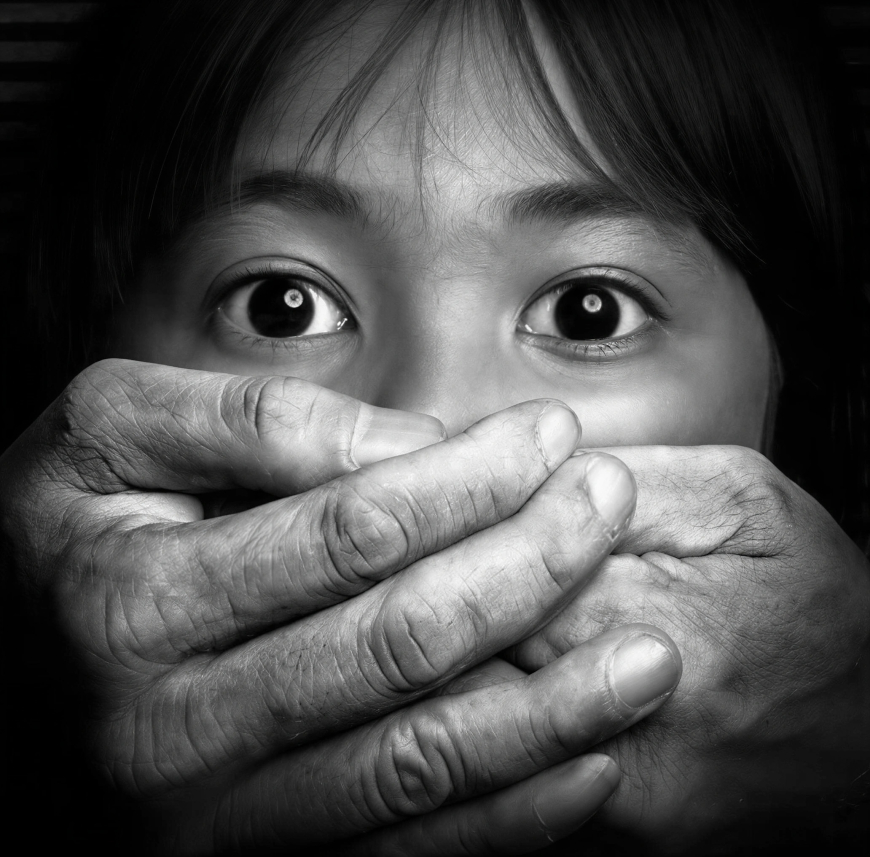
In April, a madrasa teacher in Netrokona was accused of repeatedly raping an 11-year-old student. By July, she had given birth to his child; a DNA test later confirmed it with 99.99% certainty. The institutional failures around that case matter, and deserve their own reckoning.
But underneath the institution is a person, and underneath the person is a mind that found a child sexually accessible and acted on it, repeatedly, without the internal brake that stops the overwhelming majority of adults from ever considering such a thing. That mind, and the social permission structure that lets it operate in plain sight, is what this piece is about.
Naming the disorder without flinching
Sexual attraction to prepubescent or early-pubescent children is not a preference, a phase, or a symptom of an unmarried man's pent-up desire. Clinically, it is a paraphilic disorder, listed as such in both the ICD-11 and the DSM-5, defined by a persistent, often lifelong pattern of arousal directed at children rather than age-appropriate partners.
It is a deformity of desire, not a variation of it. When someone acts on that attraction, or when an adult without that fixed orientation exploits a child anyway because the opportunity and impunity are there, both are crimes and both deserve prosecution.
But the two are not psychologically identical. And Bangladesh's public conversation rarely bothers to tell them apart. This is precisely how so much abuse gets waved off as an unfortunate but understandable human failing rather than named for what it is.
This distinction matters because it rules out an explanation. A man with a fixed sexual attraction to children does not develop that attraction because he is unmarried or theologically overstimulated by promises of paradise.
Bangladeshi hujurs are not a celibate class starved of legitimate outlets. Islam neither requires nor particularly prizes celibacy for religious teachers; marriage is encouraged and easily available to them, and many hujurs marry, often more than once.
Any theory pinning this on men being denied sex until the afterlife collapses on contact with that basic fact. What actually explains the pattern is not frustration. It is opportunity, authority, and the near-total absence of anyone willing to say no to a man in a religious costume.
The normalization machine
If the attraction itself is a disorder, the surrounding permission structure is a social choice, and Bangladesh has built one of the most effective permission structures in the region. Bangladesh still has one of the highest child marriage rates in the world.
When a society routinely marries off girls before eighteen, it does not merely fail to protect those girls. It manufactures a cultural category in which a grown man's sexual and marital interest in a child is not deviant but ordinary, sometimes even desirable, provided a nikah is performed first.
The nikah becomes a laundering ritual: Identical conduct is unspeakable one day and sanctified the next, with no change in the child's age, development, or capacity for consent -- only a paperwork change.
This laundering effect has a specific religious-legal vocabulary that gives it intellectual cover. Conservative voices defending low marriage ages frequently invoke the marriage of the Prophet Muhammad (SA) to Aisha, citing her young age at the time as scriptural precedent, and pair it with the argument that physical puberty alone signals marriageability regardless of psychological or emotional maturity.
Whatever theological debate exists around that history among scholars, its practical function in today's Bangladesh is unmistakable: Hujurs and their sympathizers deploy it publicly and repeatedly to shut down objections to child marriage as a Western import hostile to Islam.
That argument does not just defend a marriage practice. It pre-loads an entire society, hujurs included, to categorize sexual and marital interest in a physically pubescent child as pious rather than predatory, so long as the correct ritual words are said over it.
A man who has spent his career using that argument to defend child marriage from the pulpit does not need a fabricated psychological theory to explain why the line between "this child could be my wife" and "this child could be my victim" has worn dangerously thin in his own mind. The theology did that work for him.
Authority as the real accelerant
Set the marriage-laundering aside and look at what correlates with clergy sexual abuse across religions and countries: Unsupervised, unquestioned authority over children combined with a community trained to treat that authority as beyond scrutiny.
A hujur occupies a position most Bangladeshis are culturally conditioned not to interrogate -- closer to God, entitled to obedience, immune to the ordinary suspicion a stranger would attract. That is the precise condition that lets both the man with a genuine paraphilic disorder and the merely opportunistic abuser select victims, groom communities into silence, and continue for years.
Psychologists call this "moral licensing". It is the phenomenon by which a person's perceived virtue makes both the perpetrator and the people around him unable to countenance the possibility of his guilt.
The more devout he appears, the harder he is to accuse, and the more room he has to act. This is measurable and documented, not speculation about anyone's private fantasies. And it is precisely why representatives of this authority structure so rarely turn on their own.
What accountability requires, starting with law
Bangladesh's legal framework does not address this problem for what it actually is. There is no standalone law criminalizing paedophilia as such; child sexual abuse is prosecuted piecemeal under the Women and Children Repression Prevention Act 2000 and the Penal Code's rape provision, both written for narrower crimes.
The Penal Code's marital rape exception protects a husband from prosecution if his wife is not under thirteen. Combined with the Child Marriage Restraint Act's notorious "special provision," which allows marriage below eighteen in vaguely defined "special circumstances" with a court's approval, this creates a legal seam wide enough for a rapist to marry his way out of a rape charge.
Boys fare worse still: The 2000 Act's protections end at sixteen, while Bangladesh's rape law does not recognize the rape of adult men, leaving male survivors of abuse by hujurs without an equivalent legal path once they pass that age.
There is also no sex offender registry, no mandatory reporting law, and no legal mechanism distinguishing a diagnosed paedophile requiring lifelong monitoring from an opportunistic abuser requiring imprisonment.
Fixing this requires specific, achievable changes, not vague appeals to morality. Parliament should eliminate the Child Marriage Restraint Act's special-provision loophole, removing any route by which rape can be converted into a legally sanctioned marriage, and abolish the marital rape exception's age floor altogether.
The 2000 Act's protections should extend to eighteen for boys as well as girls, and rape law should recognize male victims regardless of age. A mandatory reporting law should require every teacher, religious leader, and institutional head to report suspected child sexual abuse to police within a fixed period, with criminal liability for those who instead protect an institution's name.
A national sex offender registry, checked before anyone is given custodial authority over children in religious or educational settings, would prevent dismissed abusers from resurfacing elsewhere with a clean slate.
Finally, sentencing should distinguish between convicted paedophiles, who should face psychiatric evaluation and post-release monitoring alongside imprisonment, and opportunistic abusers, who should face consistently enforced maximum sentences rather than selective negotiation.
Calling it what it is
None of this requires theorizing about what any hujur privately fantasizes about, and none of it requires treating an entire religious profession as inherently diseased.
It requires the much simpler and more defensible claim that Bangladesh has built a culture, a legal code, and a set of religious arguments that together make it easy to mistake a child's body for a legitimate object of adult desire, provided the right words are said over the arrangement.
Strip away every euphemism, whether it is tradition, puberty, the best interest of the minor, or special circumstances, and what remains is a society that has spent generations giving grown men a vocabulary for wanting children, and calling it piety.
An 11-year-old girl in Sylhet is a mother right now because that vocabulary worked exactly as designed. She did not fail to protect herself from something normal. She was failed by an entire architecture, theologically, legally, and socially built to make her violation legible as anything other than what it plainly was.
Until Bangladesh is willing to say that an adult's sexual interest in a child is a sickness regardless of who performs the ceremony over it, the next child will not be an exception. She will be the system working as intended.
Md. Abrar Galib is a student of Economics at the University of Chittagong. His writing interests include politics, governance, economic affairs, and human rights. He can be reached at [email protected].