






























































RAB Needs Reform. Changing Its Name Is Not Enough.
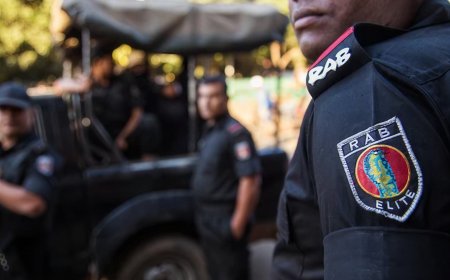
The current SRB act is viewed as a continuance of elite force, RAB as it transfers their personnel, funds, records and powers to a successor force, with no vetting of officers implicated in past abuse and no independent body opened to scrutinize the old record.
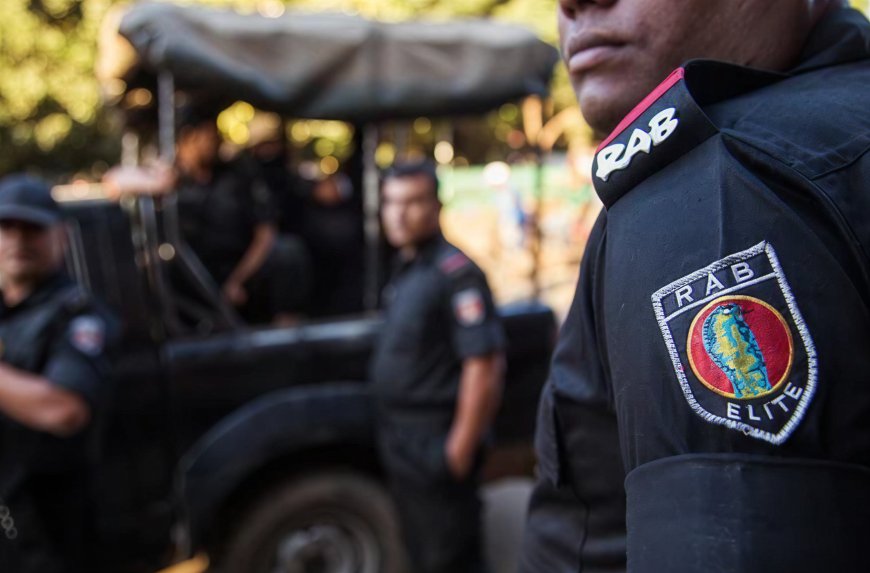
Last month, three plain-clothed men, members of RAB-2, attempted to barge into a female mess in old Dhaka. News-reports revealed that it was undertaken to detain former Jagannath University Student, Momtaz Ara Barsha.
However, the men neither carried any visible identification nor any case documents. Upon asking the charge, they couldn’t reveal the charges against Barsha. The episode fits a familiar pattern of force first and explanation later.
This civil-clothed detention bypassing the lawful procedures has long been a standard practice. The timeline is particularly pertinent here as it occurred three days before the Parliament renamed Rapid Action Battalion to Special Response Battalion.
The current SRB act is viewed as a continuance of elite force, RAB as it transfers their personnel, funds, records and powers to a successor force, with no vetting of officers implicated in past abuse and no independent body opened to scrutinize the old record. That act provides a grievance redress committee, but only on paper.
A force which investigates itself has rarely been present in this country with demonstrated accountability and transparency in their quotidian works. Hence, human rights organization and civic society actors have expressed deep concern over this reintroduction of RAB under the name of SRB and warn of the grim consequences that the act will present, if implemented, in the near future. A cosmetic change dressed as reform, continuity wearing a new uniform.
The Barsha Incident follows a longer record of violence, long enough that Bangladesh has grown to adjust to it. Between 2004 and 2006 alone, at least 991 people were killed extrajudicially in RAB’s “Death Squad” operations. Human Rights Watch’s report ‘Crossfire’ documented almost 200 deaths in RAB operations after Awami league assumed power in 2009.
The violent history followed with multiple cases in between years and found its way to the seven-murder cases which shook the nation. Sixteen officers were eventually awarded death sentences including the RAB-11 commander.
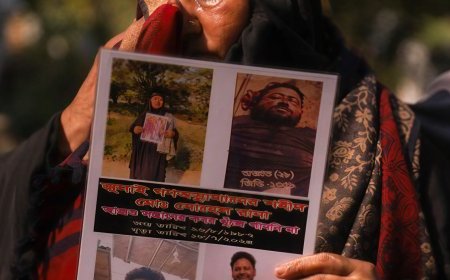
Along with these extrajudicial killings, disappearance of Sajedul Islam Sumon by RAB-1 and other cases solidified the allegations against the force. So much so, one of the senior RAB officials confessed to Sumon’s family that he had held them in custody.
The Commission of Inquiry on Enforced Disappearances revealed the majority of the cases involving RAB officers and identifies 22 or 23 secret detention facilities of RAB across Bangladesh. Even the Teknaf Councillor Ekram Murder case marked another blot on the reputation of this elite military force.
Swedish Radio had broadcast a secretly recorded confession from a senior RAB officer and other law enforcement officials, where they admitted that the force routinely picks up people, kills them and disposes of the bodies in 2017.
Each of the cases and the data illustrate the ferociousness of the force and continuous denials of any abuse against them. One of the unique defenses that the force came up with was “crossfires”.
That they felt threatened and so were forced to protect themselves. But human rights organizations have repeatedly found that most of those crossfire victims bore marks of torture or killed in custody.
What these cases share is not a single unit of deviance, but an ecosystem of law enforcement which was never designed, in the very first place, to be answerable for its action or to the citizens.
Bangladesh has assembled an entire ecosystem. RAB, now renamed as SRB, the Detective Branch, Police Bureau of Investigation, Criminal Investigation Department or Counter-terrorism and Transnational Crime Unit.
Each of these organizations came out as a consequence of political proposals for crisis management. Each was built to answer an operation or executive and political need of its moment : Counter-terrorism capacity, a visible response to crime, a strategy useful for any political party in power. Consequently, we have adopted a culture in which the officer’s excess counts as a managed inconvenience.
The police reform commission recommended RAB’s dissolution in December 2024. Even Bangladesh Nationalist Party (BNP) leaders including Begum Khaleda Zia and Tarek Rahman were repeatedly calling for an abolition of this elite agency due to the allegation of enforced disappearance, extrajudicial killings and gross violation of human rights.
But, the priorities have clearly shifted as one can see. When in opposition, they raised their concerns for extracting political benefits, but it seems that the willingness to disband RAB has been outweighed by the sustenance of a coercive force.
The more ironic thing is that this is the brainchild of BNP and was formed to combat militancy, terrorism and organized crime in 2004. So, the goodwill of the government is questioned again.
When the reputation of RAB is smeared with so much bloodshed, why is it that it continues to be relevant in current times by presenting it as a compliant force, while keeping the machinery of impunity intact?
The rejuvenation of RAB via SRB is hence criticized by human rights organizations and civic space continuously. The widespread power of investigation, the possibility of secret detention, the recurrence of enforced disappearances or extrajudicial killings are some of the legit concerns which resurfaces with the operation of the force.
Just because a new insignia has been done, the overarching structure that enabled the previously documented cases has not ceased, nor has the government shown their interest in prosecuting the names which were alleged in the criminal cases against RAB.
Rather, we saw, Sheikh Hasina awarded two of the officers just after they were sanctioned.
Even an ambassador was summoned to express discontent on such a decision of the US and called the allegations against RAB “exaggerated”. The state apparatus is still built on suppressing the dissent and if necessary, diminishing them.
The accountability is negotiable here and these two were never meant to meet.
For Bangladesh, what has always remained unaddressed is that the political will to let those laws bite into the institutions a government still relies on for control.
After the US treasury’s global magnitsky sanction in 2021, extrajudicial killings and enforced disappearances had dropped dramatically as per Odhikar’s report. The restraint which was supposed to emerge within the state structure was ultimately executed via external checks.
Recently, a UN Human Rights Office report (2025) reached the same underlying conclusion where they identified RAB as a force that was linked to serious human rights violations and called for structural accountability among the force, not just a cosmetic reform of name-change.
The constraints on the law enforcement were never beyond the state capacity, only beyond its interest in exercising that control domestically across different stakeholders. Whether Bangladesh requires a force like this to combat the ever-changing crime patterns remains a fair question.
A paramilitary body assembled from multiple defence forces can never match the uniform investigative standard of a civil force built through years of training.
But, the new act keeps that issue very much alive. More to it, the act preserves the structural hazard of sweeping investigative authority to SRB and the power to detain suspects in their own detention facilities, with no monitoring or family and legal counsel access like regular police custody.
However, even after all the concern and objections, if the force is staying, the excuses must be brushed off. Continuous monitoring via body-cameras should be mandatory.
Also, the Grievance Committee, as written now, is chaired by the Additional Director General of SRB, a classic paradox of state investigating state. This needs to be reimagined.
The committee itself is designed to fail as it involves Ministry of Home Affairs and government approved human rights activists. Additionally, there is no preservation of the old records of RAB, which provides a clean chit to the predecessor RAB.
If the state is not willing to review the previous records or asks for accountability of the force for their action,whose interest will the rebranded RAB or SRB serve?
This question will be asked time and again. The trust and credibility must be first earned by the Special Response Battalion to be a reliable and pro-people force, rather than a power-serving auxiliary body like its previous chapter, RAB.
Md. Sajid Tamjid is currently working as a researcher at SAPRAN-Safeguarding All Lives.