

















































The LDC Reprieve Bangladesh Cannot Afford to Waste
A trade agreement is of little use to a factory that sits idle for lack of gas, so a credible plan for industrial power supply belongs at the heart of the graduation strategy rather than in a separate ministry's file.

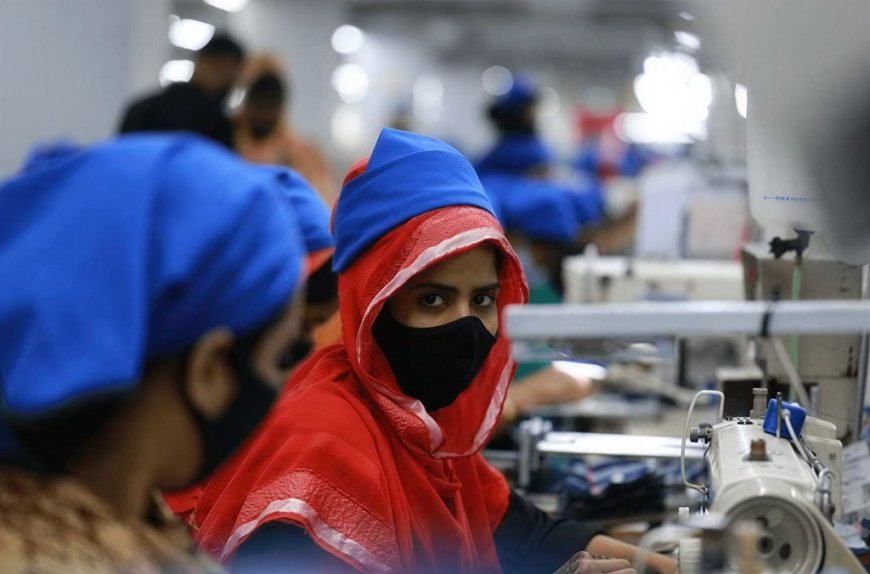
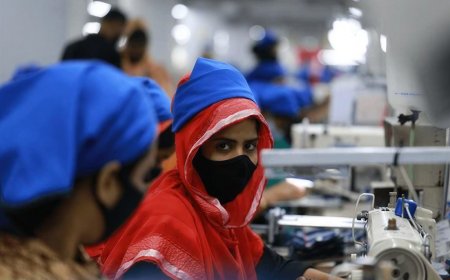
Twelve percent. In a factory office on the edge of Ashulia, that number decides whether 800 sewing machines keep running. Picture the owner in the last week of October, a spreadsheet open on his screen with two columns, while downstairs his workers stitch cotton T-shirts bound for a discount chain in Germany.
The first column shows what each shirt earns today, entering Europe duty-free. The second shows the same shirt with roughly 12% added at the border. In the second column, the order does not exist.
The buyer has already said so, politely, by email: If the numbers change, next season goes somewhere else.
On the night of October 29, in New York, that second column was hidden for three more years.
The owner is invented. The spreadsheet is not. Some version of it has been open in factory offices across Gazipur, Narayanganj, and Chittagong all year.
That is why the UN's decision to defer Bangladesh's graduation from the Least Developed Country (LDC) category was the right one. It is also why it will be worthless if we treat it as a holiday rather than a deadline.
What New York Gave Us
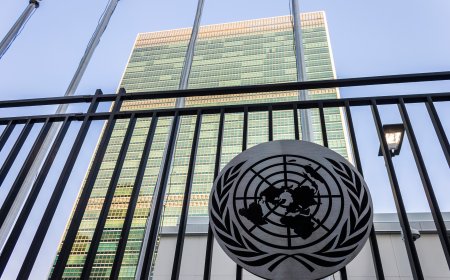
The UN General Assembly adopted a resolution on October 29, New York time, extending Bangladesh's preparatory period by three years, from November 24, 2026 to November 24, 2029. Uruguay moved the proposal on Bangladesh's behalf.
The European Union, Canada, Australia and New Zealand spoke in support, and the G-77 had already backed the request. The session was chaired, as it happens, by the President of the 81st General Assembly, Bangladesh's own Foreign Minister, Khalilur Rahman.
What the decision preserves is concrete. Duty-free, quota-free access to our major markets now continues until November 2029, sparing exporters an average tariff of around 12.5%.
In June, Commerce Minister Khandakar Abdul Muktadir told Parliament that exports worth $17.5 billion were exposed to the loss of preferences. One recent analysis estimates that trade preferences carry 73% of everything Bangladesh sells abroad.
It is worth being precise about what the UN did not do. It did not say Bangladesh failed to qualify. The UN Committee for Development Policy confirmed that we met all three graduation criteria.
The framework does not normally treat a political transition as grounds for more time, but the UN accepted that our recent transition was complex enough to merit an exception. In plain words: We earned graduation. What we lack is readiness.
Why Asking for Time was the Right Call
Graduation was sold to us as a trophy. For years it appeared on billboards and in speeches as proof that Bangladesh had arrived. Even the Commerce Minister now admits the achievement was politically glorified while its economic and financial costs were ignored.
A UN assessment earlier this year found our financial preparedness weak and the government's own smooth transition strategy barely implemented.
Now look at the economy that would have absorbed the shock this November. The IMF projects growth of just 3.2% in FY2026-27, which would be the lowest since 1988-89, with average inflation climbing to 10.9%. Private sector credit growth fell to 4.5% in June, a 33-year low.
The World Bank reports that non-performing loans reached 33.2% of the banking system, and that relaxed provisioning rules are hiding roughly $17 billion in losses from view.
Into that economy, graduation on schedule would have dropped a tariff wall on our single largest source of foreign exchange. Factories already struggling with gas shortages and expensive credit would have faced buyers asking for a 12% discount overnight.
Jobs, overwhelmingly women's jobs, would have been the first casualty.
Some have called the deferral humiliating. It is not. A student who has passed the exam but cannot yet afford the fees does not prove anything by dropping out to save face.
Pride does not pay wages. Asking for time, and getting it with the backing of our biggest trading partners, was an act of realism, and realism has been in short supply in Bangladesh's economic policy.
The Case Against Deserves a Hearing
The critics of deferral have a serious point, and it should be stated in its strongest form. Bangladesh has a national reflex for rescheduling. We reschedule defaulted loans, relax provisioning rules, extend deadlines for reform, and call it flexibility.
A three-year extension, the argument goes, is simply the same reflex at the level of the state. Deadlines force decisions; removing one removes the pressure.
There is also a harder truth about competitiveness. A garment sector whose margin depends on a tariff preference is not truly competitive; it is subsidized by European and Canadian taxpayers.
Vietnam sells into Europe through a free trade agreement, not charity. Every year we spend inside the LDC shelter is a year our exporters are not forced to raise productivity.
The critics are right about the risk. They are wrong about the remedy. Graduating in November into a banking crisis and an energy shortage would not have produced reform; it would have produced closures.
The real danger is not the delay itself but what we do with it. And this time, the UN granted the extension on an exceptional basis. Nobody should expect a second one in 2029.
There is one more thing the critics should notice. The government that asked for this time was elected in February 2026, so the new deadline falls squarely within its own term. In 2029 there will be no interim government and no previous regime to blame. The clock now belongs to the people who asked for it.
What Three Years Can Buy
Used well, three years is a long time in trade policy. Here is what Bangladesh can realistically do with it.
The most valuable thing it can do is lock in market access before the shelter expires. The Economic Partnership Agreement already concluded with Japan shows that our negotiators can close a deal.
Talks with South Korea are under way, and the government has said it wants an agreement with the European Union before graduation. If those deals arrive in 2027 or 2028 rather than in the final weeks of 2029, exporters will have time to plan around them instead of scrambling.
Bangladesh can also prepare now for the route most exporters will rely on in Europe after graduation: The EU's GSP+ scheme. Unlike the current Everything But Arms arrangement, GSP+ ties tariff preferences to implementing international conventions on labour rights, human rights, the environment and governance.
Its rules of origin for clothing are also stricter, so more of the fabric has to be made at home. Seen this way, labour reform and investment in spinning and weaving mills stop being concessions to foreign buyers. They become the price of keeping the European market.
None of that will matter much if factories cannot borrow, which makes cleaning up the banking system a trade policy too. The World Bank has suggested completing asset-quality reviews quickly to establish which banks are viable.
Publishing those results, and resolving the banks that cannot survive instead of granting another round of forbearance, would do more for exporters than any single tariff concession.
The same is true of energy. A trade agreement is of little use to a factory that sits idle for lack of gas, so a credible plan for industrial power supply belongs at the heart of the graduation strategy rather than in a separate ministry's file.
The three years also offer a chance to widen the export base beyond the T-shirt.
Pharmaceuticals, leather, light engineering and IT services each have room to grow, though pharmaceuticals will also lose the patent flexibilities that LDCs enjoy and will need time to adjust. Sector plans with realistic export targets for 2029 would give investors something to aim at.
What could tie all of this together is something simple and inexpensive: A public graduation scorecard, updated every quarter and presented to Parliament, showing progress on trade deals, banking reform, energy and diversification.
A deadline that nobody tracks quietly stops being a deadline. A scorecard that citizens, businesses and journalists can see makes the time much harder to waste.
The Second Column is Still There
Back in Ashulia, the owner can close the spreadsheet for now. But the second column has not been deleted, only hidden. On November 24, 2029, it opens again, and it will show the same 12% unless something else in the numbers has changed: Cheaper credit, reliable power, a trade agreement, fabric woven at home, a buyer who stays because the factory is good rather than because it is cheap.
The UN has given Bangladesh time. It cannot give us readiness. That part is ours, and the clock started on October 29. Three years is enough time to prepare. It is also exactly enough time to waste.
Suborna Akther Laboni is a researcher at Dacca Institute of Research and Analytics (daira).