







































































The Age of Petroleum is Over. And Only One Country is Prepared.
China has sketched a hull that sails the world's oceans for years at a time without taking on a single drop of it. The ship that never stops for gas. And the ship that never refuels is a ship that can never be cut off at a choke point.

For over a century, the entire modern world has run on one thing: Oil. It powers our cars, our factories, our militaries, and the countries that sit on top of it have shaped the last hundred years of history.
Nations have gone to war over it. Economies rise and collapse with its price. So, when a Chinese research team announced they had developed a way to produce clean, usable fuel without pulling a single drop of oil out of the ground, the rest of the world didn't quite know how to react.
The process uses nothing but sunlight, water, and carbon dioxide pulled straight from the air -- and turns them into fuel that runs in engines built today, with no scarce metals and no drilling. Early results suggest it could be made at a cost that oil simply cannot compete with.
The countries whose entire power rests on crude are watching very closely. Because if this works at scale, the map of who controls the world's energy gets torn up completely -- and someone stands to lose everything.
China's Oil Dependency
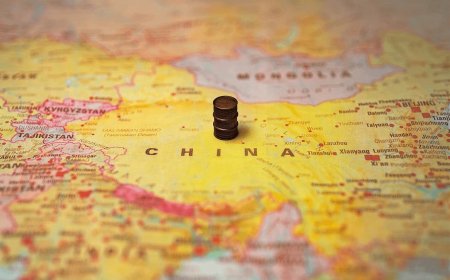
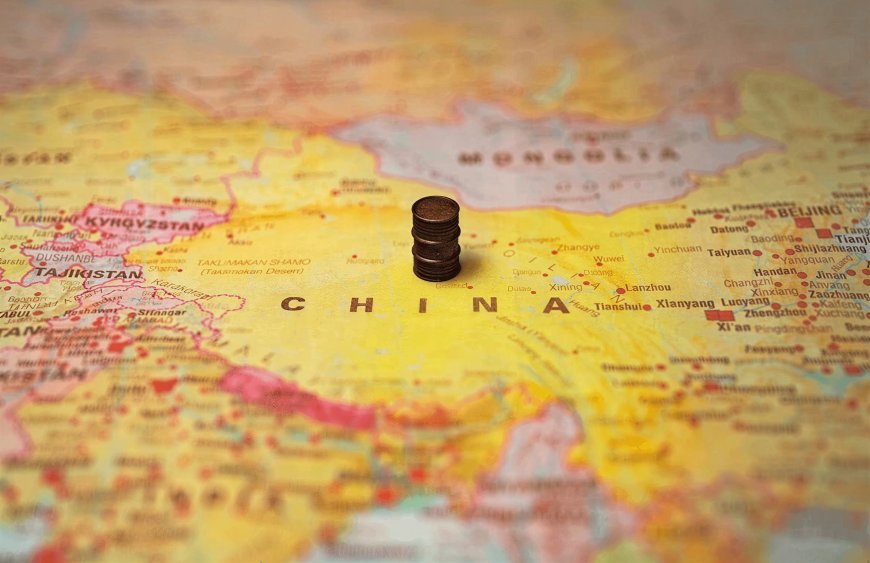
Here’s a fact of life. China burns 15 million barrels of crude oil per day, and more than 70% of it arrives by sea, through a stretch of water another navy could close in a single afternoon.
So, as the West spent the last decade fighting over pipelines and drilling permits, China quietly went to war with oil itself. Not with speeches or poetry, but with machines.
And here’s the part almost nobody in the West is talking about. China is not doing this to save the planet. China is doing it because it has no other choice.
This is what they’ve done.
They’ve transformed solid volcanic rock by pulling it into a thread eight times stronger than steel.
They’ve made gasoline already pumping in Shandong Province out of thin air.
They’ve built a Net Zero nuclear reactor in the Gobi desert that runs on a metal China used to throw away as garbage.
And they’ve built a cargo ship that navigates across the Pacific without ever taking on a single drop of fuel.
Because this was never really about one invention. It’s about who controls the energy of the entire next century.
Beijing's Strategic Dilemma
The story starts with a nightmare that keeps Beijing's strategic planners awake at night. A gap of water less than 3 kilometers wide at its tightest. When we look at a map of how oil actually reaches China, we notice something terrifying -- if you are the one in charge.
Roughly 80% of every barrel China imports by sea funnels through one narrow passage, the Strait of Malacca flowing between Malaysia and Indonesia.Strategists have a name for this. They call it the Malacca Dilemma. One choke point, one blockade, and the machine that runs the largest economy on Earth starts to choke with it.
No shots have to be fired. No war has to be declared. A single line of warships across 3 kilometers of water. And within weeks, the trucks stop. The factories slow and the grid starts to flicker. That’s why every leader in Beijing knows the exact width of that gap under three kilometers.
China tried the obvious fix. It spent enormous money on overland pipelines through Central Asia, through Russia, and through Myanmar. All part of the Belt and Road push.
On paper, it looks like insurance. In practice, it’s not even close. Here’s the brutal math. The China-Myanmar corridor moves around 420,000 barrels a day. The sea routes move more than 6.5 million. The pipelines are a garden hose next to a fire hydrant.
You cannot pipe your way out of a problem that size.
And there’s a second trap underneath the first one. Even if you secure every drop, you'd still be buying it from someone else on someone else's terms, priced in someone else's currency, shipped through someone else's territory.
A country that imports more than seventy percent of the single most important substance in its economy is a country that never fully controls its own future.
Diversifying where the oil comes from does not fix that. It just spreads the leash around more hands. So, China built an innovative and interconnected machine-architecture around the problem, and began to answer that 3-kilometer-wide question.
China looked into every place where oil hides in a modern economy, and built a machine to take its place.
Looking at the problem, China made a decision most countries never even consider. Instead of trying to secure the oil, they decided to make the oil unnecessary.
Not by finding more of it, but by replacing what it does. Not with one silver bullet, but with a coordinated attack on five fronts at once: the fuel in the tank, the plastic in the packaging, the steel in the frame, the refinery that processes it, and the power plant that runs the whole chain.
Now let’s break the tech race down. This is where it gets strange because the first front in this war is not fuel at all. It is the stuff things are made of.
Replacing Steel
Here is something they do not teach you about oil. A huge slice of every barrel never gets burned. It gets turned into plastics, resins, and synthetic fibers. And the metals we build with steel and aluminum take enormous amounts of fossil energy just to smelt.
So, if you want to kill oil, you cannot only replace the fuel, you have to replace the material.
China's answer to steel is, of all things, a rock. Basalt, the dark volcanic stone that half the planet is paved with.
Chinese factories take raw basalt, melt it at around 450 degrees Celsius, and push the molten stone through bushings made of Platinum alloy, drawing it out into filaments finer than your hair.
Raw rock in at one end, high tensile thread out the other. That’s the whole cascade. No oil anywhere in it. And from that thread they weave rebar, turbine parts, and the frames of cars.
This basalt fiber has a tensile strength between 800 and 4,800 Megapascals. At the top of that range, that’s up to eight times the structural strength of ordinary steel at roughly 25% of the weight.
In other words, something stronger than steel that can pretty much float in comparison. And it does things steel simply cannot. It doesn’t rust. It shrugs off salt water. It doesn’t conduct electricity. And it is almost invisible to radar. Every one of those is a weakness in steel that China just deleted.
So where does China put it?
Start with the militarized artificial islands in the South China Sea. Fiery Cross Reef, Mischief Reef, and Subi Reef. Concrete reinforced with ordinary steel out there corrodes in tropical salt water in about 25 years. Reinforce it with Basalt fiber instead, and the design life jumps to roughly 100 years.
Strategically, that means that China is building military outposts engineered to outlast the people who ordered them in one of the most contested waters on the planet.
The radar transparency is the other half of the trick. It is exactly why the same material shows up in the domes that hide military radar antennas. In electric cars, Basalt battery enclosures cut frame weight by 60 to 70% versus steel, which buys up to 50 extra kilometers of range on a single charge.
And every gigawatt of offshore wind turbine China builds swallows 50 to 80 tons of this fiber. So, the same rock strengthens the islands, lightens the cars, and holds up the wind farms. One material doing the work oil, heavy composites, and smelted steel used to do.
Now, here it is the part that should make Western manufacturers nervous. China already controls over 52% of the Asia-Pacific basalt fiber market.
They possess the data from around 30 years of quietly tuning their furnaces to the exact chemistry of their own rock. Imagine if the United States had spent three decades perfecting a super material, and never made the front page. That’s where China already is.
Replacing Plastics
And the material next to it on the list does not come from a rock at all. It grows in a field. Because the other half of the oil as material problem is plastic. A forestry team in northeast China went after it with bamboo.
They re-engineered bamboo cellulose down at the molecular level and produced the structural bio-plastic that is 100% plant. Zero petroleum in it and it matches the strength of the commercial plastics you throw away every day. Except this one fully decomposes in soil in about 50 days, not 50 years the way an ordinary plastic bottle lingers and participates in the ongoing ecocide.
That’s 50 days. It comes out of a plant. It does its job and it goes back into the ground before the season turns. And here is the twist that makes this even better It’s not just bamboo.
Along the Yangtze River, Chinese industrial botanists have scaled up a fast-growing grass called miscanthus.
A company in Shisho, Hub Showing Industrial Area, pulls cellulose and lignin out of that grass to make bio-resins and farm films that biodegrade completely. They’re bringing a 10,000 ton a year bio-refinery online.
And here’s where the scale stops being cute and starts being frightening for a petrochemical executive. Under China’s next 5-year plan, running from 2026 to 2030, the stated goal is to scale this across China's roughly 1 billion tons of crop straw waste every year.
The leftover stalks farmers used to burn in the fields become the feed stalk that eats into a 700-billion-dollar global plastics market. A waste stream on one side, a market worth almost three-quarter of a trillion dollars on the other, and China is building the bridge between them.
Imagine an American startup announcing that it would replace a chunk of the entire plastics industry using literal farm garbage. It would be the biggest story of the year.
In China, it’s a line item in a government plan.
Replacing Fuel
So, the materials are sorted. But oil's real crown jewel is still the fuel. And that’s where China's next machine does something that sounds physically impossible. It makes gasoline without a drop of crude.
Exceptional systems thinker, Chinese problem solvers went after the refinery itself. Because refining oil is one of the dirtiest steps in the whole chain. Conventional refining works by boiling crude over and over, separating it by tiny differences in boiling point.
Globally, that process alone throws off about 1.3 gallons of carbon dioxide a year, roughly 4% of all human emissions from heating. So, researchers at the Dalian Institute of Chemical Physics, part of the Chinese Academy of Sciences, asked the heretical question: “What if you never boil it at all?”
Their answer, published in the journal National Science Review, is what they call molecular refining, and it runs at room temperature.
Here's how it works plain terms. Instead of a furnace, they use a stack of ultrafine filters. Membranes built from a material called a metal organic framework, a kind of molecular sponge riddled with holes of a very exact size. The specific one they start with is called CuBTC.
And they etch it with tannic acid so precisely they can tune those holes in increments as small as 100th of a nanometer. Let that land for a second. They’re adjusting the size of a doorway by 100th of a billionth of a meter, small enough to tell one type of molecule from another by shape alone.
The first membrane sieves out the small straight molecules by size. That stream goes straight to making ethylene and other chemicals.
Whatever is too big to fit flows onto a second membrane which no longer source by size, but by surface chemistry and pulls high octane gasoline directly out of the mix.
No boiling, no heat, no phase changes, just molecules walking through doors sized exactly for them. In testing on a 15 component naphtha mixture, a generally messy real-world feed, they hit 85 to 90% recovery on each of three separate product streams.
And because nothing is ever heated, the whole process uses 91% less energy than traditional distillation. 91%. One of the most energy hungry industries on the entire planet. An industry that runs on constant fire, redesigned to run cold. If that scales, it does not just cut costs. It quietly erases a chunk of the 4% of global emissions that refining is responsible for.
Replacing Reactors
But sorting oil more cleanly is not replacing it. Making it from nothing is. And that is exactly what the same institute did next. The team in Dalian built a catalyst, a blend of sodium, iron oxide, and a zeolite called HZSM 5 that pulls off a kind of chemical magic trick in a single reactor.
Feed in carbon dioxide and hydrogen. In the first step, the catalyst strips an oxygen off the carbon dioxide and turns it into carbon monoxide. In the second step, in the very same chamber, it takes that carbon monoxide and stitches the carbon atoms together into chains. The exact 5 to 11 carbon chains that make up gasoline.
Two reactions that normally need two separate plants have been neatly folded into one reactor. It's Fischer-Tropsch Chemistry. The same century old idea that kept armies running when they had no oil. Except China has tuned it to feed on the one thing the whole world is trying to get rid of.
The performance is what makes this serious. That sodium tweak on the catalyst suppresses wasteful methane down to just 4%. And it steers 78% of everything produced straight into gasoline-range fuel at a single pass conversion of up to 54%.
Those are not hobby numbers. This is not a beaker on a bench either.
Partnered with a company called Zhuhai Fuel Energy Technology, the institute built and ran a full pilot plant in Zhucheng in Shandong Province, producing 1,000 tons a year of high-octane gasoline, over 90 octane, meeting China's national fuel standard, the same grade you would pump into your own car directly out of a carbon dioxide feed.
The plant is running. It is making fuel. Today, picture what that actually means. You take the exhaust, the thing every other engine on Earth throws away, and you run combustion backwards. Air and water in, gasoline out.
And here’s the twist. Gasoline was only the warm-up, because you cannot fly a plane on a battery, and you cannot cross an ocean on one either. Those are the two fronts everyone said were impossible to decarbonize.
So, China went after both. At the Shanghai Advanced Research Institute, scientists took that same reverse combustion idea and stretched the molecules longer into the 8 to 6 carbon chains that make jet kerosene, carbon dioxide, and hydrogen in aviation fuel out in large-scale pilot testing.
And at the same time, other Chinese academy teams cracked something adjacent. Turning old plastic waste directly into high-grade jet fuel using cheap nickel cobalt catalysts instead of expensive precious metals at a liquid fuel yield of 82.3%.
So, now hold that image in your head. The garbage plastic in a landfill and the carbon dioxide in the sky both become fuel for a jet. But every one of these machines, the cold refinery, the thin air gasoline, the plastic to kerosene, has the same hidden appetite.
They all need enormous constant clean heat and power -- solar and wind cannot deliver that around the clock. So, what runs all of it? The strangest machine on this list. And it is powered by trash.
Mining Trash
For decades, China dug up a mineral complex called Baiyun Obo in Inner Mongolia for its iron and its rare earth metals. And for decades, they piled up the waste tailings and ignored them.
But inside that waste sits thorium, a nuclear fuel that is three to four times more abundant in the Earth's crust than the Uranium every conventional reactor runs on.
A national survey by the key laboratory of Uranium resources exploration mapped 233 thorium-rich zones across China and Baiyun Obo alone is estimated to hold around 1 million tons of thorium.
Here is the number that should stop us in our tracks. Processing just five years of the accumulated waste from that one mining complex would yield enough thorium to power all of China for millennia. The garbage pile is a 1,000-year battery. The catch is that thorium is stubborn. It does not split easily on its own.
So, in the Gobi Desert near Wuwei in Gansu province, the Shanghai Institute of Applied Physics built a reactor to tame it. They call it the LF1, a 2-megawatt liquid fuel molten salt reactor. And instead of solid fuel rods, the fuel is dissolved right into a molten salt that flows through the core like hot syrup.
The milestones came fast. It went critical on October 11, 2023. It reached full design power on June 17, 2024. And then on November 1, 2024, the institute confirmed the one that matters, the world's first successful conversion of thorium into usable nuclear fuel, Uranium-233, inside a running molten salt reactor.
Nobody had ever done that in an operation machine. And in October of that year, they refueled it while it was still running, adding fresh fuel straight into the flowing liquid, no shutdown. Something a normal reactor physically can't do. And the safety design is both efficient and elegant.
It runs at near normal pressure, so it needs none of the massive steel pressure domes a conventional reactor has to be wrapped in to hold back 150 atmospheres of steam.
The molten fluoride salt stays liquid across an enormous range from around 500 degrees to over 1,400. If the core overheats, the salt simply expands, gets less dense, and the reaction naturally slows itself down.
Physics doing the work a control room used to do. And if the power ever failed completely, utter catastrophe.
The exact nightmare that played out at Fukushima. A frozen plug of salt at the bottom of the vessel melts on its own, and gravity drains the entire fuel load down into tanks where it cools and hardens into solid rock.
A meltdown drained away by nothing but gravity and heat. There’s no water anywhere in the design to flash into steam and blow the lid off because the thing needs no cooling water at all.
And that last detail is the strategic one. No water requirement means you can build this reactor in the driest, emptiest place you can find.
Which is exactly why it is sits in the Gobi, right next to the fuel factories and hydrogen plants that are starving for its heat. It even leaves behind far less long-lived radioactive waste than a conventional plant because the liquid fuel burns more completely.
The plan from here is a 100-megawatt demonstration plan by 2035, a fifty-fold jump from the machine running today.
And Chinese ship builders have already drawn up what it’s really for. A container ship called the 24 for twenty-four thousand containers with one of these thorium reactors sitting in its belly.
The single biggest consumer of dirty bunker fuel on Earth is the global shipping fleet. And China has sketched a hull that sails the world's oceans for years at a time without taking on a single drop of it. The ship that never stops for gas. And the ship that never refuels is a ship that can never be cut off at a choke point.
Now at this point it’s easy to surmise that China has already replaced oil, or that one of these -- the reactor, the thin air gasoline, the rock thread -- is the single new invention in the title that kills crude forever.
Here is the reality check. None of them does. Not one. Because oil stands on two legs, not one. It is the most energy dense liquid fuel we have. And it is the raw feed stock for almost all of modern chemistry and materials.
But all of these inventions and innovations put together mean that the post-petroleum age is almost upon us, and there is only one country leading the charge.
Sohel Nadeem Rahman is an Industrial Psychologist specializing in Neurocognitive Systems, Behavioral Finance, and Strategy.