

























































Where the Poor Pay the Most
Rent in the slums exceeds Tk40 per sfqt, surpassing the costs in more developed regions. For comparison, businesses in the Motijheel commercial, specifically in Arambag, pay around Tk22.73 per sfqt. Even in prime locations near Bangladesh Bank, the rate is only Tk33.33 per sfqt.

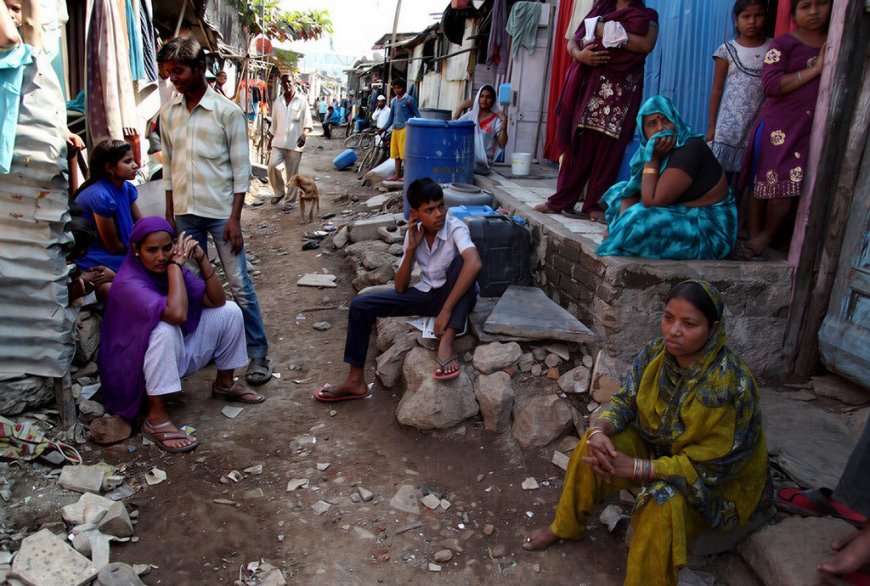
Shah Alam pedals his rickshaw under the scorching sun, in heavy traffic, and sometimes in the rain to support his family. Despite all his hard work, he can only afford a small 110sfqt room in the three-story pucca building for his family of seven next to Buddhijibi Road in Rayer Bazar, Dhaka South.
The cozy room he calls home is on the ground floor next to the stairs. After placing a bed, there is barely any space left. In this room, the rickshaw puller, his wife, their two adult daughters, and three grandchildren -- all seven family members -- live together. The cost of the room is Tk4,500 per month.
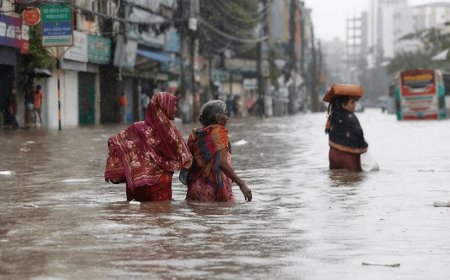
Some family members sleep on a bed while others rest on the floor. During the monsoon season, their rooms flood with rainwater, making their lives much more difficult. In such situations, they simply wait and hope for the sunrise.
Showing the small room, which barely had space after placing a bed, Mokseda Akter, the rickshaw puller's wife, said: “This is our living space. Seven of us share this room: My husband, our three grandchildren, and I manage to fit on the bed, while my two adult daughters sleep on the floor each night.”
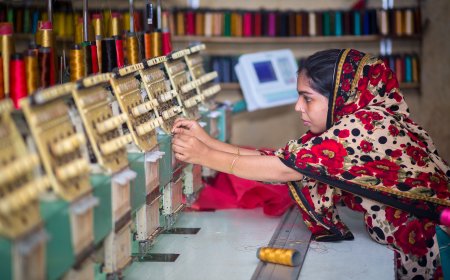
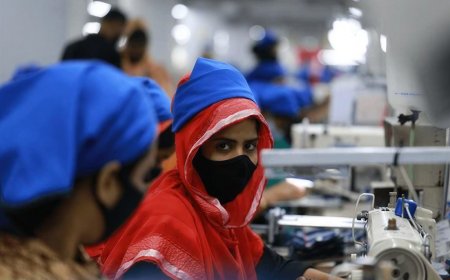
Due to age-related complications, Shah Alam can no longer pedal rickshaws for extended periods. To support the family, his two adult daughters started working at a garment factory.
His daughter, Rima Akhter, said: “We two sisters shared a small room with our parents and children. My father pedals a rickshaw, earning barely Tk8,000 to Tk9,000 per month, which is insufficient to have a roof over our heads and bring food for the family. So, my sister and I started working at a garment factory to support our family. All combined, we earn around Tk30,000 per month.”
Responding to a question about how difficult it is to live all the family members in one room, she added: “For a decent lifestyle, we need at least two rooms. We would be starving if we rented more than one -- it would cost Tk9,000 per month, which is out of our budget. We don’t have the option to cut the food, so we live in a small space within our budget.”
Females need to maintain some menstrual hygiene during their monthly period cycles. But these girls needed to share their toilets with four other families, causing risks to their menstrual health as well, and she further added: “We even share toilet and kitchen facilities with four other families, comprising over 20 people, on a regular basis.”
Monir Hossen, an ambulance owner, lives in one of the four rooftop rooms of the building. He bought his ambulance two and a half years ago with a Tk18 lakh loan. Despite earning over Tk1 lakh per month, he only takes home Tk35,000 after paying Tk65,000 in expenses, including loan repayments and salaries for helper and driver.
His wife, Reshma Akhter, explained their struggles: “We pay Tk65,000 on our loan every month. Even though my husband's earnings are good, most of it goes towards debts, so our living conditions haven’t improved. Our tin roof makes it unbearable during heatwaves, forcing us to stay at my parents' house with our two children. We pay Tk4,500 in rent for this tiny room and Tk10 per unit for electricity, with this month's bill being Tk1,500.”
What they spend on house rent constitutes over 12% of their monthly income.
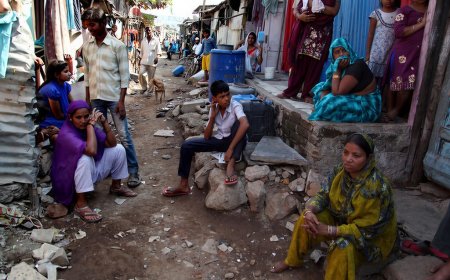
Similar conditions prevail among most families in the area. They pay over Tk40 per sqft for rent. Most residents earn an average income of Tk30,000, and most spend in the region of 15% of their income on housing.
They live in very harsh conditions, with more than 20 people sharing a single toilet and kitchen, highlighting the significant inequalities in housing within the city.
Dhanmondi 15 No area is another area where mostly people who earn an average of Tk30,000 or less reside. Most of them are either CNG drivers, rickshaw pullers, or employed at garment factories.
The conditions in this pucca slum are similar to those in the Rayer Bazar slum. Conversations with Mofajjol Hossain (rickshaw driver), Tobarok Mia (CNG driver), and Morzina Akter (garment worker) revealed that they pay slightly higher rent here. For a room about 110sqft to120sqft, they pay between Tk4,500 to Tk5,000 per month.
Additionally, on average, 20 people share a single toilet and kitchen in this area.
Rent in these slums exceeds over Tk40 per sqft.
Comparative Rent Dynamics in Motijheel and Bashundhara areas
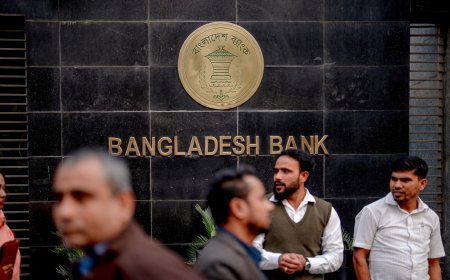
While visiting the Motijheel commercial area, it was observed that shops in the prime commercial area near Bangladesh Bank pay Tk33.33 per sqft, which is lower than the pay rate of Buddhijibi and Dhanmondi No 15 pucca building slum dwellers.
Robiul Islam runs a bookstore in an alley next to Bangladesh Bank in the Motijheel. He said: “My bookstore is 1,500 sqft. I pay about Tk50,000 for rent, with utilities costing Tk2,500 and the electricity bill amounting to Tk2,500. My monthly income is Tk200,000.”
He pays Tk33.33sfqt.
When visiting other parts of the Motijheel area, such as Arambag, rental prices are comparatively lower than those in prime locations. However, slum dwellers still pay higher rents than those in areas like Arambag.
Rezaul Karim Mithu supplies garment accessories in Arambag, Motijheel. His inventory includes paper and knitting items. His office occupies 1,750sqft, for which he pays rent of Tk25,000. The electricity bill ranges between Tk20,000 and Tk25,000. His profit amounts to Tk200,000. He pays Tk14.29 per sqft.
Mehriba Jafrin lives in Block A of Bashundhara's residential area. Her apartment is 1,600sfqt, and she pays a total rent of Tk35,000. Their total family income is Tk300,000.
She pays 11.67% of their family income in house rent and Tk21.88 per sqft.
Similar pictures were seen in other families living in the area.
Mariya Hossen lives in Bashaundara area. Her house is 1,200sfqt. For this, she pays Tk23,000. Her family’s monthly income is Tk85,000.
She pays Tk19.17 per sqft and spends 27. of her family’s total income on rent.
Do bosti dwellers pay more per square foot than residential and commercial areas?
The bosti dwellers of Buddhijibi Road (near Rayer Bazar) and Dhanmondi No 15 pay a higher rent per sfqt than residents of the Bashundhara residential area and business owners in the Motijheel commercial area.
Rent in the slums exceeds Tk40 per sfqt, surpassing the costs in more developed regions. For comparison, businesses in the Motijheel commercial, specifically in Arambag, pay around Tk22.73 per sfqt. Even in prime locations near Bangladesh Bank, the rate is only Tk33.33 per sfqt.
Meanwhile, the Bashundhara residential area rate is about Tk21.88 per sfqt, which is still less than what is paid for in the slum area.
People living in the Bashundhara Residential Area pay a lower rate per square foot than those in well-established slum areas. Additionally, in Bashundhara, one or two individuals typically share a washroom, whereas in the slums, about 20 people may share a single toilet. They still paying per square foot higher.
Which authority is responsible for this rent injustice?
Regarding this rental injustice to the poor, National Housing Authority (NHA) Chairman (Additional) Hamidur Rahman said it is not NHA’s department to say that. When asked who is responsible for this, he ignored the question.
What do experts say?
When asked about the responsibility for these injustices in slum area, such as poor living conditions and high rents, Nazrul Islam, chairman of the Centre for Urban Studies (CUS) said: "The government, specifically the Housing Ministry's public works, is responsible.
Under this, the National Housing Authority is tasked with providing housing for low-income and middle-income groups, whereas RAJUK primarily serves upper, middle, and affluent families by providing land."
He further explained: "The primary responsibility lies with the government for housing the poor. Ultimately, the government is constitutionally bound to do so, as stated in the housing policy, though currently, it is not very active in supporting the poor, similar to employment, predominantly in the informal sector where the government offers little assistance."
Discussing the informal sector, he said: "Poor people’s homes in the informal sector are built without any official approval and without adherence to regulations. Just as shops are spontaneously built, so are slums. No rules are followed, making it unrealistic to expect law enforcement in these areas.”
He further said: “Humanitarian actions can be taken, such as advising landlords not to charge excessive rent or evict tenants and to provide services. Organizations like WASA help in slums by providing water through initiatives like Korail Bosti.
This supports the poor positively, although rent control is non-existent in slum areas. Due to the lack of approved housing plans and registration, the housing remains entirely informal, and thus, the legal and regulatory framework does not apply."