






























































Trapped Owners, Squeezed Workers: Why the RMG Crisis Needs a Structural Fix
Does Bangladesh really need more than 2,000 garment factories? A smaller number of larger, stronger firms would serve the country, its workers, and its economy far better.

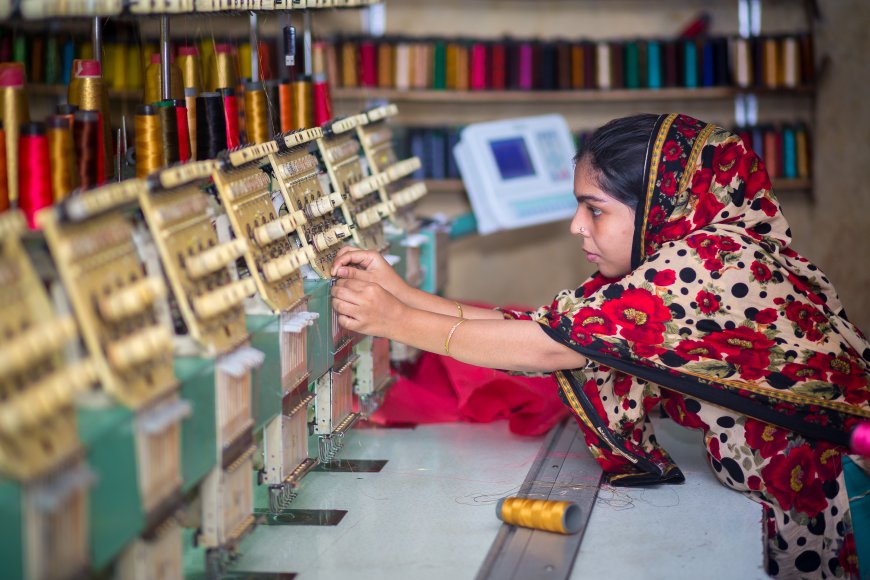
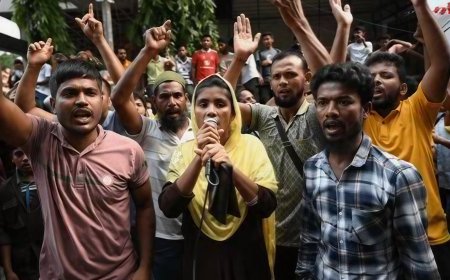
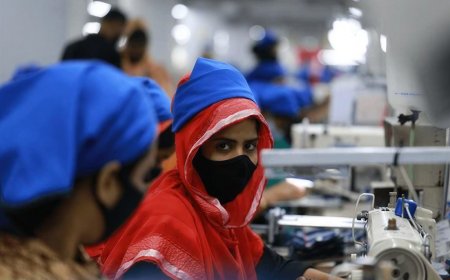
Every three to five years, Bangladesh goes through the same ritual. Garment workers take to the streets, a new minimum wage is negotiated under pressure, calm returns, and everyone moves on until the next round.
The current unrest is only the latest episode. We keep treating each outbreak as a wage dispute to be settled. It is not.
The wage crisis is a symptom of a deeper structural problem in our RMG industry: It has too many factories, too little bargaining power, rising costs, and no orderly way for weak firms to leave. Until we fix that structure, no wage settlement will last.
This time the pressure is greater than usual. Inflation has eroded real wages, private investment is at an all-time low, youth unemployment is high, city authorities are cracking down on hawkers who often join the protests, and the Awami League is trying to exploit the unrest ahead of Sheikh Hasina's announced December return. But these are triggers. The fuel was laid long before.
An Industry Losing its Edge
The uncomfortable truth is that our RMG sector is steadily losing its overall competitiveness. Three costs are moving against us at once: Expensive energy, rising labour costs, and heavy dependence on imported raw materials.
The energy squeeze is severe. Gas and electricity shortages force many factories to run on diesel almost half the time, and both diesel and gas prices have risen.
Meanwhile, what buyers pay keeps falling. According to Eurostat data, our average apparel price in the EU, our largest market, dropped 7.43% to €13.76 per kg in January-August 2026, far below the EU import average of €19.65. Vietnam, by contrast, has moved up the value chain and earns well over twice our price per kilogram.
The result is that the industry is no longer as profitable as it was even a decade ago. Nor is there any sign that the good years will return: Both global demand and supply chain dynamics have changed for good. We should stop waiting for the old model to recover and start adapting to the new one.
Too Many Factories, Too Little Bargaining Power
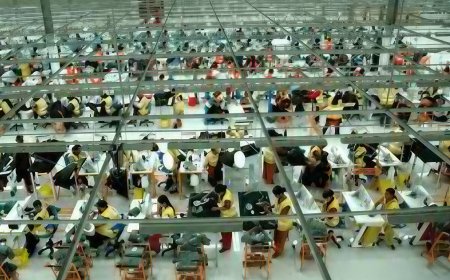
On top of rising costs, the industry suffers from significant overcapacity. More than 2,000 active factories are chasing a shrinking pool of orders.
To keep their lines running, many manufacturers undercut one another, sometimes pricing below cost just to use idle capacity. This domestic price war hands the gains to foreign buyers. It does nothing for our factories, and nothing for our workers.
A fragmented industry of thousands of small and mid-sized suppliers has very little power at the negotiating table. As long as that remains true, buyers will keep pushing prices down, and the pressure will keep landing on wages.
No Way Out: Why Weak Factories Keep Running
In a healthy market, unprofitable firms close and capacity adjusts. In our RMG sector, that does not happen, because owners cannot afford to leave.
Many owners would gladly exit; their profits have become thin or vanished altogether. But a mid-sized factory employing 5,000 to 10,000 workers would owe more than Tk 100 crore in worker compensation to shut down. Most owners could not raise that even by selling every asset. Many also carry rescheduled bank loans, so closing would turn them into loan defaulters overnight.
So they keep running at an operating loss, taking orders at any price. This is what keeps overcapacity locked in, and the price war alive.
Workers Pay the Price
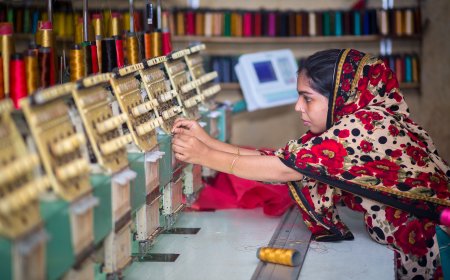
At the bottom of this chain are the workers. At today's inflation, the Tk 12,500 minimum wage no longer covers basic living costs. At the current exchange rate, it is worth only about $102, less than the $114 it was worth when set in 2023. According to CPD, competitors pay $170 in Vietnam, $171 in India, $200 in Cambodia and $243 in Indonesia.
Most workers do earn above the minimum, as senior grades get 30 to 50% more. They still back a big increase, to Tk 25,000 or Tk 30,000, because the whole grade structure rises with it.
The anger also reflects a wider sense of injustice. The government recently raised pay for nearly 18 lakh public employees by around 100%, while private-sector raises, in RMG and beyond, stay below 10% a year.
It has also announced a Tk 60,000 crore package for business entrepreneurs, many of whom received and misused similar support from past governments. To many citizens, it looks like socialism for the elite and capitalism for workers.
So workers cannot survive on current wages, and many owners cannot afford higher ones. Both are true, and both trace back to the same structural problem.
The Structural Fix: Fewer, Stronger Factories
We need to ask a hard question: Does Bangladesh really need more than 2,000 garment factories? A smaller number of larger, stronger firms would serve the country, its workers, and its economy far better.
The path is consolidation. Through mergers and acquisitions, weaker factories can be absorbed into stronger ones. That would bring three gains:
Bargaining power: Fewer, larger suppliers could negotiate better prices with buyers instead of undercutting one another.
Efficiency: Bigger firms gain from economies of scale and can spread fixed costs, including energy, across more output.
Modernization: Stronger balance sheets make it possible to invest in technology and move into higher-value products.
Consolidation will not happen on its own while exit remains so costly. The government must therefore design a clear exit policy that lets owners leave the industry at a much lower cost. Owners who want out should have a workable route, rather than being forced to run loss-making factories indefinitely.
Only when the industry can earn decent prices will it be able to pay decent wages. That is how we break the cycle.
Let Creative Destruction Do its Work
If we settle this round with another wage number and nothing else, we will be back in the same place in three to five years, with an industry even weaker than today.
Economists have a name for what our RMG sector now needs: Creative destruction. The idea, made famous by the Austrian economist Joseph Schumpeter, is that a market economy renews itself when old, inefficient firms give way to newer and more productive ones.
Last year's Nobel Prize in economics went to Philippe Aghion, Peter Howitt and Joel Mokyr for explaining how this process drives sustained growth. The lesson is simple: An economy grows only when it lets the weak make way for the strong.
That is exactly where our garment industry stands today. Thousands of factories are kept alive not because they are productive, but because they cannot afford to die. Keeping them on life support hurts everyone: Owners keep losing money, workers stay underpaid, and foreign buyers keep the gains.
The RMG sector carries our exports, our foreign currency earnings and the livelihoods of millions. Its future lies in fewer and stronger factories, a workable exit route for those who want out, and the bargaining power to earn fair prices.
A measure of creative destruction today is the price of an industry that can pay fair wages tomorrow, and of finally ending the cycle of unrest.
Fahim Mashroor is the Founder and CEO of bdjobs.com.