







































































When Journalism Chases Views
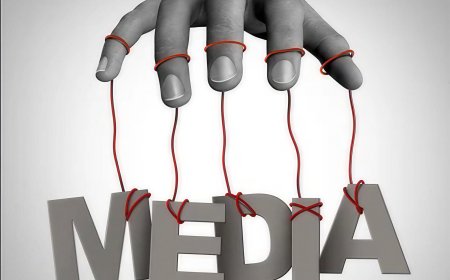
Journalism should be more than a delivery system for whatever happens to be viral. Its value lies in verification, context, scrutiny and public relevance. A society does not become better informed merely because more content is circulating.


“Man is born free, and everywhere he is in chains.” Jean-Jacques Rousseau opened The Social Contract with this famous observation. Centuries later, the chains may look different. In the digital age, one of them may be our growing dependence on attention: The pressure to remain visible, relevant and viral, whatever the cost.
A recent controversy surrounding a man known for provocative political and religious commentary has brought this problem into sharper focus. His recent remarks about actress Pori Moni have attracted considerable attention, but another aspect is perhaps even more troubling: A circulating video appears to show people presenting themselves, or appearing to work, as journalists encouraging him to make more provocative remarks.
I have not been able to independently verify the full context of that footage, so such a claim should be treated cautiously. Yet if journalists are encouraging abusive speech to generate attention, it raises a serious question about what journalism is becoming.
When does reporting controversy become participation in it?
The digital media economy has transformed attention into a valuable commodity. A thoughtful argument may take minutes to understand, while an outrageous remark can become a thirty-second clip and spread rapidly. The incentives are obvious.
Strong reactions bring comments, shares and views; views bring reach; and reach can translate into revenue or influence. But when attention becomes the measure of success, provocation can begin to look more valuable than substance.
That creates a troubling feedback loop. A person discovers that outrageous speech attracts an audience. The audience encourages more of it. Media outlets return for another reaction because the previous one performed well. The boundaries are gradually pushed further, until public discourse becomes less about ideas and more about spectacle.
This is where journalistic responsibility becomes crucial. Journalism has every right to report controversial statements when they are genuinely newsworthy. But there is a fundamental difference between documenting what someone says and prompting them to say something more offensive. The first can serve the public interest; the second risks turning the journalist into a participant in the spectacle.
The distinction matters because journalists possess a form of power that ordinary bystanders do not. A microphone, camera and established media platform can transform a fleeting remark into a national conversation. That power carries an obligation to exercise judgement. The question should not simply be, “Will this generate views?” It should also be, “Will this help the public understand something that matters?”
There is another reason for caution. Public figures and controversial personalities should certainly be open to scrutiny, but their conduct should not automatically be treated as representative of the religion, community or social group with which they identify. A person's clothing, religious appearance or public identity does not give that person authority to speak for an entire faith. Nor should individual misconduct be used to stigmatize millions of ordinary believers.
The audience, too, is part of this system. Media organizations respond to what people watch, share and reward with attention. If audiences consistently engage more enthusiastically with insults than with evidence, the market will respond accordingly.
This does not absolve journalists of responsibility, but it reminds us that media culture is partly shaped by our own choices as consumers.
The solution is not to suppress controversy or silence difficult voices. It is to restore proportion. Editors should ask whether a story informs or merely inflames. Reporters should distinguish between documenting offensive speech and facilitating it.
Audiences should learn to recognize when their attention is being deliberately converted into spectacle.
Rousseau's “chains” therefore offer an interesting metaphor for the present moment. We may have more opportunities to speak than ever before, yet the pursuit of visibility can make both speakers and media organizations dependent on increasingly extreme forms of expression. Freedom of speech loses something important when the loudest voice is repeatedly rewarded simply for being louder.
Journalism should be more than a delivery system for whatever happens to be viral. Its value lies in verification, context, scrutiny and public relevance. A society does not become better informed merely because more content is circulating.
Sometimes it becomes noisier.
The real test of journalism, then, is not how many views a story produces, but what those views leave the public knowing. If the answer is little more than another insult, another confrontation and another fleeting outrage, perhaps the problem is not that the public has lost its appetite for news. Perhaps journalism has allowed the appetite for attention to become the news itself.
Md. Yeasir Arafat is an undergraduate student from the Department of Political Science, University of Rajshahi, Bangladesh.