




























































Who Should We Believe: Abdur Razzaq or Mia Golam Porwar?
Acknowledging historical wrongdoing does not mean that present members inherit the criminal guilt of their predecessors. It means something more politically mature: Refusing to make the past innocent simply because the present finds it inconvenient.

Mia Golam Porwar’s argument about 1971 does more than reinterpret history. It shifts the source, nature and ownership of responsibility.
Imagine that armed men break into a house in the middle of the night. They kill members of the family, take some away, and force others to flee to the house next door. The neighbour gives them shelter, later supplies them with weapons, and eventually joins the fight himself.
50 years later, someone sits down to write the history of that night and announces that the real story was “the neighbour’s aggression.”
You would probably say: By all means, let us examine what the neighbour later did. Let us ask what interests he had, what advantage he sought, and whether his conduct was entirely altruistic. But first, one small question. Who broke into the house that first night?
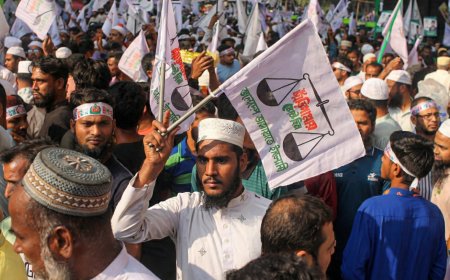
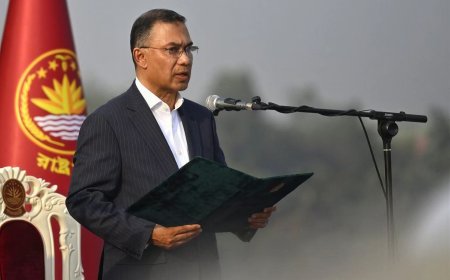
That is what came to mind when I read the latest remarks by Jamaat-e-Islami Secretary General Mia Golam Porwar. He has argued that Jamaat’s leaders in 1971 took a strong position in favour of a united Pakistan “against Indian aggression”; that Jamaat committed no criminal offence; and that, if one starts counting Razakars, the BNP would rank above Jamaat.
Put those claims together and a remarkably neat political manoeuvre emerges.
First, the source of responsibility moves from Pakistan to India. Then the nature of responsibility changes: Instead of asking what particular individuals and collaborative structures did in 1971, we are invited to ask whether an abstract entity called “Jamaat” itself committed a criminal offence. Finally, the ownership of responsibility moves from Jamaat to the BNP.
On Porwar’s historical stage, India is present, the BNP is present, and “the people” are present. Pakistan, curiously, is gradually moved into the shadows.
The phrase “Indian aggression” is therefore more than a colourful anti-India expression. It is a political frame that rearranges cause and consequence. If the Liberation War can be reconstructed primarily as a conflict between India and a united Pakistan, the Pakistani state ceases to be the principal actor in the crisis.
The 1970 election, the failure to transfer power to the parliamentary majority, the military crackdown of 25 March, Bengali resistance and the refugee catastrophe all become episodes inside a larger India-Pakistan story.
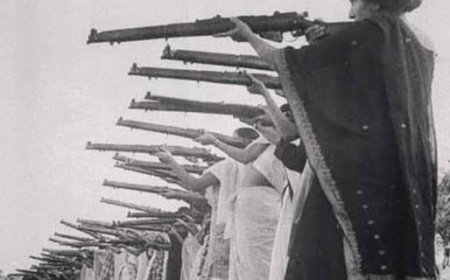
Chronology is inconvenient for this argument. The Pakistani military crackdown began in March. The full-scale India-Pakistan war came in December. Contemporary United States diplomatic records describe the violence unleashed by the Pakistani military in East Pakistan months before the final conventional war with India.
India certainly had strategic interests. It trained and armed Bengali fighters, sheltered refugees, faced the enormous pressure created by roughly ten million people fleeing across the border, and ultimately intervened militarily. Pakistan’s defeat also served Indian strategic interests.
None of that needs to be sanitized. States do not run charities in international politics, and India was no exception.
But the fact that India had strategic interests does not logically produce the conclusion that the central event of 1971 was Indian aggression. Nor can India’s December intervention be used retrospectively to explain away the Pakistani military crackdown that began in March.
More importantly, this framing diminishes Bangladeshi agency. The voters of East Pakistan had delivered an unmistakable democratic verdict in 1970.
The crisis over transferring power followed that verdict. Military repression and resistance followed. Bengalis were not spectators in an Indian project; they were political actors in their own history. Once the centre of the story becomes “India versus Pakistan”, Bangladesh risks becoming a third party in the history of its own birth.
There is also a political convenience in this reframing. If India becomes the explanatory centre, Jamaat’s support for Pakistan no longer has to be examined primarily against what the Pakistani state was doing to the people of East Pakistan. It can instead be narrated as resistance to Indian domination.
That argument is not new. The posthumously published memoir of Barrister Abdur Razzaq, who spent 33 years in Jamaat, served as an assistant secretary general and became one of the principal defence lawyers for Jamaat leaders before the International Crimes Tribunal, describes repeated internal debates over whether the party should apologize for its 1971 role.
According to accounts of the memoir, opponents of an apology argued, among other things, that supporting Pakistan’s unity had not been wrong and that fears of Indian domination had been justified. One senior figure was even reported to have worried about Pakistan’s reaction to an apology.
Porwar’s invocation of “Indian aggression”, then, is not merely a new response to a contemporary political controversy. It sits within an older language through which Jamaat has negotiated its relationship with 1971.
Razzaq himself reached a different conclusion.
His memoir says that after the army crackdown on March 25, Jamaat reversed an earlier position and supported the Pakistani military action. He described the army as having committed atrocities against Bengalis and argued that Jamaat’s failure to dissociate itself from the Pakistan Army was immoral and un-Islamic.
This matters because it is not an accusation made by an Awami League campaigner. It is an internal critique from a former assistant secretary general of Jamaat and a lawyer who defended its senior leaders.
That critique exposes the incompleteness of the phrase “we supported a united Pakistan.” The issue was never confined to whether one believed Pakistan should remain territorially united.
However historically wrong, objectionable or anti-independence that belief may have been, holding a political opinion is not by itself a criminal offence. Political belief belongs to political history. Criminal responsibility belongs to evidence, law and courts.
But the other side of that distinction is equally important. Once a military force is killing, abducting, persecuting and inflicting widespread violence on civilians, knowingly assisting that force, identifying targets, facilitating abductions, participating in killings or otherwise contributing to criminal acts cannot simply retreat into the safe category of “political opinion.”
At that point, political motivation may explain why an act was committed. It does not determine whether the act was criminal.
This is the distinction Porwar’s formulation risks collapsing: Political belief, organisational collaboration and individual criminal responsibility. They are related, but they are not interchangeable. Collapsing them makes history easier to narrate. It does not make the history more accurate.
The point needs to be stated without euphemism. Murder remains murder. Abduction remains abduction. Torture remains torture. Crimes against humanity do not become political disagreements because the perpetrators believed they were preserving Pakistan. Ideology, loyalty to a state or fear of a geopolitical rival does not erase the legal character of a criminal act.
This brings us to Porwar’s bolder assertion that “Jamaat committed no criminal offence”. What exactly does that mean? A political party is not a human being holding a rifle. Criminal law ordinarily attributes liability to identifiable persons for identifiable conduct, although legal systems may also create forms of organizational liability.
The relevant historical question is therefore not whether the word “Jamaat” can itself pull a trigger. It is whether individuals in Jamaat’s leadership or associated organizations participated in, ordered, assisted or were otherwise legally responsible for specific crimes.
On that question, a categorical claim of “no criminal offence” is much harder to sustain. Senior Jamaat figures were prosecuted and convicted by Bangladesh’s International Crimes Tribunal, with some convictions subsequently considered by the Appellate Division.
Supreme Court judgments examined evidence concerning Jamaat leaders, the Peace Committees, Razakars, Al-Badr and their relationship with the Pakistani military.
In the Kamaruzzaman appeal, for example, the court discussed the East Pakistan Razakars Ordinance, the recruitment of Islami Chhatra Sangha activists into Al-Badr, their training and arming by the Pakistani military, and evidence concerning Kamaruzzaman’s leadership role.
The trials themselves cannot simply be placed beyond criticism. Human Rights Watch, while repeatedly supporting accountability for the atrocities of 1971, documented serious fair-trial concerns in International Crimes Tribunal proceedings, including in the Ghulam Azam case. Those criticisms matter. A society cannot claim justice for historic atrocities by treating due process as optional.
But there is a basic logical distinction here too. “The trial was flawed” and “the crime never happened” are not the same proposition. A murder investigation may be badly conducted.
Evidence against a particular defendant may be insufficient or improperly handled. That does not mean the victim was never killed. Procedural criticism concerns the fairness and reliability of adjudication; it does not, by itself, erase the historical existence of atrocities, auxiliary forces or collaboration.
This is why the internal Jamaat debate over an apology is politically significant, even though it is not itself proof of criminal liability. Razzaq’s account describes repeated attempts, stretching from the 1990s into the following decades, to persuade the party to issue an apology over 1971.
Multiple drafts were prepared. The matter was debated by senior party bodies. At one point, the possibility of dissolving Jamaat and creating a new organization was also considered.
If there was no serious historical responsibility to confront, why did the party spend so many years debating the language of an apology? An internal debate is not a criminal conviction. But it makes it difficult to dismiss the entire question of Jamaat’s 1971 responsibility as an invention of its political enemies.
Mr Porwar, reducing established criminal convictions involving individuals associated with your party to mere differences of political position is therefore a dangerous move.
These were not simply disputes about whether Pakistan should remain united. Individuals associated with Jamaat were convicted of grave criminal offences. Those convictions may be scrutinized, and the fairness of the proceedings must be scrutinised. But political motive does not, by itself, convert criminal conduct into legitimate political opinion.
Nor is “the people will judge” an answer to criminal responsibility. The people certainly judge parties politically. They vote for them, reject them, return them to power or send them into opposition.
But popular support does not erase a crime, and an electoral mandate cannot transform a criminal offence into a legitimate political position. A ballot can confer political legitimacy. It cannot issue a retrospective acquittal.
Then there is the word “Razakar.” In contemporary Bangladeshi politics it has been used so indiscriminately as an insult that its historical meaning is often obscured.
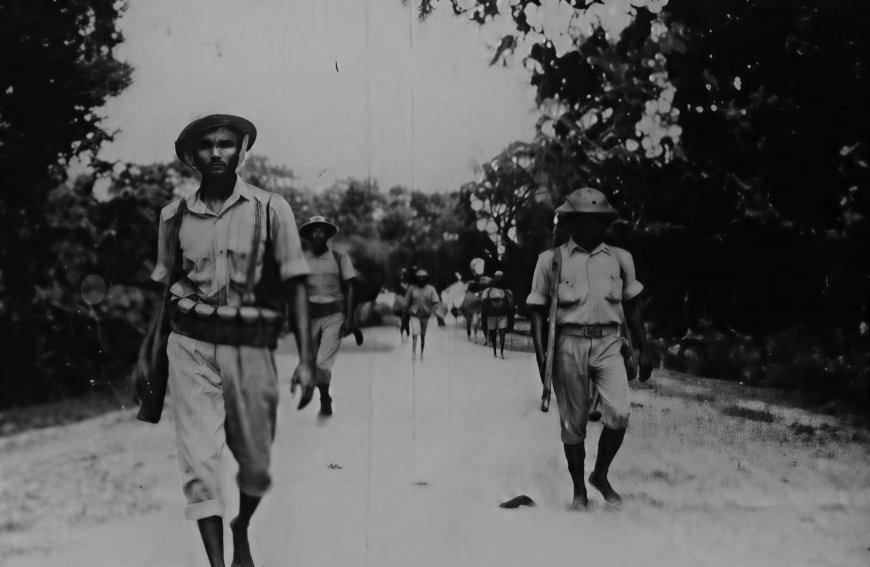
In 1971, however, Razakar was not simply a synonym for anyone who opposed independence. The East Pakistan Razakars Ordinance created a specific auxiliary force under provincial government control, with provisions for recruitment, training and equipment.
The Supreme Court has also discussed the Razakars and other auxiliary formations in the context of Pakistani military operations.
Historical precision matters here. Not everyone who opposed independence was formally a Razakar, and not every local collaborator belonged to the Razakar force. There were also Peace Committees, Al-Badr, Al-Shams and other structures.
But that precision cannot be selectively invoked to make the documented connections between Jamaat, its then student organisation and pro-Pakistan auxiliary structures disappear into the harmless category of “political disagreement”.
“Jamaat equals Razakar” is therefore too crude to be good history. But “Jamaat merely supported a united Pakistan” is also a misleading simplification. The serious question is not only who wanted Pakistan to remain united. It is who stood where, and did what, when the Pakistani state was using military violence against the Bengali population.
Porwar then shifts to the BNP, arguing that a list of Razakars would place the BNP above Jamaat. There is an elementary chronological problem with that claim. The BNP did not exist in 1971.
What can legitimately be examined is whether people who had served as Razakars, collaborators or opponents of Bangladesh’s independence later joined the BNP, and whether the BNP subsequently rehabilitated or elevated them politically.
That is a serious question, and the BNP should answer for its own record. Indeed, Porwar has separately accused the BNP of appointing people who had opposed Bangladesh’s independence to senior state positions. If substantiated, political rehabilitation after independence deserves scrutiny.
But two kinds of responsibility must not be confused. What an individual did in 1971 is that individual’s historical and, where established, criminal responsibility. A party founded later may bear political responsibility for knowingly rehabilitating or empowering that person. The latter does not rewrite the former.
Suppose, for the sake of argument, that Porwar is entirely correct and that more former collaborators later entered the BNP than Jamaat. Then what? How does that reduce the responsibility of anyone associated with Jamaat?
A student scores 25 in an examination and is told he has failed. He replies triumphantly that the student beside him scored 15.
Congratulations: The other student did worse. Your 25 has still not become 33.
Razakar history is not a league table in which the BNP can win gold and Jamaat collect a silver medal for innocence. If the BNP rehabilitated collaborators, investigate that history.
If the Awami League or any other party did the same, investigate theirs too. A person’s later party membership does not sanctify what he did in 1971. But another party’s wrongdoing is not an acquittal of your own.
This is a familiar pathology of Bangladeshi political argument. Asked about one’s own record, point to the opponent. The Awami League points to the BNP. The BNP points to the Awami League.
Jamaat points to the BNP. Everyone becomes an excellent accountant of somebody else’s history while keeping their own ledger mysteriously closed.
Democratic accountability cannot be built on comparative innocence: “I may be bad, but he is worse.” That may work as a child’s defence. It is a poor philosophy of institutional responsibility.
The deeper issue is not whether today’s young Jamaat activists should inherit personal guilt for crimes committed before they were born. They should not. Criminal guilt is not hereditary. The question is institutional memory.
If a political organisation claims continuity of name, tradition, history and political inheritance, then its present relationship to the darker parts of that inheritance is a serious political matter.
Inheritance is not a buffet from which a party may place the glorious episodes on its plate and leave the bowl of responsibility on the table.
This is where Porwar’s argument is politically weakest. He does not answer the question of history with history. When Pakistan’s role becomes uncomfortable, India enters the frame.
When Jamaat’s responsibility is raised, the BNP appears. And at the end, responsibility is handed to “the people”, as though keeping responsibility permanently in motion can make it disappear.
It cannot.
India’s conduct should be examined as India’s conduct. The BNP should answer for the BNP’s history. The Awami League should answer for its own uses and abuses of history. Jamaat should answer for Jamaat’s.
Acknowledging historical wrongdoing does not mean that present members inherit the criminal guilt of their predecessors. It means something more politically mature: Refusing to make the past innocent simply because the present finds it inconvenient.
A party’s claim to have changed is ultimately tested not by a new vocabulary, a new generation of leaders or a new electoral mandate, but by whether it can stand upright before the difficult truths in its own institutional history.
So yes, discuss Indian interests. Discuss the flaws of the war-crimes trials. Investigate the BNP’s rehabilitation of people with troubling 1971 records. Examine every party’s ledger.
But do not answer your own ledger by pointing to somebody else’s.
Because after all the detours through India, the BNP and public opinion, the historical question remains remarkably simple:
You supported a united Pakistan. Understood.
But what did your political predecessors do after March 25?
That question cannot be answered with a slogan. It has to be answered with evidence.
Dr. Lubna Ferdowsi is an academic and researcher based in England.
Sources and further reading
Mia Golam Porwar’s recent remarks and related Jamaat-BNP exchanges. Jamuna TV and The Daily Star, 2026.
Abdur Razzaq’s posthumous memoir and Jamaat’s internal debate over a 1971 apology. The Daily Star, September 2026.
Muhammad Kamaruzzaman v. Chief Prosecutor, International Crimes Tribunal. Supreme Court of Bangladesh, Criminal Appeal No. 62 of 2013.
Motiur Rahman Nizami v. Government of Bangladesh. Supreme Court of Bangladesh, Appellate Division.
Foreign Relations of the United States, 1969–1976, documents on East Pakistan, 1971. Office of the Historian, U.S. Department of State.
Bangladesh: Azam Conviction Based on Flawed Proceedings. Human Rights Watch, 16 August 2013.
Bangladesh: Suspend Death Penalty for War Crimes Convict. Human Rights Watch, 9 May 2016.