






























































Lessons from Ashes of the Ascent: The Undoing of a Nation’s Dream
Progress in poverty reduction, education, health, infrastructure, and women's empowerment belongs ultimately to the people who made it possible. Such achievements should not become casualties of political contestation. Ashes of the Ascent is ultimately a story of achievement and vulnerability.


Few countries have defied development expectations as dramatically as Bangladesh. Emerging from the devastation of its independence struggle in 1971, the country was once regarded as a symbol of poverty, vulnerability, and dependence on foreign assistance.
Yet over the following decades, Bangladesh transformed itself into an internationally recognized development success story. Millions escaped poverty, agricultural productivity improved, women entered the workforce in unprecedented numbers, and substantial progress was achieved in education, health, and infrastructure.
By 2024, Bangladesh had demonstrated how sustained reforms, investment in human capital, and economic transformation could change a nation's trajectory.
But development achievements, however impressive, are not necessarily permanent. The political upheaval of August 2024, which ended Sheikh Hasina's 15-year uninterrupted tenure as prime minister, raised fundamental questions about the durability of Bangladesh's progress.
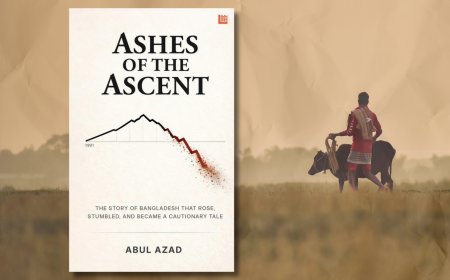
My recently published book, Ashes of the Ascent: The Undoing of a Nation's Dream, examines this journey of how Bangladesh rose, why its development model became vulnerable, and what its experience reveals about economic progress, governance, and political transitions.
The Ascent: Three Decades of Transformation
Bangladesh's transformation did not happen overnight. Beginning in the early 1990s, successive governments pursued economic liberalization, export-oriented industrialization, agricultural modernization, and investments in education and health.
Supported by entrepreneurs, development partners, civil society, and ordinary Bangladeshis, these policies gradually transformed the economy.
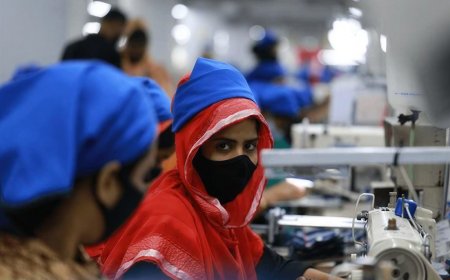
The ready-made garment industry became a major engine of exports and employment, particularly for women. Agricultural reforms, improved technologies, irrigation, and rural infrastructure strengthened food production and household welfare.
Girls' education provides a compelling example of policy continuity. During Prime Minister Khaleda Zia's first administration, Bangladesh introduced the nationwide Female Secondary School Stipend Program in 1994, creating financial incentives for rural girls to remain in school. Subsequent administrations expanded these investments.
Under Prime Minister Sheikh Hasina, particularly between 2009 and 2024, continued support for girls' education and women's empowerment helped consolidate earlier achievements. Alongside advances in maternal health and family planning, these policies contributed to remarkable improvements in human development.
Poverty reduction was particularly significant. National poverty declined from nearly 59% in the early 1990s to 18.7% in 2022.
Infrastructure investments, including the Padma Bridge, improved connectivity and market integration. Digital services, financial inclusion, and industrial expansion created new opportunities for an emerging middle class.
While these achievements accumulated across successive administrations, Hasina's tenure from 2009 to 2024 witnessed substantial infrastructure investment, industrial expansion, and ambitious national development strategies.
The first eight chapters of Ashes of the Ascent examine these achievements through the lens of public policy, highlighting a central lesson: Development success is rarely accidental. It requires sustained investment, policy continuity, institutional capacity, and the ability to translate economic growth into improvements in people's lives.
Yet weaknesses persisted. Political polarization, concerns about democratic accountability, financial-sector vulnerabilities, inequality, and institutional shortcomings remained significant challenges. These would become particularly consequential during the political transition of 2024.
The Undoing: When Political Upheaval Meets Institutional Fragility
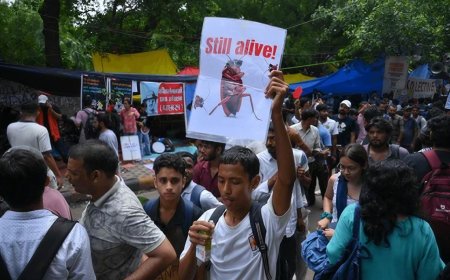
The second part examines Bangladesh's political transition following the collapse of the Sheikh Hasina government in August 2024 and the subsequent interim administration led by Muhammad Yunus.
The uprising emerged amid grievances over governance, political representation, and economic opportunity. For many Bangladeshis, it represented the possibility of political renewal.
Yet the transition also created uncertainty about economic management, administrative continuity, and public policy.
My book argues that the post-2024 transition exposed and, in several respects, intensified vulnerabilities in Bangladesh's development architecture. It examines how policy reversals, discontinuity in public investment, regulatory uncertainty, and institutional disruption affected business confidence, economic activity, productivity, and employment.
These pressures compounded existing weaknesses and placed additional burdens on households struggling with inflation and declining purchasing power.
The consequences for poverty reduction and social protection are particularly concerning. Weaker employment opportunities, rising poverty, and disruptions to public programs threatened vulnerable households.
The World Bank's subsequent poverty assessment estimated that national poverty increased from 18.7% in 2022 to approximately 21% in 2025, reflecting pressures that began before the political transition and continued afterward.
Beyond the economic consequences, the book raises concerns about Bangladesh's changing social and ideological landscape. It examines growing Islamist political influence, resistance to reforms advancing women's rights, and pressures on the country's traditions of religious tolerance and pluralism.
The central concern is whether increasing religious influence over public policy and institutions could undermine the inclusive social development that helped sustain Bangladesh's earlier progress.
These concerns are especially relevant to girls' education, women's economic participation, maternal health, and minority rights; areas where progress depended on decades of coordinated public policies and social investment.
Bangladesh entered August 2024 with significant economic and institutional weaknesses, and not every subsequent setback can be attributed to the change in government.
Nevertheless, the book argues that policy continuity, effective administration, protection of fundamental rights, and institutional accountability are essential for safeguarding development achievements during political upheaval.
The broader lesson extends beyond Bangladesh: Infrastructure can be built within years, but capable, accountable, and trusted institutions require sustained commitment across generations.
History's Mirrors: Lessons from Other Nations
Bangladesh's experience is not unique. History offers examples of countries that achieved remarkable progress, only to confront political upheaval, institutional breakdown, or economic reversal.
The third part examines six international experiences from South Korea, South Africa, Sri Lanka, Iran, Afghanistan, and Zimbabwe to explore how political and institutional choices shaped development trajectories.
South Korea illustrates how industrial transformation and subsequent democratic reforms can contribute to sustained prosperity. South Africa's transition under Nelson Mandela demonstrates the importance of reconciliation and institutional continuity, while revealing persistent economic inequalities.
Sri Lanka offers lessons about macroeconomic mismanagement and recovery. Iran's 1979 revolution illustrates how ideological transformation can reshape economic institutions and development priorities.
Afghanistan highlights the difficulties of sustaining development gains amid conflict and political transitions, while Zimbabwe demonstrates the long-term consequences of weakened economic governance.
These cases are not identical to Bangladesh, nor do they offer simple prescriptions. Their value lies in revealing recurring relationships between political choices, institutional resilience, economic management, and social progress.
A common lesson emerges: Political transformation does not automatically produce economic renewal. Development depends on whether institutions can preserve essential public functions, protect citizens' rights, and sustain credible economic policies through periods of change.
The Final Reckoning: Can Development Survive Political Change?
The concluding chapter returns to Bangladesh and asks a fundamental question: What happens when a nation achieves substantial economic and social progress without building sufficiently resilient institutions to protect those achievements?
The book's central argument is not that economic growth should take precedence over democracy or political accountability. Rather, sustainable development requires both effective policymaking and institutions capable of maintaining accountability, protecting rights, and ensuring continuity across governments.
Bangladesh's experience underscores the importance of distinguishing a government's political fortunes from a nation's development achievements.
Progress in poverty reduction, education, health, infrastructure, and women's empowerment belongs ultimately to the people who made it possible. Such achievements should not become casualties of political contestation.
Ashes of the Ascent is ultimately a story of achievement and vulnerability. Bangladesh demonstrated that even a resource-constrained country could transform its economic and social prospects through sustained policies and collective effort.
Its subsequent political upheaval raises difficult questions about protecting those gains when political arrangements change.
Building prosperity is a remarkable achievement; building institutions capable of preserving it through political upheaval is an equally important challenge.
That is the central message of Ashes of the Ascent; a reflection on what Bangladesh achieved, the vulnerabilities its experience exposed, and the institutional foundations necessary to sustain development for future generations.
Abul Azad is a World Bank economist, researcher, and author with over 25 years of experience in international development, economic policy, and poverty reduction. His book, Ashes of the Ascent: The Undoing of a Nation's Dream, is available on Amazon and in bookstores across India. The views expressed are his own.