


























































Britain Must Not Become a Stage for Awami League Violence
Britain’s political freedoms depend on people being able to exercise them safely. If political opponents can be driven away by threats and violence, those freedoms become conditional on the permission of the most aggressive.
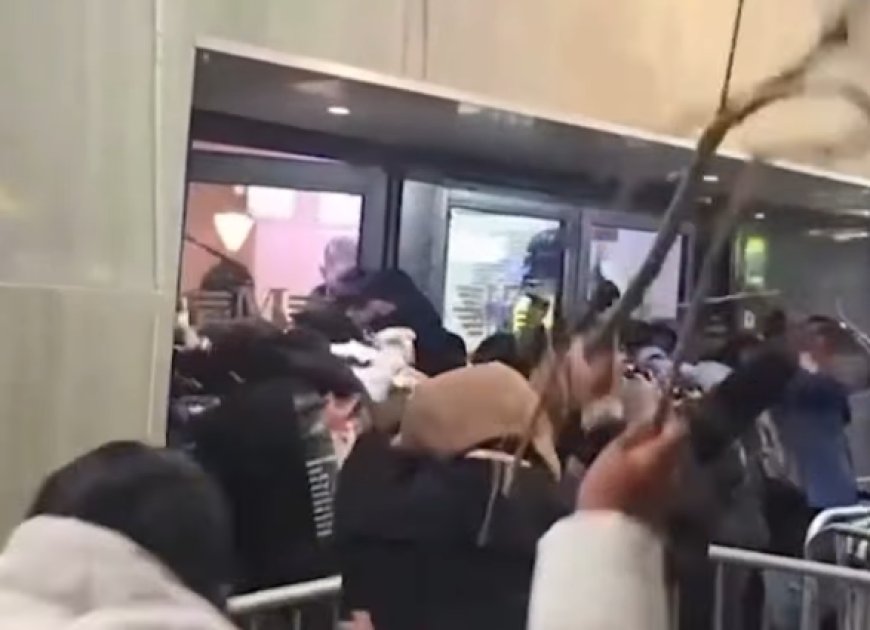
People attending a political reception in London should be able to return home safely. On Monday night in Romford, that basic expectation was shattered.
Violence erupted outside a reception for Nahid Islam, a leading figure in Bangladesh’s 2024 student-led uprising and now convener of the National Citizen Party and Member of Parliament..
Five people reportedly required hospital treatment following clashes between NCP and Awami League supporters. Police and ambulances attended the scene.
As a British Bangladeshi, I find these scenes appalling. Our British streets cannot become an overseas arena for political intimidation. Nobody should have to pass through a gauntlet of threats or violence to attend a meeting.
The allegations against Awami League supporters are serious. According to reported accounts from eyewitnesses and organizers, supporters gathered outside the venue, threw eggs and water bottles at arriving guests, and confronted attendees.
The evening subsequently descended into chasing and physical fighting instigated by British resident supporters of Awami League.
Nahid has accused Awami League activists of attacking expatriate Bangladeshis and university students who attended the reception. He has called for a prompt, impartial investigation by the British authorities. His allegations must be investigated, and individual responsibility established through evidence.
But there should be no hesitation in condemning the violence itself.
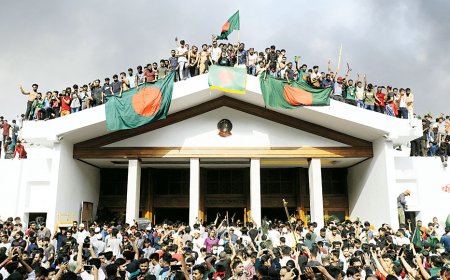
The political background matters. Sheikh Hasina fled Bangladesh on August 5, 2024 following the mass uprising in which Nahid played a prominent role.
Her Awami League party’s activities are now banned in Bangladesh. For some of her supporters, the student leaders who helped bring down her government remain targets of hostility.
That hostility confers no entitlement to intimidate people in Britain.
Romford also sits within a disturbing pattern extending beyond Britain. On October 12, former interim chief adviser Professor Muhammad Yunus was confronted at New York’s JFK Airport by a group of US-based Awami League activists.
Seated in a wheelchair, the Nobel laureate was surrounded and subjected to shouted accusations. He was wheeled back into the terminal as members of the group continued after him. Bangladesh’s government condemned the harassment and instructed its mission to pursue the matter with local law enforcement.
There had been an earlier confrontation at the same airport in September 2025, when political leaders accompanying Yunus to the United Nations General Assembly were targeted. NCP leader Akhter Hossen was reportedly pelted with eggs and subsequently filed a complaint in New York.
Taken together, these incidents suggest a recurring pattern of overseas harassment targeting Bangladesh’s political representatives, former officeholders, and opponents of Sheikh Hasina.
The incidents differ in severity, but the repeated targeting of airports and public engagements is deeply troubling. Host countries must take that pattern seriously before intimidation escalates into further violence.
Awami League supporters have every right to express their views peacefully. They can criticize Nahid or Yunus, challenge their politics, and organize demonstrations. The same freedom protects those who wish to hear them speak. Political grievance cannot become a licence to assault opponents or prevent others from gathering.
Nor does condemnation require allegiance to the NCP. I do not need to endorse every position Nahid takes to defend his right to address an audience without violence surrounding the event. That principle must hold for every political party and every community.
For British Bangladeshis, there is another indignity. A community built through generations of work, enterprise, and public service is forced to watch its public life overshadowed by factional street fighting. Those responsible do not speak for us.
Awami League leaders abroad must condemn this behaviour unequivocally and tell their supporters plainly that political loyalty excuses neither harassment nor assault. A party seeking to rebuild its credibility cannot credibly invoke democratic freedoms while its supporters intimidate others seeking to exercise those same freedoms.
The UK Metropolitan Police must investigate thoroughly: examine footage, hear witnesses, establish who initiated and committed assaults, and pursue charges wherever the evidence warrants them. Any evidence of organized intimidation should be followed through to those who directed it. Party affiliation must provide no protection from accountability.
Britain’s political freedoms depend on people being able to exercise them safely. If political opponents can be driven away by threats and violence, those freedoms become conditional on the permission of the most aggressive.
Romford must not set that precedent. Those responsible must face the consequences of their actions.
Toffael Rashid is a global marketing professional.