



































































Bangladesh Must Become a Destination of Choice for Business and Investment
The time has come to make Bangladesh not merely a country of investment opportunities, but a country where businesses are welcomed, honest entrepreneurs are supported, investment is protected, and opportunities can be realized with confidence, efficiency, and dignity.
Bangladesh stands at a defining moment in its economic journey. With a large domestic market, a young and energetic population, a growing entrepreneurial community, and a strategic geographical location, the country possesses enormous potential to become a major destination for domestic and foreign investment.
Yet, despite these advantages, Bangladesh continues to attract relatively modest foreign direct investment (FDI) compared with several competing economies in Asia.
Domestic private investment, too, remains below its potential. The fundamental question is whether we can create the institutional, regulatory, financial, and infrastructural environment necessary to convert our opportunities into reality.
Investment is not merely about capital. It brings technology, innovation, employment, skills, productivity, and access to international markets.
If Bangladesh aspires to achieve sustainable economic growth, create quality employment, and improve the living standards of its people, attracting investment must become a national priority.
The Cost of Regulatory Delays
One of the most serious obstacles confronting investors in Bangladesh is the complexity and unpredictability of the regulatory environment.
Entrepreneurs frequently encounter prolonged delays in obtaining business licences, environmental clearances, construction permits, utility connections, land-related approvals, and other essential authorizations. Investors often have to approach multiple government agencies, submit similar documents repeatedly, and navigate procedures that are neither sufficiently transparent nor efficiently coordinated.
The problem is not simply the number of approvals required; it is the uncertainty surrounding how long the process will take.
An investor may have secured financing, identified a location, completed feasibility studies, and committed substantial resources, yet remain unable to commence operations because an approval is pending. Such delays increase project costs, weaken financial viability, and undermine confidence.
In today's competitive global economy, investors compare countries not only by market size and labour costs but also by the speed, predictability, and reliability of their business environments.
When competing countries can offer approvals within weeks while Bangladesh requires months, investment decisions naturally move elsewhere.
A particularly concerning issue is the widening gap between government commitments and actual delivery. Policymakers and regulators frequently announce ambitious investment-friendly initiatives, but businesses continue to experience delays, procedural complications, and inconsistent implementation.
In business, time is money. Every unnecessary delay represents additional costs, lost opportunities, and diminished competitiveness.
Bangladesh must therefore move beyond administrative discretion and procedural complexity towards a system founded on efficiency, transparency, accountability, and measurable performance.
From One-Stop Service to One-Stop Solution
The establishment of the Bangladesh Investment Development Authority (BIDA) and its One Stop Service initiative represents an important step forward. However, a genuine one-stop service must be more than a digital portal for submitting applications.
It must become a comprehensive system through which investors can obtain all necessary approvals without personally navigating the institutional maze.
- A practical reform agenda should include:
- Reviewing and eliminating unnecessary, overlapping, and outdated licensing requirements.
- Establishing a unified digital application system through which investors submit documents once and track every approval.
- Introducing clearly defined service delivery timelines for every regulatory agency.
- Providing automatic approval, where legally appropriate, for low-risk applications when authorities fail to act within prescribed deadlines.
- Empowering a dedicated investment facilitation team to resolve inter-agency bottlenecks.
The objective should be simple: Make doing business in Bangladesh easier, faster, and more predictable.
Protecting and Rehabilitating Honest Businesses
While attracting new investment is essential, equal attention must be given to businesses that have already invested in Bangladesh and are struggling to survive.
Many honest entrepreneurs and established enterprises are facing extraordinary challenges arising from economic uncertainty, high borrowing costs, declining business confidence, weak demand, regulatory complications, and difficulties in accessing finance.
These challenges are not unique to Bangladesh, but their combined impact has placed considerable pressure on businesses operating within the country.
We must recognize the distinction between deliberate financial misconduct and genuine business distress. Honest businesses that have fulfilled their obligations, created employment, contributed to the economy, and are making sincere efforts to overcome difficulties deserve thoughtful consideration and appropriate institutional support.
When viable businesses collapse unnecessarily, the consequences extend far beyond their owners. Employees lose jobs, suppliers lose customers, banks face additional non-performing loans, government revenue declines, and valuable productive capacity disappears.
The government should therefore introduce a comprehensive business rehabilitation framework to help viable enterprises restructure their operations, restore financial stability, and continue contributing to national development.
Developed economies have employed various business rescue, restructuring, and financial assistance mechanisms to preserve viable enterprises during periods of exceptional economic distress.
Bangladesh should carefully examine these experiences and develop an appropriate framework suited to its own economic and institutional circumstances.
Such support must be transparent, time-bound, performance-based, and subject to appropriate monitoring. It should prioritize businesses demonstrating genuine viability, responsible management, financial disclosure, and a credible commitment to recovery.
Saving a viable business is not merely saving an enterprise; it is protecting employment, investment, productive capacity, and the economic future of the country.
A More Supportive Banking Environment
The Bangladesh Bank and commercial banks must play a more constructive role in helping honest and viable businesses navigate the present difficulties.
Banking institutions understandably have a responsibility to protect depositors' funds, maintain financial discipline, and recover legitimate loans. However, recovery should not become an inflexible process that destroys otherwise viable businesses and ultimately increases financial losses for everyone.
A more balanced approach should encourage banks to work with struggling but honest enterprises to develop realistic restructuring and rehabilitation plans.
Depending on the circumstances, appropriate measures could include extending loan repayment periods, rescheduling instalments, restructuring accumulated liabilities, providing temporary repayment relief, and offering carefully assessed working capital facilities.
Such arrangements must be supported by credible business plans, independent financial assessments, transparent reporting, and regular monitoring to prevent misuse.
Special emphasis should also be placed on substantially reducing the effective interest burden on viable businesses wherever financially and institutionally feasible. Excessively high borrowing costs can consume operating cash flows, discourage fresh investment, and prevent enterprises from recovering even when their underlying business prospects remain sound.
A temporary, targeted, and carefully monitored interest relief mechanism could provide businesses with the breathing space necessary to stabilize operations, protect employment, and gradually restore their financial health.
Bangladesh is facing an exceptionally challenging business environment. Extraordinary circumstances may require extraordinary but responsible measures. A supportive banking system can become a powerful partner in business recovery and economic revitalization.
Infrastructure, Automation, and Productivity
Investment cannot flourish without reliable infrastructure.
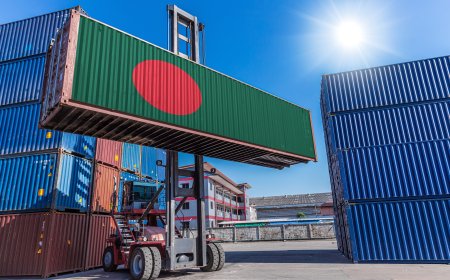
Although Bangladesh has made significant progress in developing roads, bridges, power generation, ports, and economic zones, important gaps remain. Congested roads, inefficient port operations, inadequate railway connectivity, unreliable gas supplies, and high logistics costs continue to increase the cost of doing business.
Bangladesh must prioritize infrastructure that directly supports productive investment, including modernized ports, improved railway freight transportation, stronger connectivity to industrial zones, and reliable electricity and gas supplies.
Economic zones must be developed as integrated industrial ecosystems, offering ready-to-use land, dependable utilities, modern logistics, waste management, and efficient administrative services.
At the same time, businesses must be encouraged to adopt industrial automation, artificial intelligence, digital supply chains, and modern management systems. Automation should be understood as a tool for improving quality, productivity, competitiveness, and the capacity to create higher-value employment.
Bangladesh's large workforce can become a powerful competitive advantage if supported by appropriate education, technical training, and continuous skills development.
Policy Stability, Good Governance, and the Rule of Law
Investors seek more than financial returns. They seek certainty, fairness, and confidence in the institutions governing their investments.
Frequent policy changes, inconsistent interpretations of regulations, unpredictable taxation, and weak contract enforcement can discourage long-term investment.
Bangladesh must establish a predictable policy environment in which investors can make decisions with confidence that the rules will remain transparent and reasonably stable.
Equally important is strengthening the rule of law, protecting property rights, ensuring efficient commercial dispute resolution, and establishing confidence in the independence and effectiveness of the judiciary.
Good governance must become integral to the investment strategy. Transparency, accountability, integrity, and equal treatment are indispensable to building a credible business environment.
No investor should feel that success depends on personal connections rather than the quality of the business proposition.
A National Investment Mobilization Strategy
Bangladesh needs a comprehensive national strategy to mobilize domestic and foreign investment, supported by clear priorities and measurable outcomes.
Promising sectors include agro-processing, pharmaceuticals, light engineering, electronics, renewable energy, logistics, tourism, healthcare, education, and technology-based industries.
Domestic investors must receive the confidence and institutional support necessary to expand existing businesses and establish new enterprises. Foreign investors should be encouraged to form partnerships with local businesses, bringing capital, technology, management expertise, and access to international markets.
Investment promotion must become more professional and targeted. Bangladesh should identify prospective investors, understand their requirements, address their concerns, and provide sustained facilitation throughout the investment process.
A strong aftercare system is equally important. Existing investors who are satisfied with their experience are often the most credible ambassadors for attracting new investment.
Turning Potential into Prosperity
Bangladesh's future economic success will depend significantly on its ability to create an environment where entrepreneurs can innovate, businesses can grow, and investors can confidently commit their resources.
The challenge is substantial, but the opportunity is even greater.
Investment does not wait indefinitely. Capital is mobile, and investors have choices. Countries offering greater efficiency, transparency, infrastructure, and institutional reliability will attract a larger share of global investment.
Bangladesh must therefore move decisively from procedural obstacles to facilitation, from administrative discretion to institutional accountability, and from fragmented services to integrated solutions.
At the same time, we must recognize that attracting new investment and protecting existing viable businesses are complementary objectives. A country that welcomes new investors while allowing honest existing enterprises to collapse unnecessarily sends a contradictory message to the business community.
Our national investment strategy must therefore combine investment promotion with business rehabilitation, regulatory reform with effective delivery, and financial discipline with constructive support for genuine enterprise.
A prosperous Bangladesh cannot be built by government alone. It requires a dynamic partnership among the state, domestic entrepreneurs, international investors, financial institutions, and the people.
If we establish that partnership on the foundations of good governance, regulatory efficiency, financial discipline, modern infrastructure, technological advancement, and a compassionate yet accountable approach to business recovery, Bangladesh can transform its enormous potential into sustainable prosperity.
The time has come to make Bangladesh not merely a country of investment opportunities, but a country where businesses are welcomed, honest entrepreneurs are supported, investment is protected, and opportunities can be realized with confidence, efficiency, and dignity.
Let us create a Bangladesh where businesses can survive with confidence, recover with determination, grow with ambition, and thrive for the greater prosperity of our nation.
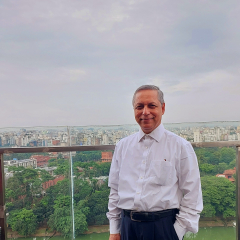
A. Gafur is a Private Sector Professional and Writer, and Former Executive Director, The American Chamber of Commerce in Bangladesh (AmCham Bangladesh)