




























































A Hospital Corridor Is No Place to Recover
The measure of a healthcare system is not simply how many patients pass through its doors. It is also whether those patients can receive treatment in conditions that protect their safety and dignity, and whether the institutions responsible respond when those conditions fall short.

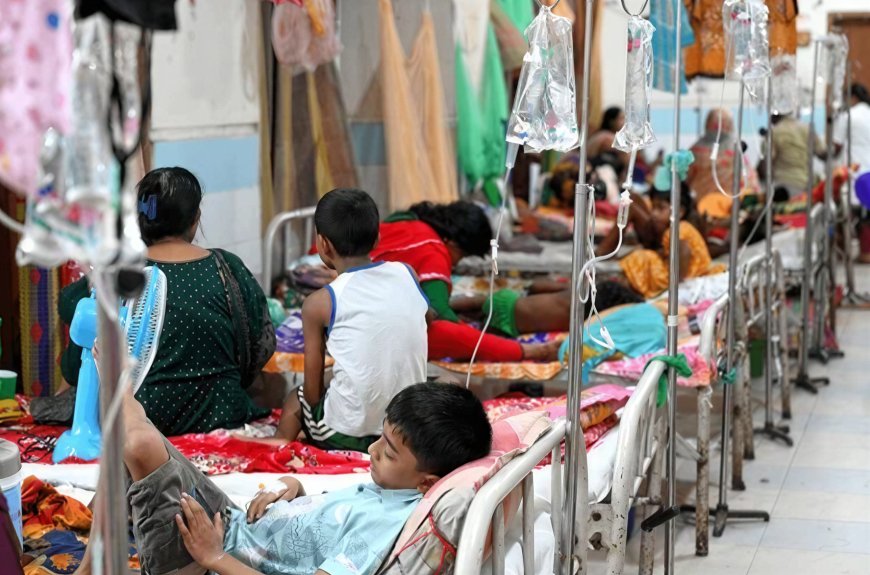
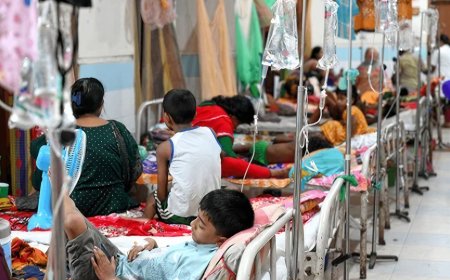
Yesterday, I went to Ward 31 of Rajshahi Medical College Hospital (RMCH) to visit a relative whose leg had been broken in an accident. I had visited the hospital before, so the scene was not entirely unfamiliar. Men and women were lying on mats along the corridors, trying to rest wherever a little space was available. Then I noticed two dogs curled up on the same tiled floor.
For a moment, I found myself looking at the scene without knowing what to think. People had come to the hospital because they were injured, ill or desperate for treatment. Some were lying beside their relatives, who could do little more than stay close and hope for their recovery. And just a few feet away, the dogs were sleeping in the same corridor.
It was not the presence of the animals that troubled me most. They were not responsible for the situation. What troubled me was the question the scene raised: How did a hospital corridor become a place where sick and injured people were expected to rest?
When Overcrowding Becomes Ordinary
Anyone who has spent time in a crowded public hospital in Bangladesh may recognise the scene. A family arrives seeking treatment, only to discover that finding a bed can be another struggle.
Relatives wait beside patients, often with few options and little control over their circumstances. A corridor, designed for people to move through, becomes a place to stay.
This is not merely an impression formed during one hospital visit. Published figures reveal the scale of the pressure on Bangladesh’s public healthcare system.
According to the Directorate General of Health Services’ Health Bulletin 2024, as reported by The Daily Star on 26 July 2026, the average bed occupancy rate in 59 district hospitals reached 178% in 2024. In public medical college hospitals, it was 164%, while the average for 432 upazila health complexes stood at 111%. A bed occupancy rate above 100% means the number of admitted patients exceeds the number of available beds.
In addition, more than 23,000 sanctioned posts at government hospitals remained vacant, according to information provided by the health minister in Parliament. It also reported that the prime minister had told Parliament that an estimated four million patients receive treatment on hospital floors across the country.
Behind these figures are people who cannot simply postpone falling ill until a bed becomes available. They are patients and parents, sons and daughters, wage earners and elderly people. They arrive with their own fears and circumstances, but they share one expectation: that a hospital will offer them care when they need it most.
A hospital floor may provide a place to lie down. It cannot, by itself, provide the comfort, privacy and dignity that appropriate accommodation should offer.
Who is Watching Over the Patients?
During my visits, I have often been asked to show a visitor pass before entering the hospital. Such checks can serve legitimate purposes, including security and the management of visitors. I do not object to them simply because I have been asked to comply.
But the experience has left me with a question. If there are arrangements to monitor who enters, what arrangements ensure that patients are being accommodated safely and humanely?
Who is responsible for monitoring overcrowded corridors? Who checks whether the number of patients admitted is matched by sufficient beds, staff and essential supplies? Who must explain when the same problems persist, and what measures are being taken to address them?
These are not questions aimed at a particular guard, nurse or doctor. Many healthcare workers operate under enormous pressure, and it would be unfair to hold individuals responsible for every failure of the system. The issue is whether the institutions responsible for planning, staffing, maintaining and managing public hospitals are being held accountable for the conditions patients face.
The dogs in that corridor made the problem more visible to me, but they were not the problem itself. Their presence raised concerns about hospital management and the control of animals in areas used by vulnerable patients. Yet removing the animals alone would not answer the more fundamental question: why were so many people left without proper beds in the first place?
A Constitutional Promise, an Everyday Reality
Bangladesh’s Constitution provides a clear basis for taking public health seriously. Article 15 identifies medical care among the basic necessities of life that the state has a fundamental responsibility to work towards securing. Article 18 states that improving public health is among the state’s primary duties.
There is, however, an important constitutional distinction. Article 8(2) states that the principles in Part II, which includes Articles 15 and 18, are not judicially enforceable. They guide governance, lawmaking and the work of the state, but they do not operate in the same way as directly enforceable fundamental rights.
That distinction matters, but it should not become an excuse for indifference. A constitutional commitment to public health still carries weight in judging the priorities of government and the performance of public institutions. The question is whether that commitment can be felt by ordinary people when they enter a hospital.
A promise written in a constitutional document means little to a family struggling to make a patient comfortable on a corridor floor if the institutions responsible for healthcare cannot explain how such conditions will improve. Public accountability begins with asking those questions openly and demanding credible answers.
The Answer Cannot be More Pressure on Exhausted Staff
Overcrowding cannot be solved by simply telling doctors and nurses to work harder. Nor is adding beds enough if hospitals lack the staff, equipment, medicines and other resources needed to care for the people occupying them.
Bangladesh also needs a stronger primary healthcare system. Improving primary care and the referral system is crucial to reducing pressure on overcrowded public hospitals. There are currently only 5.26 doctors per 10,000 people -- well below the minimum standard set by the World Health Organization.
Nevertheless, Bangladesh spends approximately 2% of its GDP on health, while more than 70% of total health expenditure comes directly from people's own pockets.
When local health facilities cannot adequately manage patients who could be treated closer to home, people may have to travel farther in search of care. District and medical college hospitals then face additional pressure, including from patients who have limited alternatives.
Strengthening primary healthcare will not eliminate every reason for referral to a specialist hospital. Serious injuries, complicated illnesses and emergencies will always require higher-level care. But an effective system should ensure that patients receive appropriate treatment at the appropriate level, while hospitals have the capacity to care for those who need more advanced services.
The authorities must also make staffing shortages, hospital capacity and progress on reforms matters of public concern. Plans should be accompanied by clear responsibilities, realistic timelines and measurable improvements. Patients should not have to rely on another overcrowded visit to discover whether anything has changed.
We Must Stop Accepting This as Normal
I left RMCH thinking about my relative, but I also thought about the strangers lying along the corridors. I did not know their names or their stories. I could not know how far they had travelled, how long they had waited or what their families had already sacrificed to bring them there. I knew only that they had come seeking medical care and that some had to make do with the floor.
Perhaps the most troubling part of such scenes is how easily we can become accustomed to them. When overcrowding is seen repeatedly, people may begin to regard it as an unavoidable feature of public hospitals. The extraordinary becomes ordinary, and the ordinary no longer demands an explanation. But a familiar problem is not necessarily an acceptable one.
Nor should the debate become a contest over whether public hospitals are better or worse than private facilities. Many people depend on government hospitals because they cannot afford private treatment. Their financial circumstances should not mean that they must accept avoidable indignity alongside the illness or injury that brought them there.
A hospital is more than a building where medical procedures take place. It is where people turn when their own strength, resources or knowledge are no longer enough. They arrive at some of the most uncertain moments of their lives. They deserve care that recognizes their humanity.
The measure of a healthcare system is not simply how many patients pass through its doors. It is also whether those patients can receive treatment in conditions that protect their safety and dignity, and whether the institutions responsible respond when those conditions fall short.
I cannot say what one visit reveals about every ward or every hospital. But the experience at Ward 31, considered alongside the published figures on overcrowding, raises questions that cannot responsibly be ignored.
A hospital corridor should be a passage to treatment, not a substitute for a hospital bed. And the sight of patients forced to rest on the floor should never become so familiar that we stop asking why.
Md. Yeasir Arafat is an undergraduate student from the Department of Political Science, University of Rajshahi, Bangladesh.