























































'Sustainability? I want to make people's lives sustainable.'
“They may not be graduates yet. There's a long way to go for that, but in their hearts they are graduates,” she said, beaming with pride for each one of those students.
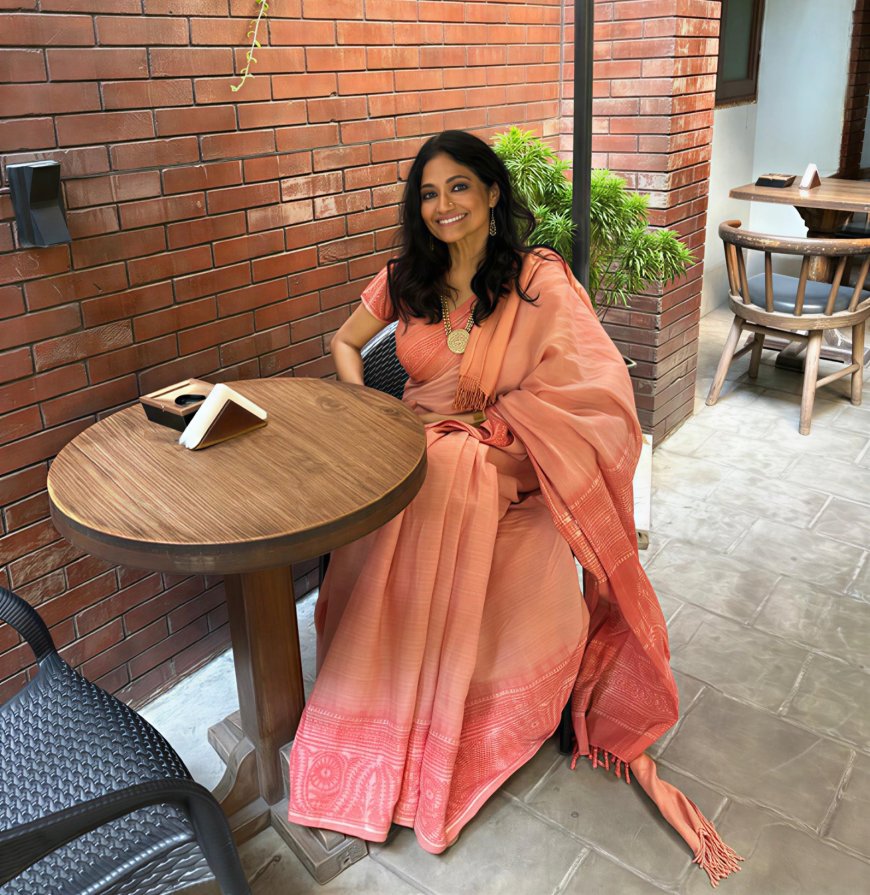
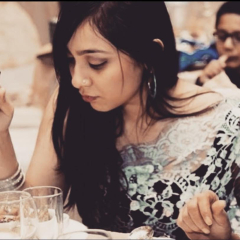
As my editor and I waited at the Emerald cafe in Banani, Runa Khan, the veteran social worker, walked in, wearing a peachy-pink saree. She greeted Mr Sobhan with a warm hug before turning to me with an equally generous full, bright smile.
She was not the image I initially carried of the founder of Friendship. She quickly dismantled the stereotype of the understated Jhola Wala that we have long lived with, when the thought of NGO workers comes to mind.
Given that She and Mr. Sobhan clearly shared a deep sense of camaraderie, the conversation effortlessly oscillated between familial history and professional milestones.
Pausing to order herself a beverage, she grabbed a waitress's hand and endearingly asked: “What can you get me to drink?” ditching the menu entirely.
While initially asking for some apple juice with mint leaves, she settled for just apple juice, not to inconvenience the waitress, once she was informed that mint leaves were not available.
Ultimately, the waitress came back with mint leaves just as she wanted.
As she sipped on her apple juice, she said: “We come from a privileged background, probably from the oldest family in the country. We are always in a glass bubble.” She said, as she gave us an introduction to her roots.
She does not shy away from acknowledging that her surroundings and upbringing may have been a barrier to reaching the poorest and most in need.
She regaled us with a tale of when she rode a bus for the first time as if it were a train and fell.
Then she laughed as she remembered how, at 12, her sister didn’t know that there were poor people in Bangladesh because she thought everyone had chauffeur-driven cars.
She broke barriers the moment she decided not to limit her exposure to the wealthiest families in villages but to reach out to the most remote areas.
“Even when we go to the village, we stay in the nicest homes,” she speculated, a little vexed by the surface-level effort that doesn't really break the glass bubble.
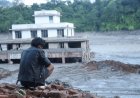
Ready to dig deeper, she sought out those living in the chor ghors. Chor ghors are fragile huts built on wetlands that are highly susceptible to seasonal changes and can easily be swept away by incoming tides.
Her calling was to address a sense of deep-rooted injustice in the country.
This led her to start Friendship despite having no intention of opening an NGO to begin with. She recalls asking: “What is an NGO?”
That question eventually became Friendship. Their education program, which kickstarted in 2006, caters to both children and adults alike, recognizing that adults grapple with illiteracy just as much as children do, if not more on a daily basis. They created means for them to earn as well.
“They may not be graduates yet. There's a long way to go for that, but in their hearts they are graduates,” she said, beaming with pride for each one of those students.
She ecstatically demonstrated how proud she was of a letter from a student. As she scrolled through her phone searching for it, she did not need prompting, rather just someone willing to listen.
Khan was very clear about what she wanted from the get-go from her work. Her decades-long experience in the development sector showed as she recounted stories of students from Friendship’s programs. Yet, education was only part of it.
She mentioned that: "There's more to learn from the silence.” The boat hospital once fixed up bruises of a woman who claimed she accidentally fell in the kitchen while the grueling reality of the abuse was visible to everyone.
This woman's silence was a loud cry for help.
In a remarkable moment of questioning accountability, she also told us a story of a girl: “Once the DG (Director General) was visiting and a girl from the chor went up to him and told him that it would be helpful if we had a high school and college out here. The DG turned around and said: “That is not in my hands, really.”
The girl retorted: “You’re the DG, don't you work under the prime minister? Tell the prime minister yourself,” And the DG was left shell-shocked.
“How many people in Dhaka actually know that the DG works under the prime minister?” She questioned. “This girl in a veil, barefoot, is pointing that fact out to him.” She relished the reversal of power between the two.
She then gave her two cents on buzzwords like sustainability. She questioned: “What is sustainability? I’m interested in making these millions of people whose lives I’m touching, to make them sustainable.”
She further explained that she shared “mutual learning” with different stakeholders. Especially, an interaction with an Ernst & Young representative, who was pleased to see everything that Friendship has achieved over the years.
Friendship won the Earthshot prize 2025, one of the most prestigious environmental awards. Khan emphasized how she wants to work through the opportunities given to her now.
“Someone brought up in a meeting: We are slightly opportunistic, so where is the limit of opportunity?” She asked.
The opportunity is a project, according to her. “After the Earthshot, opportunities have skyrocketed. We have to see what we want to do.“ Looking at the award as another responsibility.
At the end of a nearly two hour long conversation of what still stands to be a memorable meeting about poverty and resilience, she only paused long enough to pose for a photo but enthusiastically asked: “Can I put on my lipstick first?”
Michella Chowdhury is Senior Editorial Assistant, Counterpoint.