
























































The Tariff Threat and the Deal that Remained
Access to the American market is worth keeping, but it does not require Bangladesh to accept the agreement on its current terms.

On February 9, three days before its general election, Bangladesh signed a trade agreement with Washington.
Eleven days later, on February 20, the US Supreme Court ruled that the emergency powers law behind the tariff threat Dhaka was trying to escape did not authorize tariffs at all.
The legal basis for the threat was gone, but the agreement remained. Dhaka has continued buying, from Boeing jets to gas.
Bangladesh can legally leave the agreement, but it can hardly afford to. The text provides an exit, and the court ruling gives Dhaka a reason to consider it. Yet a country that depends so heavily on one export sector cannot simply walk away from its largest single country market. The sensible course is renegotiation, not a clean break or silent compliance.
The threat did not disappear. It changed form. A temporary 10% global tariff was announced within hours of the ruling. When it expired on July 24, Section 301 tariffs on unfair trade practices replaced it.
Bangladesh now pays 10% on top of the standard 15.62% duty on apparel. Dhaka’s argument is therefore not that the pressure has lifted. It is that the agreement was signed on a legal basis that no longer exists.
The mistake began with the timing. The interim government signed the agreement in its final days, and the elected government inherited the result. The Supreme Court case was no secret. Lower courts had already ruled against the tariffs, and the justices appeared unconvinced.
Whether through oversight or calculation, Dhaka signed while a ruling was clearly in sight. The agreement’s enforcement clause allows Washington to restore the old tariffs after consultations if it finds Bangladesh in breach. But the clause refers to an executive order whose legal basis the Court has since removed.
The imbalance becomes clear when we read the text. In treaty language, “shall” creates an obligation, while “will” expresses an intention. By my count, “shall” appears 179 times across the agreement’s 32 pages, compared with just three instances of “will.”
The phrase “Bangladesh shall” accounts for 131 instances, while “the United States shall” appears six times. The Bangladeshi press has also reported this difference. Washington promises to establish a mechanism for garment relief, but sets no deadline. It also promises to consider financing.
There is no commitment to invest. The text even contradicts itself on purchases. One article says Bangladesh “shall purchase” certain goods, while the annex says it “shall endeavour to” do so.
A tariff agreement should deal with tariffs. This one goes further. Bangladesh commits to increasing its purchases of American military equipment. Article 4.3(5) also bars it from buying nuclear reactors, fuel rods or enriched uranium from any country that jeopardises “essential US interests”. The agreement leaves this phrase undefined. Rooppur appears to be exempt, but a second nuclear plant may not be.
Nuclear supplies are normally governed by International Atomic Energy Agency safeguards and bilateral treaties, not tariff agreements. Including such restrictions here ties Bangladesh’s energy future to a trade deal.
Farmers would bear part of the cost. More than 83% of rural households keep livestock or poultry, often without subsidies. They would face competition from American producers and the entry of biotech products without additional labelling.
Farida Akhter, who held the fisheries and livestock portfolio in the interim government, objected. Some figures in the poultry industry, however, welcome cheaper feed, provided local producers receive comparable support.
After the ruling, Malaysia, which had signed a similar deal in October, declared its agreement "null and void." It later softened its position. Washington, meanwhile, warned signatories to honour their commitments. Dhaka chose to review the deal instead.
The then commerce secretary, Mahbubur Rahman, said Bangladesh would first ask Washington whether the agreement still stood. In May, the new commerce minister, Khandakar Abdul Muktadir, said the deal could not be scrapped at will but contained a “self-correcting element”.
Meanwhile, the buying continued, and it had started before the agreement was signed. Imports of American farm goods more than tripled year on year. Meghna Group chairman Mostafa Kamal also said openly that the aim was to ease tariff pressure.
The agreement named fourteen Boeing aircraft, but did not require Bangladesh to buy twenty five. Yet Biman has ordered all twenty five. In August, a cabinet committee approved a long term LNG contract without an open tender and before the agreement had entered into force.
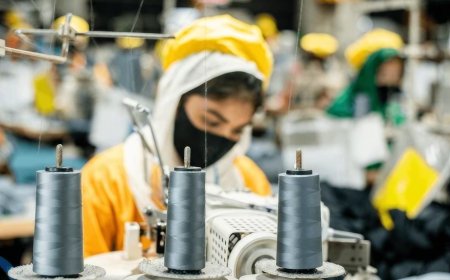
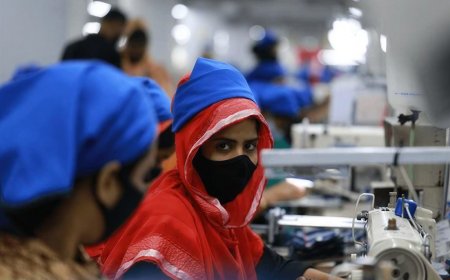
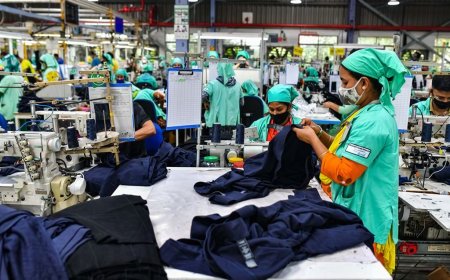
The exit is legally open. Article 6.5 allows either side to terminate the agreement with 60 days notice. But leaving would cost Bangladesh far more than it would cost Malaysia. Garments account for more than 80% of Bangladesh’s exports and support four million jobs. Successive governments have promised diversification for decades, but none has delivered it.
Buying while reviewing the agreement leaves Bangladesh in a difficult position. Every new order makes it look as though Dhaka accepts the deal as binding. With the aircraft purchases, it is already doing more than the text demands. This weakens its argument that the agreement has lost its legal footing. Yet a complete break would allow Washington to portray Bangladesh as the party that failed to honour the deal.
Why would Washington agree to amendments? Negotiations remain possible. US trade officials, led by Brendan Lynch, visited Dhaka in May. Article 6.2 also requires each side to consider the other’s requests in good faith. Washington has an ongoing Section 301 investigation into excess manufacturing capacity that covers Bangladesh, so Dhaka needs something to offer in return.
Its best bargaining chip may be what it has already delivered, the Boeing orders and the gas contract. These purchases can serve as evidence of good faith in return for amendments. Every new order, however, reduces the value of that bargaining chip.
Domestic scrutiny could strengthen Dhaka’s position. A negotiator who can point to a parliament that has not examined the agreement, and to a court challenge, has something to bargain with. So far, scrutiny has been limited.
On April 29, the Speaker ruled independent MP Rumeen Farhana’s request to debate the agreement out of order under Rule 301, which limits points of order to the business before the House.
A High Court petition filed on May 4 challenges the agreement as unreasonable, structurally imbalanced and signed without the required constitutional procedures.
Relief on garments made with American cotton could help exporters. Kutubuddin Ahmed, a former BGMEA president, has predicted that garment exports to the US could reach $15 billion within two or three years.
Bangladesh also secured the lower 10% tier under the new Section 301 tariffs, compared with 12.5% for economies without a deal. This was linked to Bangladesh’s commitment to forced labour. Washington is also considering a quota for goods made with American cotton. Leaving the agreement could put both benefits at risk.
These benefits matter, but they do not justify accepting every term. The garment relief has no start date, and the quota remains under consideration. Garments still face a tariff rate of about 25.6%.
Access to the American market is worth keeping, but it does not require Bangladesh to accept the agreement on its current terms.
First, the promised review must happen. Parliament should examine the agreement before it enters into force. The full tariff schedules, which are missing from the signed text, should also be published.
Second, Bangladesh should use Article 6.2 to seek specific changes. The nuclear and defence sourcing clauses should be removed from a tariff agreement. The two sides should clarify which purchases are binding obligations and which are intentions. The garment relief should have a clear start date, and the promise to “consider” investment should be replaced with a firm commitment.
Third, Bangladesh should honour contracts already signed but pause new purchase commitments until the review is complete. Any future order should require a published business case explaining its costs and benefits.
Fourth, export diversification must become a measurable goal. The government should set annual targets for non garment exports and new markets, with progress reported to parliament.
Eleven days separated the signature from the judgment. Bangladesh cannot change the calendar. But it can still rewrite the text.
Minhazul Abedin Rahat is an International Relations Graduate from Jahangirnagar University.