























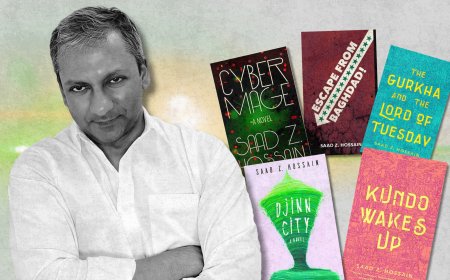
























Saad Z. Hossain on Djinns, Dhaka and the Unlikely
We have to look at how ideas are combined and developed in the sub continent, and find our own heritage that we can be proud of. We cannot erase thousands of years of mythology indigenous to our region simply because we have a thin patina of Arab faith.
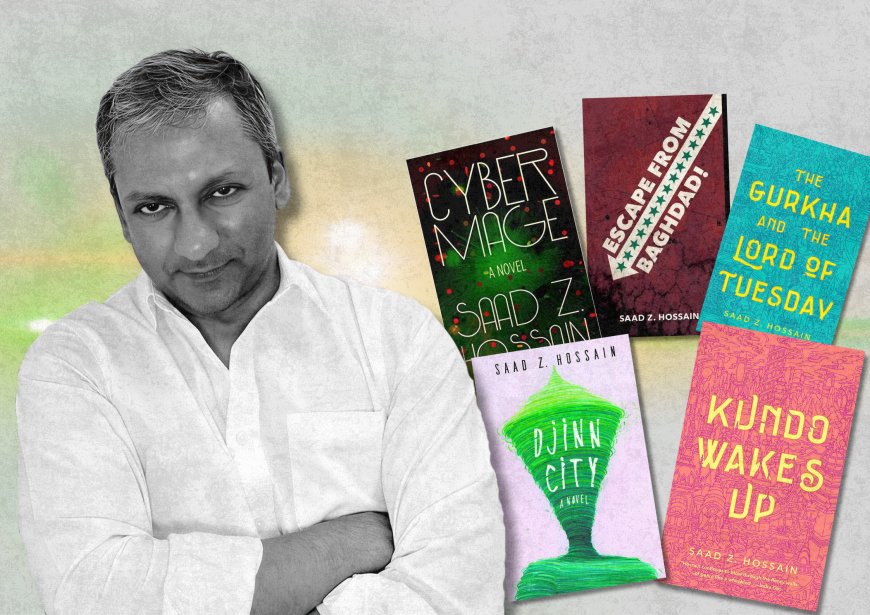
Your stories often begin with premises most writers wouldn't dare attempt. Was there ever an idea you hesitated to pursue because it seemed too strange to work?
I cherish weird ideas. Staleness is the enemy of writing, that feeling of swimming through tropes without finding any originality, of finding your thoughts running on predetermined train tracks rather than running wild in forests and caverns. I try to break the rigid sense of reality we normally operate in.
Fantasy and science fiction have their familiar Western settings and mythologies. What made you want to explore these genres through a distinctly Bangladeshi, South Asian lens?
I started writing science fiction and fantasy originally using the same familiar western settings. As I honed my craft and gained confidence, I leaned into creating my own worlds using our mythology and identity. This also created a sense of crisis and examination into what is Bangladeshi identity, because we are somewhat fractured from our past, and our mythology is an amalgamation of Hindu and Muslim heritage, and even our version of Islam is very different from that of Arab tribesmen. To reflect the mind set and mythological landscape of an entire people or region is difficult and requires more thought than I had originally anticipated when I ventured into SFF as a genre.
In Djinn City and Cyber Mage, Dhaka becomes a world where the supernatural and the futuristic feel oddly at home. What is it about this city that makes it such fertile ground for your imagination?
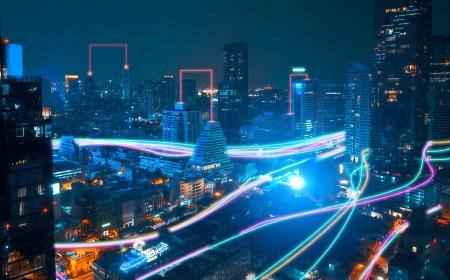
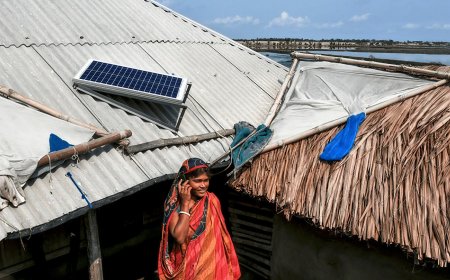
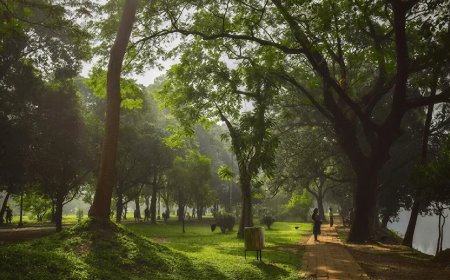
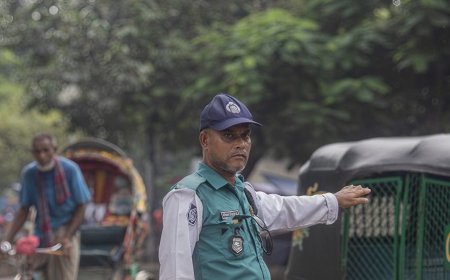
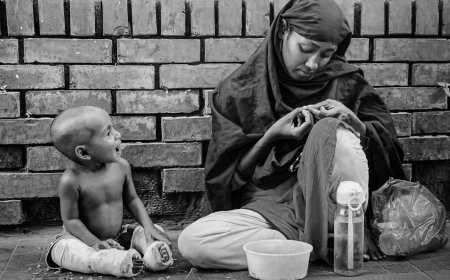
Like any big city in Asia, we have people who almost live in the stone age and people who live on the cutting edge of technology and hubris. If you really look at the city it is easy to see that Dhaka is an amalgamation of the future and the past, that the lives of people vary greatly, with huge inequality in life and income. This makes it easy to find the cracks where the supernatural can exist. The job of science fiction is to push ideas to absurdity and see what happens to a society. Dhaka is already an absurd place, it requires very little work.
Your writing can be absurdly funny even when dealing with some rather dark realities. Does humour come naturally to you, or is it a way of saying things that would be less interesting if taken seriously?
Entertaining readers is also a big part of writing. I follow the idea that a book should work on multiple lawyers, and if any part of that fails, it's bad writing. For example, it should have good characters, a plausible plot, it should be entertaining, and then finally it should have something philosophical to say. If any of those foundational parts of the story are missing, it's very unlikely the readers will stick around for my great mind boggling conclusions about the human condition. Personally also, this is just how I speak and think, it's my inner voice, and I find it easy to sustain. It would be harder for me to be entirely serious throughout a novel, and I suppose I would bore myself to death long before I finished it.
Your stories move between fantasy, science fiction, and satire with remarkable ease. Should emerging writers worry about fitting into a particular genre?
I think if you are commissioned to do a work, then you should strictly follow what you promised to deliver. For everyone else, why on earth would you care to follow any rules? The chances of making money from writing is very small and trying to follow a well trodden path will be unfulfilling and in the end highly unsatisfactory. If you’re just starting out because you have a desire to write, then try to write the most insane, unfettered stuff you can think of. Write entirely for yourself, to entertain and awe your own mind. Let the publishers worry about genres and things like that.
You've reimagined the djinn in ways that feel both familiar and entirely unexpected. How much do you draw from the mythology you grew up around, and do you think we have barely scratched the surface of the stories our own cultures can tell?
With the djinn I wanted to take the seed of something familiar and then develop them in unexpected directions. As I delved into our own mythology I realized that we don’t follow any one concrete tradition. It is not enough to take the djinns of some Arabic Bedouins and use them wholesale, this is not suitable for us. We have to look at how ideas are combined and developed in the sub continent, and find our own heritage that we can be proud of. We cannot erase thousands of years of mythology indigenous to our region simply because we have a thin patina of Arab faith. Any region that is continuously inhabited since the beginning of recorded history should have a very rich bedrock of stories and we have to rediscover this heritage.
Your characters are often deeply flawed but strangely endearing. Do you find yourself growing fond of characters you might not particularly like in real life?
I love all my characters, particularly the bad ones! The only bad characters are boring ones. I try to avoid boring characters. The key trick is to have an internal logic to all characters, big or small. No one should act against their own self interest.
As a Bangladeshi writer publishing in English, do you ever feel the pressure to make your stories introduce Bangladesh to the world, or do you prefer to let readers find their own way into your worlds?
When I was younger I didn’t particularly care, but with some maturity I am increasingly aware that I should not portray my country and people in a thoughtless way. With SFF I am not just describing scenery and facts and figures, but I am delving into the collective subconscious of the people, their mental and mythological landscape, and even if this is just one version, my version, of the truth, it behooves me to say things I can defend later on. This makes me want to develop a consistent view of the world, with a consistent value system, so that I don’t philosophically contradict myself.
What are you working on next? Is there a genre, a character, or a corner of South Asian mythology you've been itching to explore but haven't quite got around to yet?
I have just finished my sixth novel it is with the publisher now, hopefully I’ll get good feedback. This story comes from reading a large quantity of wuxia cultivation novels online, which are basically Chinese online novels about martial arts, and their very well developed fantasy system of levelling up in power by upgrading their energy centers and meridians and acu points. I found there to be some very obvious parallels to the subcontinental system of chakras and the astral body, so I adapted the two into a fantasy world centered on a half Rohingya half Bengali martial artist who starts with nothing and works his way up.
If you could step into any one of your fictional worlds for a day, which would you choose, and would you trust yourself to make it back alive?
I would def pick the utopian Katmandu of Gurkha. This is a world where everyone is taken care of and the only problem for ordinary people is boredom. Of course, it unravels due to the idea of original sin, but for a day, it's perfectly bearable.
Azeema Anhar is an English Language Instructor at ULAB and member of the editorial team at the weekly Counterpoint.