











































How The Blue Tsunami Was And Was Not Like The July Uprising
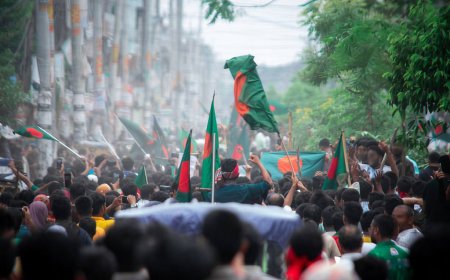
In Bangladesh the great wave of euphoric optimism in the wake of the July Uprising has largely dissipated. A fear of the return of the Ancient Régime is creeping back among the people who participated or cheered on the mass uprising. Instinct of self-preservation in a time of economic and political uncertainty is largely taking over.

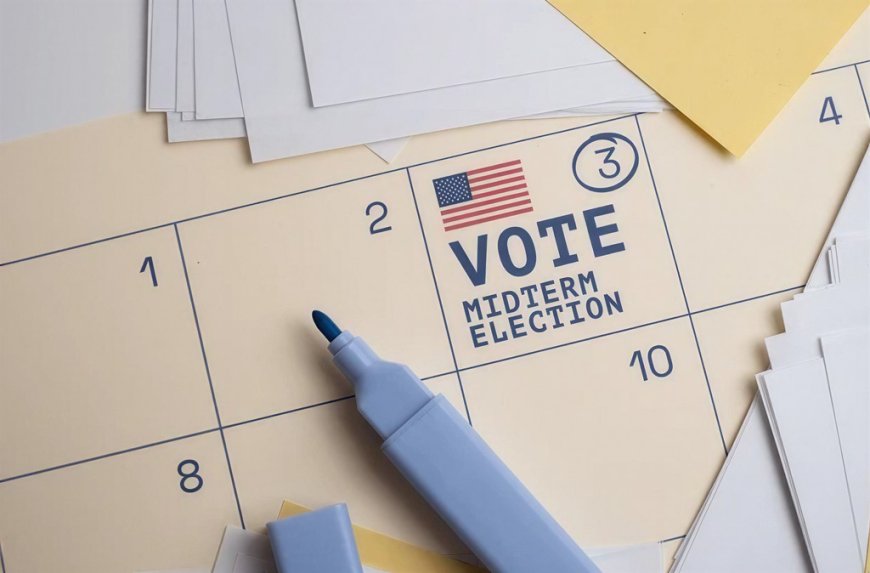
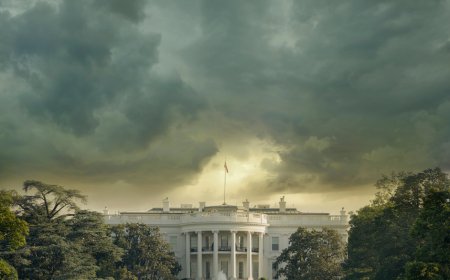
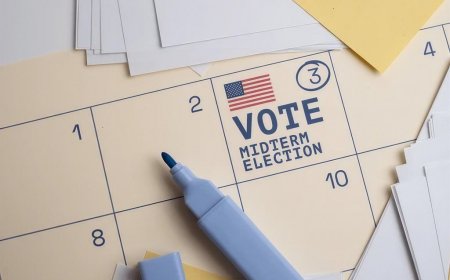
On November 2, on the eve of the Midterm Election, the venerable Financial Times published a prescient analysis titled ‘Donald Trump’s imperial presidency faces a popular uprising: Voters have grown weary of the president’s monument-building at a time of high living costs.’
By the morning of November 4, as the scale of the verdict against the regime and the party became clear, commentators were using terms like popular uprising and popular revolt quite liberally.
While obsessively consuming political commentary on the midterm and its aftermath, I couldn’t help but notice some similarities and dissimilarities of the historic 2026 Midterm Election and the July Uprising in Bangladesh.
The midterm result was truly historic in many ways.
First of all, the turnout of voters at 50% and counting, is the second highest in any midterm election since 1914, surpassed by only 2018, another Trump midterm.
Secondly, the percentage-point difference between the two parties, at 14% + is the highest in 112 years, surpassed by only the 1974 Watergate-scandal midterm.
Thirdly, such huge margin of difference means that not only lots of new voters turned up to vote for Democrats in 2026, but also significant number of traditional Republican voters crossed over to vote for Democrats.
Exit polls and analysis show that 6-7% of previous Trump voters switched votes to Democrats, while only 2-3% of Kamala Harris voters switched. The scale of victory has been dubbed as ‘too big to rig’ -- meaning that it was too large for even unabashed election-deniers to deny.
Youth voter turnout was highest in 30 years, again trailing only 2018 midterm. Compared to the 2024 Presidential election, 18-29 age group swung 32% to Democrats. Young males switched from 56% for Trump in 2024 to 59% for Democrats in 2026.
All these voting surges for Democrats meant that the Blue Tsunami overwhelmed the breakers and swamped traditional deep Republican strongholds like Texas, South Carolina, Kansas, Mississippi, and other places. Democrats flipping nine Republican seats is the biggest flip since 1958.
Polls before the election and exit polls during the voting showed that affordability concerns over high cost of living, the Iran War, and especially corruption of the regime and oligarchs were the main issues for the voters.
In a survey of voters conducted before the election, 55% said government corruption was crucial to their vote, 49% cited affordability, 36% cited immigration, 34% the Iran war, and 23% data centers.
Post-election surveys and political discourse show enormous public expectations riding on this election on curbing corruption of political and business elites, affordability, healthcare, ceasing of imperial foreign wars, halting cruel treatment of immigrants, getting a control on the existential risk of artificial intelligence, etc.
Elite Vices and Public Virtue
The surprisingly high concern of voters about corruption reflected a deeper malaise about the state of democracy in the US and in the world. In the last two years, members of the Trump regime and the oligarchs backing the regime broke all historical analogs in terms of blatant corruption like favor trading, inside dealing, favoritism, nepotism, market manipulation and straight looting of national assets at home and abroad.
Especially egregious were Tech barons and Middle East Oligarchs. There were unending waves of corruption, each one bigger than the previous one. All the while the regime engaged in brash display of wealth, power and monuments building. It seems people were simply too jaded to care about the corruption and were apathetic. It seemed that USA and the world-at-large is irresistibly heading towards a feudal-oligarchic system.
The perceived public apathy and lack of consequences for corruptions and institutions-breaking caused, in many quarters of the citizens and intelligentsia, a profound fall in faith in public morality.
In the day after the election, one of first never-Trump Republicans emotionally said in a podcast that people like him have been waiting for this date for more than ten years, an unambiguous public repudiation of flagrant corruption and institution-destruction. The public rebuke of 2018 and 2020 were not clear and big enough and then there was 2024! 2026 election restored their faith in the public morality of the republic.
Public morality is the bedrock of social and political institutions. Public morality is what that makes citizens willing to pay taxes, obey the rules when no one is watching, accept election results when they are free and fair, hold elected officials accountable when they break norms and rules, etc.
Alexis de Tocqueville, the most famous commentator on America, observed that American democracy rested less on its constitution than on the "habits of the heart" of its people.
The American founding fathers openly worried that the institutions they were devising, would fail without a virtuous citizenry. Institutions do not enforce by themselves. A constitution is just words on a paper unless elected leaders, officials, judges, soldiers and citizens treat it as binding.
Exploring the Similarities
Looking at the historic public repudiation of an exceptionally corrupt ruling elite in this election, I couldn’t help but think of a few similarities in the core mechanics between our July 2024 uprising and the electoral uprising in the 2026 US midterm election.
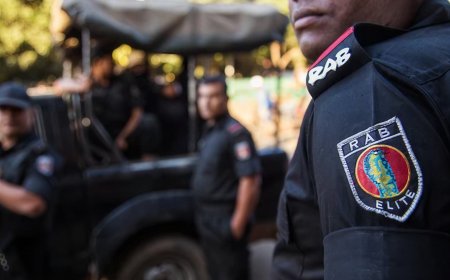
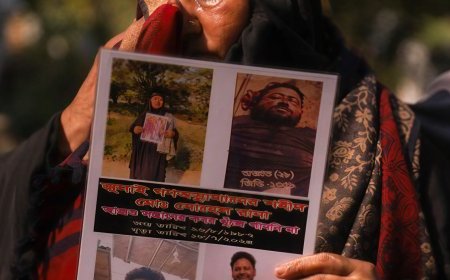
The July Uprising was a direct result of and public reaction to oligarchic looting of the state and nation by the Awami regime. Crisis of inflation, unaffordability and impending crisis in the national economy were underlying factors in people’s mobilization. In July too, general disgust at the cruel excesses of the state law-enforcing forces was a driving force in civic mobilization.
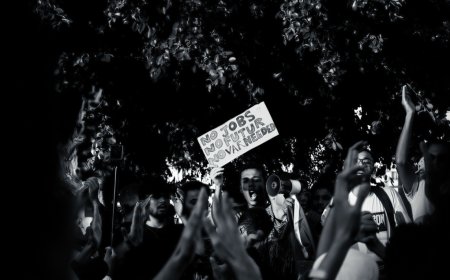
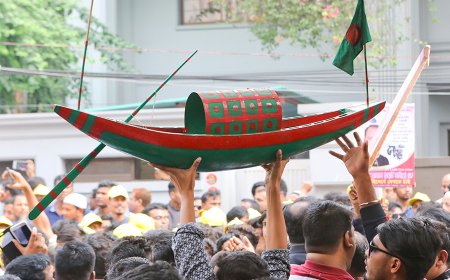
In July a significant number of politically apathetic citizens came out to the streets. Especially the famously apolitical Gen Z in Bangladesh came out in droves to change direction of political history. People yearning for democracy in Bangladesh also were losing hope before July 2024 that they will see free and fair election in Bangladesh in their lifetime. All these developments mean that the magnitude and completeness of the outcome of the midterm was as unexpected as the July Uprising.
Like the immediate aftermath of July Uprising in Bangladesh, we are seeing a huge surge in hope and expectations among a large section of US citizens that the unexpected Blue Tsunami of 2026 can arrest US decline in institutions and economics and revive journey to a more inclusive nation.
And like in Bangladesh in 2024 after August 5, the high expectations are greatly riding on a new crop of political superstars like Zohran Mamdani, Jon Ossoff, James Talarico, Abdul El-Sayed, Annie Andrews, Adam Hamilton, and others.
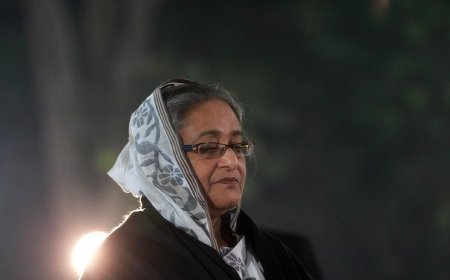
There is a curious Bangladeshi diaspora dynamic linking the aftermaths of July Uprising and the Blue Tsunami too. In 2024, many of the Bangladeshi diaspora in the West, disillusioned with decline in institutions and policies of their governments, pinned great hope upon a post-Hasina Bangladesh and the main actors in the country.
However, the past two years have greatly disappointed them and many of them have now turned their gaze back to their adopted homeland and jumping on the bandwagon of hope from the new heroes.
Hope and Disappointment
But the US has experienced such great surges in liberal-reformist hope before in recent history, only to see the hopes dashed in obdurate rocks of powerful entrenched interests. The 1974 Midterm, which produced a political earthquake similar to 2026 and which, very curiously also occurred during the faltering end of a failed war (Vietnam) and great crisis of affordability and inflation (the OPEC oil embargo), failed to produce significant reform and change in direction.
During his campaign, senator-elect James Talarico often talked about the infamous Powell Memorandum (1971) authored by Lewis Powell that outlined a strategy of uniting corporate special interests, privileging corporate perspectives in the media, appointing sympathetic judges to the court, and buying politicians in both political parties.
Politics since then largely followed that playbook. The 2008 Presidential Election, the great ‘Hope’ election of President Obama, also faltered very quickly in face of entrenched political and ‘too big to fail’ business interests.
In Bangladesh the great wave of euphoric optimism in the wake of the July Uprising has largely dissipated. A fear of the return of the Ancient Régime is creeping back among the people who participated or cheered on the mass uprising. Instinct of self-preservation in a time of economic and political uncertainty is largely taking over.
There is great disappointment with the heroes that July Uprising put forward. There seems to be a profound lack of competence and conviction all around.
The abundant crop of heroes of the US midterm electoral revolution seems to be made of sterner stuff than either our local heroes or previous US would-be political reformers. They have already achieved so much and promise more. They include policy and governance practitioners like Mamdani, experts in policy and politics like Ossoff, El-Sayed, Talarico, indefatigable crusaders like Annie Andrews, and many others.
These new political leaders are masters of communication as well as policy and they have captured the public imagination.
Politics not Hyperpolitics
However, these new leaders are not doing hyperpolitics of attention or influence. They are laser-focused upon their core messages in communication and practice. Zohran Mamdani’s focus on affordability during both the campaign and governance as mayor of New York City made him the unofficial architect of victory in the midterm election.
Abdul El Sayed’s focus on universal healthcare and ‘money out of politics and in your pocket’ enabled him to weather the expensive political attack in history of midterms. James Talarico’s focus on compassion and reform enabled him to win over the most formidable state bastion of the Republicans. Annie Andrews’s core message was healthcare. Jon Ossoff and Adam Hamiliton were similarly focused on core issues for the citizens. They were not doing hyperpolitics.
The heroes of the 2026 midterm election may also fail to arrest the decline of the American republic into a feudal oligarchy.
However, the unexpected voting revolution shows us that public morality and public virtue are the ultimate bedrock of democracy. This also underscores that in reforming political institutions of Bangladesh, free and fair election is the minimum and the necessary.
If we can enable our people to exercise their political judgement at the election freely, then course-corrections and change of directions will occur, and they won’t be forced to come down to the streets later in final desperation.
Shafiqur Rahman is a Political Economist and Executive Director of Bangladesh Research Analysis & Information Network (BRAIN).