












































Why China Doesn't Need to Win the AI Race
The race to build the best AI may matter less than the race to make AI free. If the closed-source model prevails, intelligence becomes a rented service priced by a few firms. If open models prevail, it becomes infrastructure, and the trillions spent building it may never be recovered.


“The race to build the best AI may matter less than the race to make AI free.”
The contest between the United States and China over artificial intelligence is usually framed as a race for the best chip or the smartest model or AAGI (Artificial General Intelligence).
That framing misses the point. The more consequential struggle is over a business question: Will AI remain a costly product sold by a handful of companies, or become a cheap public utility like electricity? The answer will decide who profits, who regulates and, ultimately, who wins.
The Renting Problem
Most people who use AI today are tenants. When someone types a question into a commercial chatbot, they are renting access to a model that sits on another company's servers. That company decides what the model may say, what it costs and whether access continues. If prices rise or access is withdrawn, the user has no remedy beyond the terms of service.
This is the closed-source model, and it underpins the valuation of the American AI industry. Hundreds of billions of dollars have been borrowed and spent on the assumption that AI will eventually generate trillions in revenue. That assumption only holds if customers keep paying.
Open-source models invert the arrangement. A developer publishes the model, and anyone can download, adapt and run it on their own hardware. No one can switch it off or levy a subscription. One is a licence revocable at the owner's pleasure, the other something close to ownership.
The Two Camps
The sides are defined by how each party earns its money. OpenAI, Anthropic and Google sell access to their models, so a free rival that is almost as good threatens their business directly. Nvidia sells the chips that run them, so the more widespread and cheaper AI becomes, the more it sells.
According to the commentary behind this article, Nvidia plans to spend around 26 billion dollars over five years building open models and giving them away.
China's Quiet AI Strategy
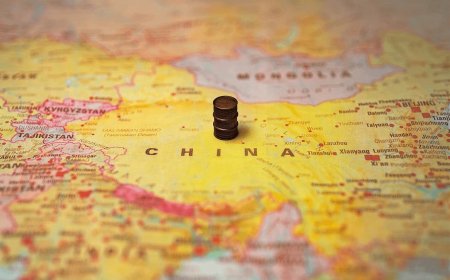
China has understood this better than its rivals. Unable, for now, to match America in the most advanced chips, Chinese developers have chosen to give their models away. Chinese open models are reportedly the most downloaded in the world, said to reach roughly 90 to 95% of the quality of leading American systems at a fraction of the price. These figures come from commentary rather than audited data and deserve scrutiny, but the direction of travel is hard to dispute.
The logic is elegant. China need not build the best product. It need only make a nearly-as-good product free, and let the economics of the American model erode.
If the best AI is free, the companies that financed its creation cannot recover their investment, and a stock market priced on that recovery is exposed.
The American response has been revealing. After Moonshot AI released its open Kimi K3 model, which reportedly beat a leading American system on some benchmarks, the Treasury Secretary raised the prospect of sanctions over alleged intellectual-property theft.
Closed-source laboratories were said to be lobbying hardest for restrictions. National security and commercial interest happened to point in the same direction.
Then, on July 24, more than twenty-five companies, including Nvidia, Microsoft and Meta, urged Washington not to ban open models. Jensen Huang made the letter his first-ever post on X, and the administration backed off.
A Story Within the Story
Three months later, the New York Times reported that US intelligence believed a woman close to Huang was passing information to China. Huang has reportedly acknowledged an affair, and Nvidia's board has opened an investigation. The allegations about espionage remain unproven, and the commentator concedes that nobody knows who leaked the story or why.
One theory holds that the information sat unused for a year and became useful only when Huang turned into the leading obstacle to the closed-source camp. A prudent reader should ask who benefits from each disclosure and demand evidence before accepting any narrative. If Huang is pushed out or changes course, American open-source momentum could collapse, leaving the world to use Chinese models anyway.
When Safety Rules Become a Moat
The final irony may come from the US Congress. Following the recent Democratic sweep, new rules are reportedly in preparation, including mandatory pre-release safety testing and fresh liability for harm caused by AI. Such measures sound unobjectionable, and accountability for dangerous systems is a legitimate goal.
Yet regulation carries a structural risk. Compliance departments, legal teams and testing regimes are affordable for large, well-funded laboratories. They are not affordable for a small open-source project that distributes its work for free. A rule designed to restrain the powerful can, in practice, entrench them by pricing out the alternative.
If that happens, American open source is regulated out of existence while the world keeps using open models, which will increasingly be Chinese. The effort to stop China winning could hand it the victory.
What Is at Stake
The broader worry is financial. If AI fails to pay off, the debt behind it threatens a deflationary collapse and a government bailout. If it succeeds, it displaces the white-collar jobs that supply roughly half of US tax revenue, and the government must again create money.
On the analyst Luke Gromen's theory, as relayed in the commentary, either outcome ends in money printing. That is a theory, not a certainty, and the commentator admits he does not know which way it will go.
The Ongoing Race
The race to build the best AI may matter less than the race to make AI free. If the closed-source model prevails, intelligence becomes a rented service priced by a few firms. If open models prevail, it becomes infrastructure, and the trillions spent building it may never be recovered.
Washington should not mistake protecting incumbents for protecting the nation. A policy that shields paid American models by suppressing free American ones will not stop free AI. It will only ensure that the free AI is made elsewhere.
Shafqat Aziz is a barrister (Lincoln’s Inn) and an accredited Civil-Commercial Mediator (ADR-ODR International).