































































The Limits of American Power in Iran
Tehran’s ability to use the strait as leverage does not make it legitimate to hold other economies hostage. The same scrutiny belongs on Washington’s language about destroying a country.

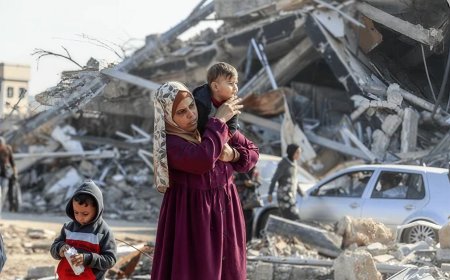
A president can order another strike on Iran. He cannot order a nuclear inspector to know what lies beneath the rubble. That is the gap in Donald Trump’s threat to “destroy the rest of the country”. Speaking at the White House on November 5, Trump said he would rather not do it but might have to.
He put Iran’s recovery at 25 years, offering no basis for the figure in those remarks. More than eight months after the United States and Israel launched their war in February, the president was still talking about what America could destroy. The harder question was what any further destruction could buy.
Trump’s answer to a question about negotiations was revealing: “They’re not doing anything without our approval.”
Yet Qatar said on November 7 that it was still mediating to prevent an escalation.
Reuters reported, citing a senior Iranian official, that Tehran had sent a nuclear proposal through Qatar and made it conditional on Washington meeting seven demands.
Separately, the Associated Press reported that Qatar had floated a narrower exchange: Easing the blockade and releasing some Iranian funds in return for inspectors gaining access to bombed nuclear sites. Neither proposal was an agreement. But the second identifies something an air strike cannot deliver: Access to find out what survived the last one.
The case for military pressure deserves a serious answer. Destroying equipment can delay a programme, and a credible threat may change the other side’s calculations. But a crater tells you where a bomb landed, not where the enriched uranium is.
If Washington cannot account for the material or establish what work has resumed, it cannot know how much time it has bought. More strikes could also strengthen the argument inside Iran that only a nuclear deterrent can prevent another attack.
That outcome is not inevitable. It is a risk that advocates of another offensive must weigh against the delay they expect to achieve.
The obvious alternative, an agreement with International Atomic Energy Agency verification, has a credibility problem of its own. The 2015 nuclear deal paired restrictions on Iran’s programme and international monitoring with sanctions relief.
Trump withdrew the United States in 2018. Washington cannot now ask Tehran to make costly, verifiable concessions while treating its own commitments as disposable. Nor should Iran be asked simply to take America’s word for it, or America to take Iran’s.
That is the point of a phased bargain. Inspectors get access and establish what material can be accounted for; verified steps trigger specified relief.
Both sides need a way to contest breaches without immediately destroying the agreement. Even a limited deal that restores some visibility is worth more than a sweeping promise no one can check.
The Strait of Hormuz makes the limits of Washington’s leverage plain. The US Energy Information Administration put flows of crude oil and petroleum liquids through the strait at 21.6 million barrels a day in the final quarter of 2025. In the second quarter of 2026, they averaged 4.9 million.
Those are historical averages, not a measure of what is moving through the strait today. But they show how much commerce a confrontation in this narrow stretch of water can interrupt. Iran cannot match American firepower; it does not have to.
The prospect of disruption can raise the cost of insuring cargo and buying fuel for countries that have no seat at the negotiating table.
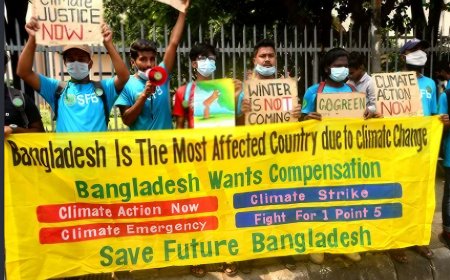
For an energy importer such as Bangladesh, the practical question is whether fuel arrives at a price it can afford, not who delivered the stronger threat on television.
Tehran’s ability to use the strait as leverage does not make it legitimate to hold other economies hostage. The same scrutiny belongs on Washington’s language about destroying a country. Iran is home to millions of people who have no say over its nuclear policy.
Under the laws governing the conduct of hostilities, parties must distinguish between civilians and military objectives, take feasible precautions and refrain from attacks where expected incidental civilian harm would be excessive in relation to the anticipated concrete and direct military advantage.
A presidential remark does not tell us how any particular strike would be conducted. It does tell us how easily a debate over specific military objectives can slip into treating an entire country as a target.
Washington has a choice about what it asks military pressure to accomplish. A narrowly defined objective, such as restoring inspections, gives negotiators something to trade for and the public something against which to judge the outcome.
A demand that Iran does nothing without American approval offers no comparable finish line. Any independent decision by Tehran can then be made to look like defiance requiring another response. That is a formula for extending the war even if every strike hits its intended target.
The test of a settlement is whether inspectors can account for nuclear material and whether ships can pass through Hormuz without either side making commerce contingent on political concessions.
Neither result requires pretending that Washington and Tehran trust each other. Both require terms that can be verified and that each side has reason to keep.
Trump says it may take Iran 25 years to rebuild. He has yet to explain how adding to the wreckage would bring either result closer.
Dr Lubna Ferdowsi is an academic researcher, geopolitical analyst and social commentator based in the UK.