


























































How Platform Safety Rules Can Be Used to Silence Women
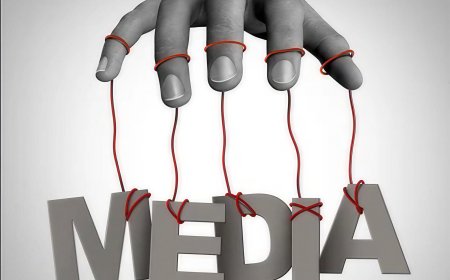
A platform’s safety rules can become a means of suppressing women’s speech when organized hostility is translated into complaints and enforcement proceeds without an adequate explanation. The danger lies in the relationship between those seeking to silence a woman and a company empowered to remove her from public discussion. Even where that relationship is unintended, the company remains responsible for investigating the evidence and the consequences of its decision.


A platform’s safety rules can become a means of suppressing women’s speech when organized hostility is translated into complaints and enforcement proceeds without an adequate explanation. The danger lies in the relationship between those seeking to silence a woman and a company empowered to remove her from public discussion. Even where that relationship is unintended, the company remains responsible for investigating the evidence and the consequences of its decision.
Since October 28, I have been trying to discover why Meta disabled my Facebook account under its “Adult Sexual Solicitation” policy. The notice identified no offending post, message or activity. I appealed that day. Nearly a month later, the appeal remains pending.
Before the restriction, I had faced harassment following posts about sexual abuse in madrasas, journalists’ conduct during Durga Puja, and a request for money from an account using Farabi’s name. I suspect coordinated reporting followed. Meta has not disclosed enough information to establish whether those reports triggered its action.
What I can establish is that the restriction has made sixteen years of writing and personal records inaccessible, interrupted contact with approximately 17,000 followers and required me to seek assistance by circulating a sexualized policy allegation I cannot examine. These consequences deserve scrutiny regardless of what caused the initial decision.
When Harrassment Recruits the Rules
For fundamentalist or political groups seeking to exclude women from public debate, reporting systems offer a potential means of turning ideological hostility into an apparently neutral administrative complaint. An argument about religious authority, institutional abuse or political responsibility can be recast as a question of whether the woman speaking is entitled to remain on the platform at all.
Sexualized reporting has a particular political logic. It can move attention from a woman’s argument to her supposed sexual conduct. Instead of having to answer her criticism, opponents may seek to make her defend her respectability. A platform that applies a sexual solicitation category without identifying supporting material can intensify that displacement, even where its own intention is protective.
This is why gender neutrality in the wording of a rule is insufficient. Enforcement takes place amid unequal social relations. A sexualized allegation against a woman can carry consequences that extend into professional standing, family relationships and personal safety. A fair review must assess the evidence while recognizing those foreseeable costs.
Organized intimidation can also influence women who remain online. Watching another writer disappear after harassment may make the risks of discussing abuse seem greater. Where a platform supplies no intelligible explanation, observers cannot distinguish justified enforcement from a successful attempt to suppress criticism. Uncertainty can encourage self-censorship even without an explicit prohibition on the subject.
Meta therefore needs to examine abusive reporting as conduct in its own right. Relevant questions include whether complaints misrepresent the same material, whether harassment accompanies them and whether their timing suggests coordination. Such patterns should prompt investigation, alongside a substantive assessment of the content. The platform must retain responsibility for the finding instead of allowing organized pressure to determine whose speech survives.
Where harassment succeeds through policy enforcement, restoring an account addresses only part of the harm. The company must also investigate how its procedures became available for that purpose. Otherwise, the labour of resisting the campaign remains with the woman while the mechanism used against her remains available.
The Power to Classify
Policies against sexual exploitation have legitimate protective purposes. Their application requires a platform to understand what a person is saying and doing.
Writing about sexual abuse necessarily involves language that also appears in material promoting it. A survivor’s testimony, an account of institutional failure and an invitation to sexual activity may contain overlapping vocabulary. Their meanings depend on the relationship between the speaker, the words and their context.
A rule intended to prevent exploitation therefore creates an obligation to distinguish its promotion from attempts to expose it. That distinction is central to whether the rule achieves its purpose.
I do not know whether an automated system made the initial decision in my case, whether a person reviewed it, or whether my public writing was involved at all. Meta should provide that information. If a Bangla text prompted the restriction, competent review would require someone able to understand its language, references and argument.
The company’s power extends beyond recognizing words. It can assign a category to someone’s activity and make that interpretation consequential before the person has an effective opportunity to challenge it.
That is why an explanation matters. The issue cannot be resolved by sending the user towards a general policy page. A policy describes prohibited conduct. A decision must explain what conduct the platform found and how the rule applies.
My research and public writing have addressed women’s and children’s protection, sexual violence and democratic accountability. Those commitments do not establish that every sentence I have published complies with platform rules. They explain why I want the material examined carefully, with the same attention to context and evidence that I expect of my own work.
The Work of Answering a Sexualized Allegation
To seek assistance, I have had to circulate a notice associating my account with sexual solicitation. I must explain the accusation before I can explain why I reject it. The classification travels with my name, while the underlying material remains unavailable.
This creates a reputational burden. Sexualized allegations enter a social world in which women’s credibility is already entangled with judgements about respectability. A woman asking for help cannot control how every recipient interprets the notice. She can only keep explaining.
The time involved also matters. Since the restriction, I have drafted letters, collected screenshots, tried unsuccessful contact routes and sought advice from friends. These tasks have occupied hours that could have gone towards research, writing, care or rest.
Feminist scholarship asks us to notice labour that institutions leave uncounted. Here, the work of seeking a correction falls heavily on the person affected. The platform issues a decision. The user undertakes the correspondence, reconstructs events and searches for someone who might listen.
The burden becomes greater when the company withholds the material needed for a response. Which passage should I explain? What inference should I challenge? An appeal against an undisclosed finding asks me to anticipate the institution’s reasoning while it retains exclusive access to the evidence.
Reporting tools remain essential for people facing threats and harassment. Their legitimacy depends on assessment. A complaint is a claim requiring investigation. Several complaints may warrant closer scrutiny, but their number cannot independently establish the meaning of a text.
Where coordinated reporting is suspected, a platform should be able to examine the pattern without treating either the complainants or the account holder as automatically credible. Responsibility for the judgement remains with the company.
The Scale of What Has Been Withdrawn
My account held approximately sixteen years of essays, reflections and exchanges with readers. Around 17,000 people followed it. Many of my writings existed only there. Alongside them were conference photographs, travel albums and videos of my son from birth through childhood.
These materials involve different interests. I have an author’s interest in my essays, a personal interest in family photographs and a shared history with people who contributed to discussions. Comments written by readers belong to their intellectual participation, too. The account accumulated a record of relationships as well as individual expression.
Disabling access affects all of them through one decision.
This raises a question of proportionality. If Meta has identified a particular violation, what justifies restricting an entire account? There may be circumstances requiring urgent and extensive intervention. The company should explain why the scope of its action is warranted in the case before it.
The fact that an account is old or widely followed cannot exempt it from rules. Its history does establish the potential scale of loss. A decision affecting sixteen years of material demands consideration of consequences beyond the disputed item.
The distinction between ownership and access is especially troubling for a writer. Copyright concerns rights in a work. Practical access determines whether the author can retrieve, revise, republish or document it. Retaining rights offers limited comfort when the only available copy cannot be reached.
Publication history has value, too. The date of an essay, the discussion it generated and the responses it received help establish how an argument developed. Saved text alone may preserve the words while losing that surrounding record.
I should have maintained an independent archive. That would have reduced my vulnerability. It would still leave unanswered whether Meta’s decision was justified, why it extended across the account and how I could challenge it.
Rebuilding also requires resources. Writing accumulates through time negotiated around employment, childcare and domestic responsibilities. Recreating an archive or readership cannot be assumed to be a simple matter of starting again. The work already invested deserves recognition when the platform decides how broadly to intervene.
Nor can eventual restoration recover every consequence of delay. Conversations continue. Readers move on. Opportunities pass. Friends interpret an unexplained absence as a personal choice. A restriction can be reversed after relationships and public participation have already changed.
What an Effective Hearing Requires
Friends and academic contacts have offered to approach people they know at Meta. I am grateful for their help. Their willingness to intervene has also exposed another inequality. A route to reconsideration that depends on professional introductions advantages people whose networks can reach inside the company.
An effective appeal should make those introductions unnecessary. It should identify the relevant material, explain the finding and provide a competent reviewer who can consider the user’s response. Where evidence indicates malicious reporting, that should be investigated. Users should also have a clear route to retrieve lawful personal material when broader access is restricted.
Restoration would matter enormously to me. An explanation would matter beyond my case. Without it, I could regain the account and remain unable to understand what happened or address the possibility of recurrence.
Where a platform’s procedures can be exploited to remove women from public debate, correcting an individual mistake is only the beginning of accountability. The company must investigate the conditions that made the mistake possible and explain how it will address them. Otherwise, each woman must fight separately for access while the same vulnerabilities remain available to the next campaign.
Meta’s protective claims should be judged against that responsibility. A company with the power to withdraw a woman’s public presence must provide reasons she can examine and a process through which she can effectively challenge them.
Dr Lubna Ferdowsi is a multidisciplinary scientist and writer whose work examines gender, culture and democratic accountability.