






































































Who Holds the Switch?
The obstacles are real. Coordination is hard, and many past South-South initiatives promised much and delivered little. A large member could dominate, swapping dependence on the North for dependence on a Southern giant.

Artificial intelligence is quickly becoming central to public life. Most countries have no control over it. For the Global South, the stakes are higher still.
In February 2021, Australians logged on to Facebook and found the news gone. The platform was locked in a fight with the government over a law that would make tech companies pay for journalism. In a single night, it cut off news for the entire country.
For a short time, some official health and emergency pages vanished as well. Weeks earlier, Twitter and Facebook had shut down the accounts of a serving US president.
Whatever one's view of that decision, the lesson was hard to miss. A private firm could press a button and reshape a nation's public life.
Now picture that button controlling something else. It no longer runs a news feed. It runs the software your hospital uses to read scans. It checks your bank account for fraud and processes your tax return.
It drives the learning tools your children use at school. None of this is fantasy. It is the direction artificial intelligence is taking. This is why "AI sovereignty" now sits at the centre of global policy debates.
What AI Sovereignty Means
Put simply, AI sovereignty is a nation's capacity to decide for itself how AI is built, used and governed. Stanford University's AI Index 2026 defines it as a state's ability to make independent choices over how AI is developed, deployed and governed.
This is not an all-or-nothing condition. It is a sliding scale. Energy security offers the closest parallel. No nation makes everything it consumes. What matters is whether someone else holds the power to turn off your lights.
We Have Been Here Before
This fear is an old one. In 1980, a UNESCO commission chaired by Seán MacBride released a report titled Many Voices, One World. It showed that international news moved mostly in one direction, from North to South.
Developing nations demanded a New World Information and Communication Order. Cold War politics buried the campaign. Yet the problem it named was real, and it never went away.
Social media made it sharper. A handful of American platforms, joined later by TikTok, began to shape what billions of people read, post, and share. Their rules were drafted in California or some other city, far from the societies they governed.
In Myanmar, the result was deadly. In 2018, a UN fact-finding mission concluded that Facebook had been used significantly to spread hatred against the Rohingya. Gaps in a foreign company's moderation helped fuel a human rights disaster at home.
Since then, switches have been pulled on every side. Meta removed news from Canada in 2023 over a law much like Australia's. Governments, too, have cut off the internet during unrest, from India and Iran to Bangladesh. Sovereignty can shield citizens. It can also gag them.
Private power now stretches even into war. Walter Isaacson's 2023 biography of Elon Musk reported that Musk refused to extend Starlink coverage for a Ukrainian military operation. One private individual decided with wartime consequences.
Why AI Cuts Deeper
AI follows all of these patterns, but it goes further. Three differences matter most. First, social media carries what you say, while AI increasingly does the thinking, writing, and deciding. Second, shutting down social media silences people.
Shutting down AI could freeze hospitals, banks and ministries that now depend on it. Third, a social media app is cheap to copy. Advanced AI demands cutting-edge chips, huge amounts of power and billions of dollars. Very few players have all three.
That concentration is striking. A 2025 study for the Paris Peace Forum estimates that the United States holds about 75% of global AI computing power. China holds about 15%, and the European Union about 5%.
Nearly everyone else is a buyer. Georgetown University's Center for Security and Emerging Technology warns that relying on foreign firms means access can be restricted, made conditional, or withdrawn as geopolitics change. American export controls on advanced chips show this is already happening.
Hosting data centres is not the same as controlling them. Researchers at Oxford University's Oxford Martin School found that Britain hosts around 4% of the world's AI data centers, yet holds sovereign control over only about 0.1%. A foreign firm's data centre on your soil still answers to the laws of its home country.
There is a further twist. Mostly, governments do not hold the switch at all. Stanford reports that industry produced over 90% of the notable AI models released in 2025.
Social media showed us that a company's business model, built on attention and advertising, can mould public life. With AI, a company's business model will mould public services. No citizen voted for either.
Three Powers, Three Philosophies
The race itself is lopsided. Stanford's AI Index 2026, using data from the research group Epoch AI, counts about 90 notable AI models released worldwide in 2025. By the latest count, the United States produced 59 of them and China 35.
Two countries clearly dominate. Europe as a whole produced just two notable models. The rest of the world, home to most of humanity, managed only a handful.
Behind these figures sit very different views of what AI is for. At a recent international conference, an academic expert set out the three main approaches, drawing on his own research.
In his account, the United States puts America and the market first, and shares advanced AI only with its allies. The European Union puts human rights and regulation first, and holds firm to European values.
China puts domestic social stability and broad global benefit first, and says it supports sharing AI among nations. This account closely tracks the work of Columbia University law professor Anu Bradford, whose 2023 book Digital Empires describes three rival models of digital power: American market-driven, Chinese state-driven, and European rights-driven.
Yet each label is partly self-portrait and partly caricature. "Global benefit first" is China's description of its approach. The United States would say its real priorities are innovation and national security.
Europe would describe its aim as trustworthy AI that protects fundamental rights. The framework is best read as one informed view, not a neutral scorecard. Still, it gets one thing right. Each power is building AI to serve its own priorities first.
Who Pays
The gap shows most clearly in who foots the bill. In the United States, AI is mainly a private enterprise. Stanford counts roughly $20.5 billion in US public AI investment over the twelve years from 2013 to 2024.
Private investment reached $285.9 billion in 2025 alone, about 23 times the private figure for China. The state's share is in the low single digits.
China takes a different route. The state's role is far larger, though estimates depend on how it is measured. The research firm Rhodium Group finds that direct government funding made up about a quarter of equity investment in Chinese AI in 2026, down from 30% in 2024 and 2025.
In AI chips and servers, more than 60% comes from state-linked sources. For people elsewhere, the point is simple. In America, the direction of AI is set mostly by companies answering to shareholders. In China, it is set largely by the state. In neither system do citizens of other countries get a vote.
Where Everyone Else Stands
Where does this leave the rest of the world? The same scholar offered a useful lens. He divided national AI sovereignty into four types: Independent, cooperative, dependent, and trusteeship.
Independent countries control most of the AI chain on their own. In practice, only the United States, and partly China, come close. Even they rely on each other's supply chains.
Cooperative countries pool resources with partners, and the European Union is the main example. Dependent countries use foreign AI with little say over its price, terms, or access.
This describes most of the world today. Trusteeship is the weakest position. Here, another country or company in effect runs critical AI on a nation's behalf. Many "sovereign AI" partnerships between developing countries and big tech firms look closer to this than their marketing suggests.
Why not simply build your own? Because the cost is immense. Even the United States depends on Taiwan for advanced chips and on the Netherlands for the machines that make them.
China still struggles to obtain the most advanced chips. National AI models can also turn into vanity projects that trail the best systems. The consultancy McKinsey flags one mistake above all - spending heavily before demand, governance, and skilled people are in place.
Shutting out foreign AI is no answer either. The Tony Blair Institute for Global Change warns that isolation and protectionism weaken sovereignty rather than protect it.
A country that refuses AI may lose more control than one that adopts it on smart terms. The word itself is also open to abuse. Governments may use "AI sovereignty" to excuse censorship, surveillance, or protectionism. Companies use it as a sales pitch.
The Five Sovereignties
Sovereignty is not lost only when someone flips a switch. Picture a student in the Global South who asks an AI assistant a question in her own language.
The answer is vague and full of mistakes. In English, the reply is far better. Now picture a young worker in Nairobi or Manila who screens violent material all day, so the same systems stay "safe" for users in rich countries. He earns little and carries the images home.
The same academic also broke AI sovereignty into five parts. The first is technology - who owns the chips, data centres, cloud services and models. Stanford notes that a single Taiwanese company makes most of the chips inside America's data centres.
Data adds a further risk, since citizens' information may sit abroad under foreign law. The US CLOUD Act, for example, lets American authorities demand data held by US companies wherever it is stored.
The second is regulation - whether a country's laws, or a foreign firm's terms of service, decide what AI may do on its soil. Writing a law is easy. Enforcing it against a company you depend on is hard, especially for a small market that a global firm can threaten to leave.
The third is language. Most leading models learn chiefly from English and Chinese text. Languages with fewer digital resources get weaker and less accurate service. Their speakers fall behind in schooling, public services and work.
The fourth is culture - whether AI reflects a society's own values, history and norms, or quietly imports someone else's. Every model carries built-in choices about what it refuses, how it frames history and what it treats as harmful.
When a government runs its services on a foreign model, those choices come with it. One example widely shared online is how the same AI can answer the same question differently when it comes to Israel, rather than Palestine.
There is an awkward flip side, though. Governments can also invoke "cultural sovereignty" to justify censorship.
Knowledge: A Gift and a Trap
The fifth part, knowledge production, is the least discussed and may matter most. It asks whether a country's scholars, schools and media still create their own knowledge, or lean more and more on foreign AI to find, summarise and rewrite it.
The benefits are real. A researcher at an under-funded university can now search the literature, analyse data, translate sources and draft papers in a fraction of the time. Used well, AI can narrow the gap with richer institutions.
But human checking, vetting and peer review must remain. AI can make confident mistakes and even invent references. People must stay accountable for what is published, taught and decided.
There is a greater danger. Heavy reliance on AI may weaken the thinking skills of a whole generation. A 2025 study by Michael Gerlich in the journal Societies linked frequent AI use to lower critical-thinking scores.
But the warning is plain -a tool that thinks for us can also stop us from thinking. For the Global South, this adds a new layer to an old problem. Poorer countries already lose many of their brightest people to emigration.
Now they risk dulling the abilities of those who stay. A country can lose its brains twice - once at the airport, and once to the chatbot.
The Hidden Bill
Then comes the question of who pays. The Cameroonian philosopher Achille Mbembe coined the term "necropolitics" for power that decides whose lives count and whose are treated as disposable.
Salvador Santino Regilme, an international relations scholar at Leiden University, has applied the idea to AI. In a 2024 article in the SAIS Review of International Affairs, he describes what he calls "necro-exportation."
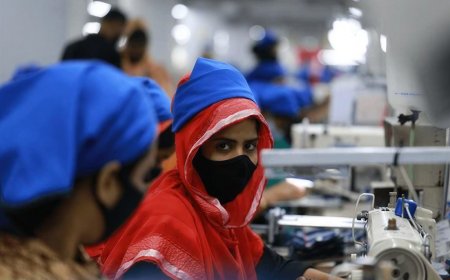
Regilme argues that AI works as a form of digital colonialism. Wealth gathers among a global elite, mostly in the North, while the Global South absorbs the harm. Its workers fill insecure, poorly paid jobs that make AI possible, yet they stay invisible in the industry's story of progress.
The worst of this work, removing hate speech, violence, and child-abuse material, goes largely to English-speaking countries such as Kenya, the Philippines, and India. The environment pays as well. Data centres consume vast amounts of energy and water, and more are being built in the South to serve users elsewhere.
This critique is powerful but needs care. Some scholars see "AI colonialism" as a metaphor, not literal colonialism, since no army occupies anyone. The critique also reaches beyond American firms.
Chinese companies build data centres in Southeast Asia and telecom networks across Africa, Asia and Latin America, including under the Digital Silk Road. A fair analysis applies the same test to every supplier.
These jobs and data centres also bring income, skills and investment. The real question is not whether to accept them. It is on what terms.
Pool, or Be Colonized Again
At the same conference, the academic made a point that deserves wide attention. Countries of the Global South, he said, must combine their efforts and resources on artificial intelligence.
I agree, and I would go further. Without pooling, AI is likely to add a new layer of techno-colonisation to the dependencies the Global South already lives with. These countries already rely on others for capital, technology, trade rules and even the news the world hears about them.
AI threatens to add dependence in how they run services, govern citizens and produce knowledge. Full independence is out of reach. But between dependence and impossible independence lies a third path - cooperation.
This is not wishful thinking. The 2025 Paris Peace Forum study, prepared with Oxford University's AI Governance Initiative, concluded that mid-sized "bridge powers" could build competitive advanced models by pooling computing power, talent and data.
The ingredients exist. According to the study, 87 of the world's 100 most-cited AI researchers come from or work in countries other than the United States and China. The cost of entry is falling too.
China's DeepSeek and France's Mistral showed that clever design can approach leading performance at a fraction of the usual price. History offers a model as well. In 1954, European countries that could not afford big physics research alone founded CERN, which now leads the world.
History also offers a warning. The call for a new information order after the MacBride Report won many declarations but produced few lasting institutions and little money. Speeches and summits are not enough.
Pooling works only when it creates real bodies with real budgets and clear rules. Some foundations already exist - the African Union's 2024 Continental AI Strategy, India's AI Compute Portal with around 10,000 subsidised graphics processors by early 2025, and grassroots language networks such as Masakhane. They are a start, not yet a system.
Real cooperation should rest on six steps, each tied to the sovereignties above. First, shared computing power, jointly owned and open to member universities, governments and start-ups on fair terms. Second, a common negotiating front. Alone, a small country is a customer.
Together, the Global South is a market of billions that can bargain over price, guaranteed access, data location, and promises not to cut services in a crisis. Third, a shared language commons that pools text, speech and archives to adapt open models for local languages.
Fourth, a joint testing centre to check imported models for bias, cultural fit and safety before they enter schools, courts or hospitals. Fifth, a research and education compact that keeps scientists in the region, reconnects the diaspora and teaches people to use AI and to question it.
Sixth, fair standards for AI work, with minimum pay and mental-health support for moderators and labellers, and environmental rules for data centres. Two principles should guide it all: build on open models, and buy from many suppliers at once, so no single company or country holds the only switch.
The obstacles are real. Coordination is hard, and many past South-South initiatives promised much and delivered little. A large member could dominate, swapping dependence on the North for dependence on a Southern giant.
That would be techno-colonisation under a new flag. The superpowers may offer tempting one-to-one deals to split the bloc, so members must agree in advance not to undercut one another. And pooled AI must protect citizens, not become a tool for censorship or surveillance.
The Last Cheap Chance
The Global South missed the industrial revolution and arrived late to the digital one. It has paid for both ever since. AI is a third chance, and perhaps the last cheap one, before costs climb and dependencies harden.
Alone, each country is a small customer signing whatever terms it is offered. Together, the Global South is a market of billions, a deep pool of talent and a voice that cannot be ignored. So, who holds the switch? For the Global South, the honest answer today is someone else.
Acting together is the only realistic way to put a hand on it. The alternative is to be colonised again, this time by code.
Simon Mohsin is a political and international affairs analyst and a Research Fellow at Bangladesh Neeti Gobeshona Kendra (Bangladesh Policy Research Center).