















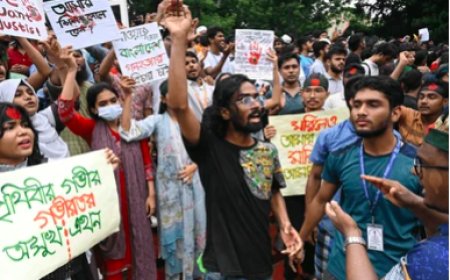










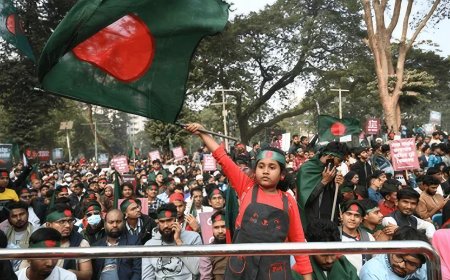











































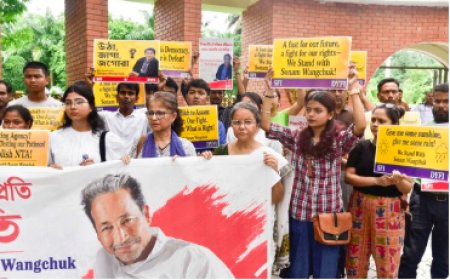
Democracy is ultimately sustained not merely by constitutions or institutions but by public trust. Once that trust begins to starve, feeding the body alone is never enough. The institutions themselves must learn to nourish hope before protest becomes the only language left.

The lesson from Bangladesh, Nepal, and now India is not that students have become unusually rebellious. It is that the region's political class has become unusually incapable of seeing them.
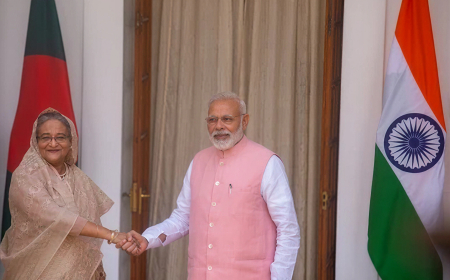
Some analysts argue that Hasina may continue to serve as a strategic political asset in India’s Bangladesh policy, reflecting a Kautilyan approach that could be summarised as: “You have China; we have Hasina.”
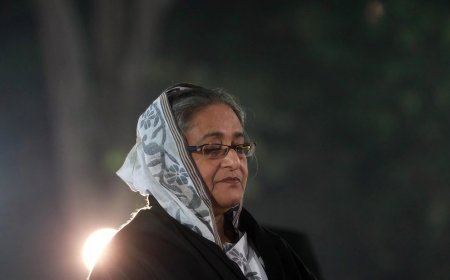
Hasina has nudged New Delhi to define its position on her extradition and forced the BNP to confront, sooner than it may wish, whether it truly wants her back and, if so, on what terms.
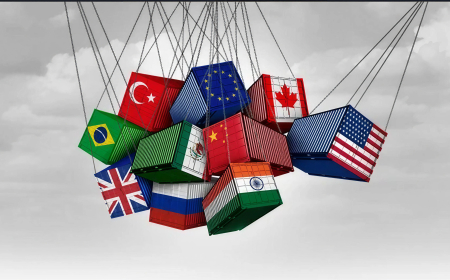
Engagement with China is presented as proof of resistance against Western dominance. Good relations with India become synonymous with regional stability. Foreign policy becomes a performance of political identity rather than a framework for advancing long-term national interests.
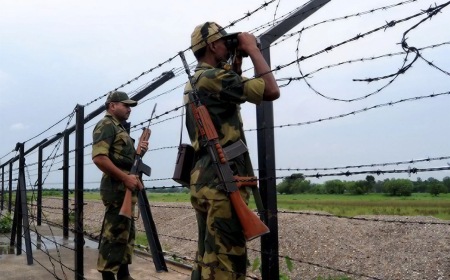
It is prudent for the Indian government to appoint H.E. Dinesh Trivedi, a former politician, as the High Commissioner to Bangladesh at a time when relations between the two countries are experiencing turbulence over the ouster of the last government.

56 previous conferences have produced 56 joint records. The 57th record will be written in New Delhi over four days beginning June 8. It will either mark the beginning of a different kind of diplomacy, one in which Bangladesh’s written commitments mean something and India’s violations carry consequences, or it will confirm that the pattern has been accepted as permanent.

Does it mark the end of an era, or return to a bygone era in which Hindu-Muslim clash was a celebrated theme? The Muslim-majority Bangladesh next door, which has just survived a massive political upheaval, adds urgency to our query.
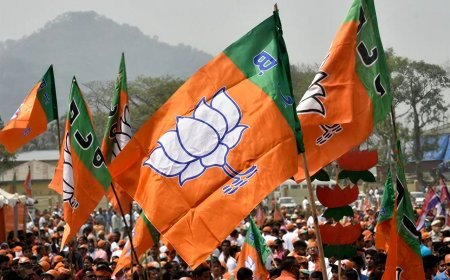
For Bangladesh, diplomacy has now become more important than ever before. It will require a sophisticated neighbourhood policy that combines realism with prudence. Emotional reactions or reactive nationalism unlikely to serve Bangladesh’s long-term interests well.

What India did for us is real. What India has done to us, and what it has told itself to justify that, is the projection.
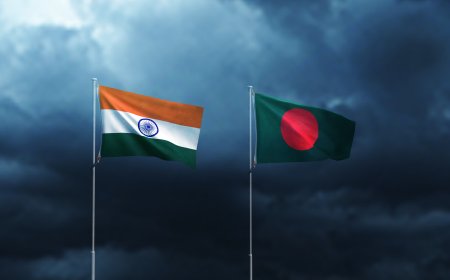
An already weakened Bengali Nationalism is going to be almost moribund. At the core of Bengali Nationalism is a common social and cultural heritage of the Bengali speaking people in both sides of the border.
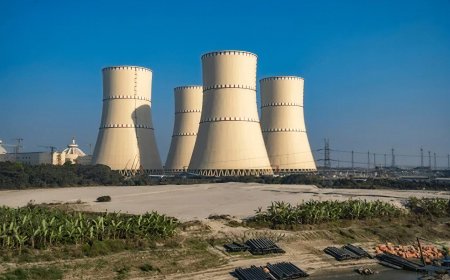
After the 2024 uprising, there was a genuine window to order a forensic audit of Rooppur's finances. That window was not used. The interim government moved on. The contracting architecture remained intact.
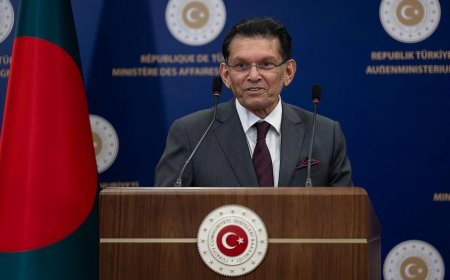
The compact’s energy architecture amplifies rather than mitigates geopolitical shock exposure. A rational energy-security doctrine would diversify suppliers, transit routes, and contract structures; this agreement funnels us toward a single, unbuilt source over which we possess zero strategic control.
The tragedy for both Bangladesh and India is that the more anti-Bangladesh sentiment gets entrenched in India, the more its mirror image will get entrenched in Bangladesh, and the implications for both countries range from the unfortunate to the unthinkable.
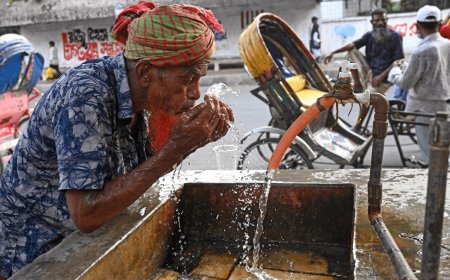
This third article in a three-part series argues how wealth leaves the country, why the gains of growth narrow at the top, and what a fairer settlement would actually require.

Ambedkar is not simply a historical figure. He is a living political question. The Republic of India today is built on his constitutional architecture -- and is increasingly governed in ways that undermine it.