






















































One Card, One Wallet -- and One Window Into Your Life?
Bangladesh’s new digital ID can make government easier to reach. It must not make citizens easier to watch.
Almost 20 years ago, Dr. Mohammad Yusuf and I sat down with a team of statisticians to design a voter ID. Nadia Hashemee, an American graduate student researcher working with me at NDI, helped us. Politics was in ferment. We argued over digits: 10 or 12? Someone raised the idea of a national ID. Dr. Yusuf opposed it.
He had spent 20 years as chief statistician at CBS News in New York. He knew what computers could do. His reason was simple: computers make the maths easy; trust takes time.
The Time Has Come
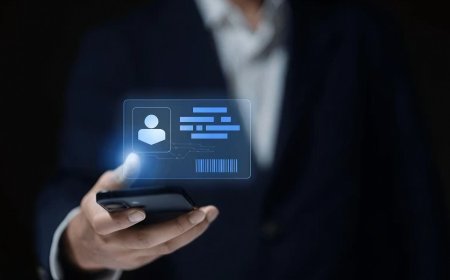
On October 4, at the Bay of Bengal Conversation in Dhaka, Rehan Asif Asad, the prime minister’s ICT adviser, set out a plan to join scattered government services into one citizen portal. Certificates, medical records, and utility services could be cross-referenced using a single identifier.
He named five principles: Simplicity, privacy, security, inclusion, and interoperability (the power of separate computer systems to share data). The Daily Star reported his remarks the next day.
A Prothom Alo follow-up story added details. Every citizen would get one card at birth and keep it for life, to reach health, education, and other services.
The project, called D-STAR, will cost Tk 91.93 billion, of which Tk 15.30 billion is a World Bank loan. The Bangladesh Computer Council is to build it between 2026 and 2031. The adviser’s slogan: “One Citizen, One Digital ID, One Wallet.”
Much of this deserves applause. No one should need a map of the civil service to get a birth certificate. No one should fill in the same form ten times. Shorter queues leave less room for the small bribe.
But a promise of privacy is not proof of it. Nothing is yet built, let alone tested by anyone independent. And linked records raise the stakes. One stolen password no longer opens one drawer. It opens the whole cabinet.
Data gathered to book a vaccine can later profile a protester. The convenience is real. So is the danger.
Who Watches Whom?
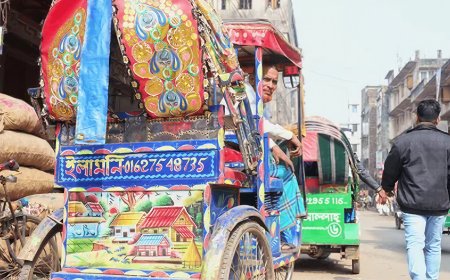
A rickshaw puller cannot watch a ministry the way a ministry can watch him. The rules should say so. Call it asymmetric privacy (privacy rules that weigh the unequal power of citizen and state). The weaker party gets the most protection; the stronger party gets the most scrutiny.
This is not a privilege for anyone with a party card. It should be a rule at the core of the system itself. Build protection around the people most exposed to misuse: the citizen who complains, the clerk who blows the whistle, the journalist who asks, and the researcher who checks the government’s numbers.
Bangladesh need not import the idea. Article 43 of the Constitution protects the privacy of a citizen’s home, correspondence, and other communication, within reasonable limits set by law.
It was written before smartphones. But its spirit covers a database that knows where you live, what ails you and whom you complain about.
Five Questions Parliament should Ask Now
Scrutiny works best before the money is spent. Members of the Jatiya Sangsad, on both sides, should ask the ICT Division:
- Who can see what? Which officials may open which records, and why?
- Is every look logged? Can a citizen see who opened her file, and when?
- How are mistakes fixed? How does a citizen correct a wrong record, and how fast?
- Who checks the system? Does an independent reviewer report to Parliament rather than to the ministry that runs it?
- Who is left out? Can a farmer without a smartphone still get her certificate at the union office?
None of these questions is hostile. A well-run system answers them gladly. An honest answer builds trust. A refusal tells Parliament where to look next.
Rules for the Watchers, Too
Asymmetric privacy has a twin: Symmetric accountability -- the same duty of care for all who handle citizen data, critics of government included.
Opposition parties and researchers must keep their own house in order. They should collect as little identifying data as they can, protect their sources, publish their methods, and correct their errors in public. The right to scrutinize is no licence to keep secret files on voters.
Ten Digits or Twelve
The test of the portal is simple. A good system lets citizens see the state. A bad one lets the state see citizens.
When Dr. Yusuf and I argued over 10 digits or 12, the question looked small. It was not. Each digit carried a promise: Every citizen counted once, the count honest, the result open to checking. A number no one can check is not a public record. It is private power.
That is the spirit of accountability. 20 years on, Bangladesh has the computers. Let the card serve the citizen, answer to Parliament, and stay open to every question the opposition and the public care to ask. Above all: Who is looking, and why?
Bangladesh already has a fundamentally sound social order. Still, the government makes a credible case for a national ID.
My own guess: After some thought, Dr. Yusuf would agree that the trust now exists to bring the two together.
Owen Lippert (PhD) is Executive Director of Opposition International (OI), a non-partisan, non-profit organization based in Toronto that measures and strengthens opposition worldwide under the principle “contest, not contestant.”