






























































The Legend of Khwaja Usman Khan Lohani
In South Asia, his legacy is known as one of the final Pathan chiefs who defied an empire and lived on his own terms until the very end.

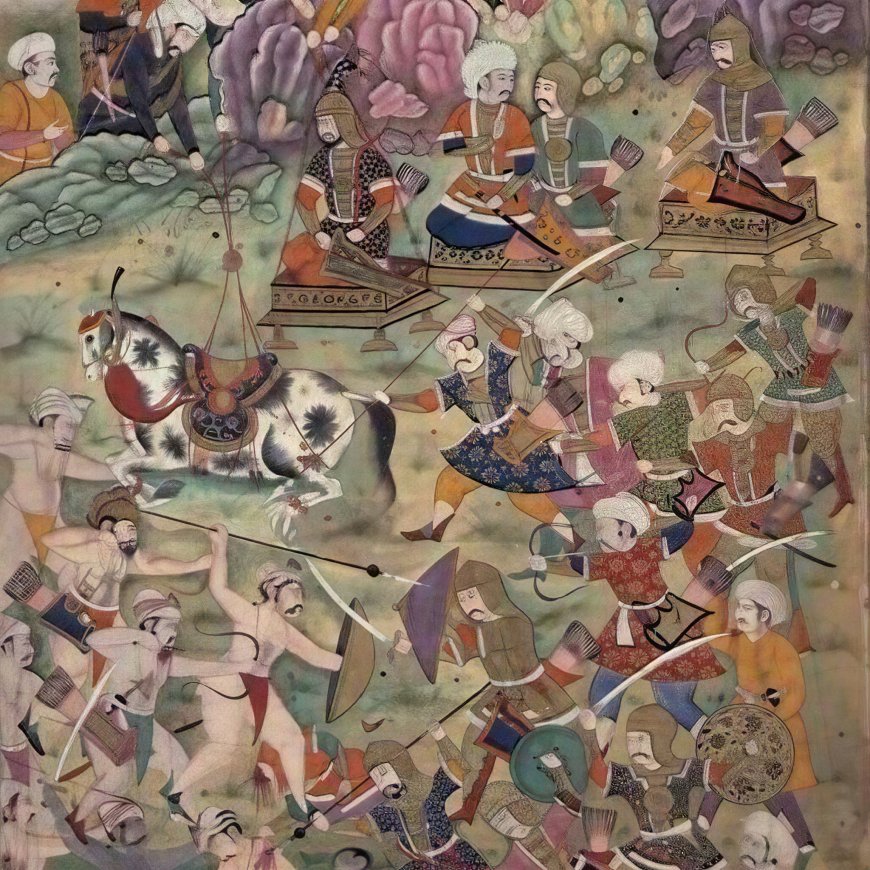
There was a Pathan general serving the final dynasty of the Bengal Sultanate. After the sultanate was dissolved by the incoming Mughal Empire, this general and his family formed their own minor kingdom in north Orissa, only to have this consumed by the imperial forces as well. He left for Bengal, where he spent his remaining years battling the superpower, fully knowing the consequences.
This is the story of Khwaja Usman Khan Lohani.
Khwaja Usman proved his mettle back in 1567, when Bengal Sultan Sulaiman Khan Karrani attacked Orissa. Khwaja Usman was among the nobles posted at Fort of Sunka Gardh to complete the territorial integration into the sultanate, earning a trusted spot in the royal court.
After the successive sultan was executed by the Mughals, Khwaja Usman’s uncle Qutlu Khan Lohani, who served as governor of Orissa, carved out this territory in 1576 and declared independence. The Miankhel Lohani dynasty maintained north Orissa until 1592, when Khwaja Usman and his family were defeated by the Mughals and sent to exile in Bengal.
Life in exile
As a lifeline, Masnad-i-ala Isa Khan gave part of his own land in Bokainagar, Mymensingh Division, to Khwaja Usman in 1593 so that he could become a zamindar in that area. Isa Khan was chief of the 12 large-scale landlords who independently ruled parts of Bengal upon the fall of the sultanate. His generosity earned Khwaja Usman’s allegiance in the anti-Mughal resistance.
The Pathan general’s best days may have been at Bokainagar, where he was chief of approximately 20,000 Afghans. He rebuilt an existing fort on the eastern bank of Balua River, a branch of Brahmaputra.
Bokainagar Fort was a mile long east to west, and half a mile wide, protected by a high earthen wall and deep external moat. A stream flowed through the fort, and the Pathan chief's residence was in the southwestern portion. He may have married Shonabhan, daughter of Bhawal (present-day Gazipur) zamindar Fazl Gazi.
He had two sons, Khwaja Mumriz and Yaqub, alongside several daughters as well, who most likely grew up in this 10-square-mile territory of lush agricultural lands. For 18 years, he and his family battled the Mughals from his stronghold in north Bengal.
Gaining a minor kingdom in Sylhet
In 1611, the Mughal Empire struck against Khwaja Usman at Bokainagar, causing the Pathan group to evacuate. Upon reaching Sylhet Division, he seized the minor kingdom of Ita (present-day Moulvibazar) from Raja Subid Narayan. Upon Khwaja Usman conquering this state, the raja passed away, his sons converted to Islam, and were provided zamindaris in the area.
Afterwards, Usman seized Taraf (present-day Habiganj) as well, setting up his fortified capital in Patan Ushar, Moulvibazar, and becoming the de facto sovereign of south Sylhet.
When the Mughals pursued Khwaja Usman to Sylhet in 1612, the final military operation against him was organized on an imperial scale. Initially, Usman was asked to surrender in return for a prosperous Mughal commandership, which he tersely refused. High officers were brought in from outside Bengal, and the chief commander’s forces included 4,000 musketeers, 500 cavalry, and a fleet of warships.
Compared to this, Khwaja Usman’s forces included 5,200 cavalry and 8,200 paiks, (bonded militiamen). They marched 12 miles east from Patan Ushar to Dawlambapur, five miles south of Moulvibazar town, for the final showdown on March 12, 1612. As bullets and cannonballs showered the skies, a Mughal cavalryman pierced an arrow into Usman, causing a fatal wound.
When gun smoke ascended in the fog of war, the Pathans retreated to Patan Ushar after midnight, taking Usman’s body and burying him in a hidden grave. This protracted campaign removed one of the last Pathan resistances from the Bengal delta.
The following day, Khwaja Usman’s family requested a pardon from the Mughals. They were brought before Emperor Jahangir in Agra, and thereafter fully supported the Mughal governor to maintain law and order in Bengal. As commanders in the Mughal army, they would assist in military campaigns, but were sidelined in the tides of history.
Khwaja Usman’s legacy
Khwaja Usman’s life story comes from official Mughal records such as Akbarnama (Book of Akbar), Tuzuk-i-Jahangiri (Memoirs of Jahangir), and Baharistan-i-Ghaibi (Springtime region of the unseen), in addition to narratives by local historians.
As Khwaja Usman had less than a year of ruling Moulvibazar and Habiganj, there are no brick-and-mortar forts or structures that exist today. Instead, his bloodline was recorded by his descendant Abdur Rahim Khan, who lived from the mid-1700s to mid-1800s. He was a maulana -- religious scholar -- and published several Persian books, including Nala-e-Rahimia, which described the family ancestry.
Abdur Rahim Khan also purchased property under his father’s name in Kanakpur, Moulvibazar, where the clan’s village home remains.
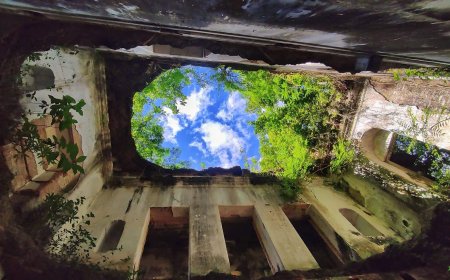
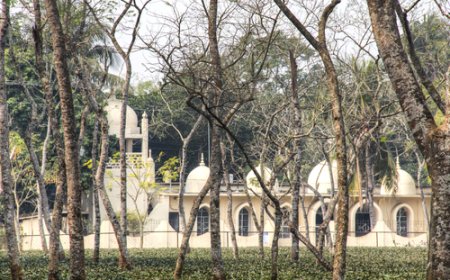
His physical legacy is in Mymensingh, where there are ruins of his Bokainagar Fort. Also, Bokainagar Shahi Jame Mosque carries Khwaja Usman’s name, even though it was built during the mid-1600s Mughal era, well after he left Mymensingh.
Moreover, the Khwaja Usman Khan Silver Pen Award ceremony is held biennially in Mymensingh, recognizing notable contributors in arts, education, language, and literature. An imaginary sketch of Khwaja Usman adorns the ceremonial banner.
In Mymensingh, Khwaja Usman’s name resonates across religious, historic, and cultural sites. In Sylhet, although there are no castles or crowns, his lineage lives on through descendants living in the land.
In South Asia, his legacy is known as one of the final Pathan chiefs who defied an empire and lived on his own terms until the very end. His high-risk, high-reward life trajectory ended with the inevitable, but his name lives on among those keen on knowing how empires rise and fall.
Tamim Choudhury is a public affairs specialist for an international volunteering agency. The views expressed are of his own.