










































































Why Britain Blames the Migrants it Sent For (Part Two)
Migration is not a machine for enriching Britain and it is not draining it either. The sums are small, and what decides them is what people are paid.


Anyone who says the anger in Britain has no basis has not been listening. Rents take half a wage in London and much of the south. Waiting lists for social housing run into years. Whole towns in England have no dentist willing to take NHS patients, so people pay privately or go without.
When I sit in front rooms asking people about their lives, these are the things that come up before anyone mentions migrants, and they come up with more feeling.
The argument I want to make is not that the hardship is imagined. It is that the cause has been misidentified, and that the misidentification is convenient for the people who caused it.
The economist most often quoted against migration is worth quoting honestly. Robert Rowthorn, emeritus professor at Cambridge, published a study for Civitas in 2015 which is still cited by people who want the numbers cut.
He argued that the fiscal effect of large-scale immigration is slight, that the gains come mainly from the age profile of the migrants rather than from anything else, and that those gains could be had with net migration of around 50,000 a year.
He warned about the pressure of a growing population on housing, transport, and the environment, and he said plainly that the losers are workers at the bottom of the pay scale.
That is a solid argument against high immigration and it should not be ignored. But look at what Rowthorn actually concluded about the money. His finding was that migration has very little overall effect on the public finances, whether positive or negative.
The expert the anti-immigration side relies on is not saying that migrants are driving Britain into debt. He is saying the financial side is close to a wash, and that the real questions are about population size and local infrastructure.
When it comes to the idea that migrants take jobs local workers refuse to do, Rowthorn pointed out that there are very few jobs local workers won't take if the pay is fair and working conditions are good. That statement isn't a strike against migrants, it is a critique of employers who rely on low wages and poor conditions.
Ten years on, the evidence has moved, and the direction it has moved in is uncomfortable for both camps. The Office for Budget Responsibility modelled in 2024 what a migrant contributes across a lifetime and found that a person arriving at twenty-five on average earnings contributes more than a British-born worker on the same salary, for the simple reason that the British taxpayer did not pay to raise or educate them.
The same model found that a migrant on low wages is a lifetime cost to the exchequer, and one on high wages a lifetime gain. In December last year the Migration Advisory Committee put figures on it, route by route, for everyone who arrived on a skilled worker visa in 2022/23.
Skilled workers outside health and care are projected to contribute £689,000 each across a lifetime. Nurses, doctors and other health staff who came on the health and care visa contribute £166,000. Care workers, who came on that same visa, cost £36,000.
The partners of care workers cost £67,000. The committee did not leave the reason to inference. It put the gap down to the lower wages that care workers are permitted to be paid on the visa.
The right has seized on the negative numbers, and Reform quotes them freely. What almost nobody points out is that the nurse and the care worker arrived on the same visa, under the same rules, often on the same plane, and that everything separating them happens after they land. The Home Office published the earnings behind the figures. In 2023/24 a skilled worker outside health and care had median earnings of £56,600, while the whole health and care route averaged £30,900 and someone on a family visa £20,200.
Within the skilled worker cohort, the committee found that 72 per cent of the entire fiscal gain came from the top 30 per cent of earners, and that the top tenth, on salaries above £131,000, produced nearly two fifths of it on their own. The ledger is not sorting migrants from natives. It is sorting the well paid from the badly paid.
One bar in that chart deserves a word of caution, since the right will quote it too. The average British resident shows up at minus £39,000 over a lifetime, but that average includes everyone drawing a pension, which is why it is negative. Compare like with like, taking British people of the same age as the arriving migrants, and the figure turns positive at around £117,000. Even on that fairer comparison the skilled worker is far ahead and the care worker still behind. The care worker's deficit is real. What it measures is her wage.
So when a minister says care workers are a burden on the public finances, the sentence should be translated before it is believed. Care workers appear as a cost because the British state decided that people who wash and feed the elderly should be paid a little above the legal minimum. Parliament set the wage.
The Treasury set the funding that set the wage. The migrant simply took the job at the price offered, and is now presented with the bill for a decision made in Whitehall. Rowthorn's point about wages and conditions applies exactly here. The work is not beneath British workers. It is beneath the pay.
The same point does something awkward to the argument about numbers. If the fiscal effect of a migrant depends on earnings rather than on the fact of migrating, then cutting migration is a clumsy instrument and raising wages is a precise one. A government serious about the public finances would fund social care properly and let the wage do the work. A government that wants a grievance to campaign on does the opposite, which is roughly what has happened.
The charge that migrants take British jobs rests on an assumption nobody states out loud, that the number of jobs in an economy is fixed. It is not. People who arrive also rent flats, buy food, send children to school and pay for haircuts, and that spending employs people. Economists have argued about this for a century and the finding has been stubborn.
The effects of migration on the wages and employment of workers already here are small. They are not nothing, and honesty requires saying where they fall. The lowest-paid lose a little, the better-paid gain a little, and the group that loses most is migrants who arrived earlier.
That last finding deserves more attention than it gets in Bengali and Pakistani households, because it describes us. The worker whose pay is undercut by a new arrival in a Whitechapel kitchen is not usually a white man from Essex. He is a Bangladeshi who came fifteen years ago and thought he had reached the bottom rung and could start climbing.
When settled migrants complain about newcomers, they are not simply repeating what they heard on television. They are describing a real squeeze. The mistake is in the culprit, not in the feeling.
Aloke Biswas, the Hackney social worker I quoted in the first part of this article, understood this in the 1970s and said it in words I have not improved on. Asian and Afro-Caribbean workers, he told us when we recorded his life story for Tales of Three Generations of Bengalis in Britain, had been brought to Britain precisely because the country needed labour, and the jobs they ended up doing were “the jobs the White working class will not do”.
John Eversley, describing the East End clothing trade in the same book, remembered Bangladeshi workers concentrated in the least skilled and worst-paid corners of the industry, where a fortnight of frantic overtime could be followed by no work at all. Then around 1981 cheap imports arrived, the market collapsed, and the production jobs went.
Nobody blamed the importers.
The pressure is most real in housing, and that is where I am least willing to wave the evidence away. More people in a country with a chronic shortage of homes means higher rents, and migrants are heavily concentrated in private renting, where the squeeze bites hardest. The government's own review of the international evidence this June found that most estimates cluster between a small fall and a rise of about two per cent in rents for each percentage point that migrants add to a local population. That is a real effect on real tenants.
Set that beside the other number. England lost well over a million council homes through Right to Buy and the decision not to replace them, and the waiting list people are standing in was shortened by that policy long before anyone arrived from Dhaka or Lagos.
The claim that newcomers jump the queue does not survive contact with the figures either. Fifteen per cent of people living in social housing in Britain were born abroad, which is below the foreign-born share of the population, and allocation is made on need, not on nationality. Most migrants on work and family visas have no recourse to public funds at all and are barred from the benefits they are accused of drawing.
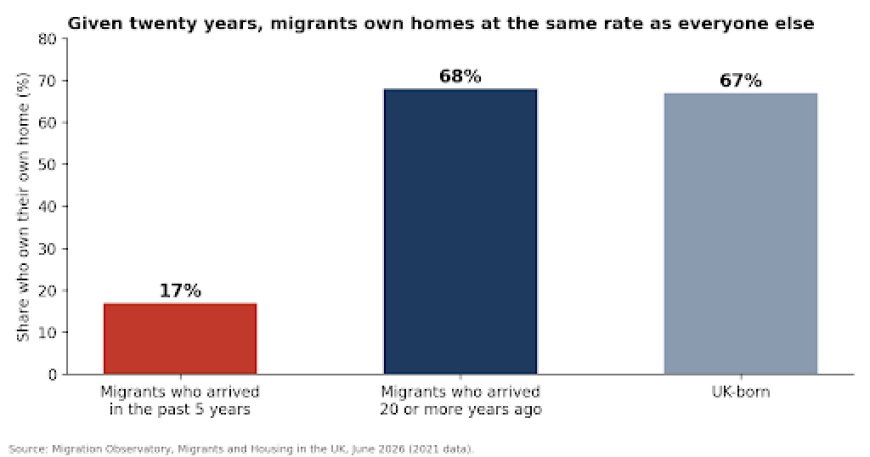
Figure 4: Home ownership by time since arrival
Time is what finishes the argument. Among people born abroad who arrived at least twenty years ago, 68% own their own home, which is fractionally above the rate for the British-born.
Among those who arrived in the past five years it is 17%. The newcomer in the damp flat above the shop is not a permanent claimant on the state. He is at the beginning of the same journey my own generation made, and the country keeps mistaking the beginning for the destination.
Which brings me to my own community, and to a figure the right would enjoy if it ever noticed it. Employment rates for people of Bangladeshi and Pakistani background have long been the lowest of any group in Britain. That is true, and it is worth understanding rather than hiding. Nearly all of the gap is women.
Among Bangladeshi and Pakistani men in London, economic inactivity runs at about 15%, which is unremarkable. Among the women it is 48%. The explanation offered in polite company is culture, and culture is part of it, but the research commissioned by City Hall put the emphasis elsewhere, on childcare that people cannot afford, on employers who will not recognize qualifications earned abroad, on inflexible hours, and on plain discrimination in hiring.
None of that shows the direction of travel. Bangladeshi pupils drew level with white British children in GCSEs in the early 2010s and are now well clear of them. Of those who sat the exams in 2021, two-thirds were at university by 19, against under two-fifths of white Britons, and over the past decade the numbers reading engineering have doubled while those reading medicine have tripled.
Among Bangladeshi women born in this country, employment is now within ten points of the white British rate. Among the women who arrived as migrants it is under a third.
That contrast explains the whole puzzle. The community's average is held down because it keeps being joined at the bottom by people who have just arrived, while those already here climb. Look at the average and you see a group going nowhere. Look at the generations inside it and you see the opposite.
In 1987 the future Charles III walked through Spitalfields and said that people were living in conditions no better than the ones they had left behind. Forty years on, their granddaughters are training as doctors in the hospitals down the road.
What they are not doing is being paid properly for it. Pakistani women in London earn around sixty per cent less than men of their own background, the widest such gap of any group in the city, and Bangladeshi women about fifty per cent less.
A community that gets described as idle has produced a generation of graduates whom British employers cannot find a use for, and the country that complains about the cost of migrants is throwing away the return on the ones it already has. The waste is not of public money. It is of people.
I have heard the cultural version of the complaint too, in front rooms and on doorsteps, and I find it the weakest part of the case. Nobody who walks down Brick Lane, or eats in Bradford, or listens to what English now sounds like in Tower Hamlets, can seriously argue that the country has been impoverished by the people who came.
What has changed is not that Britain lost a culture. It is that Britain stopped being able to offer the things that make people generous, which are secure work, a home within reach and a hospital that answers when you call it. Take those away and the newcomer becomes the explanation for their absence.
The evidence, taken together, says something less dramatic than either side wants. Migration is not a machine for enriching Britain and it is not draining it either. The sums are small, and what decides them is what people are paid.
That is a matter of wages, of housing policy and of who is allowed to organize for better terms, and none of it is settled by counting arrivals at Heathrow.
My own view, after 29 years and a good many front rooms, is that the argument is being kept alive precisely because it cannot be won. A country that never resolves the question of the migrant never has to answer the question of the landlord.
Jamil Iqbal is a Bangladeshi-British researcher and writer based in London. His work focuses on political economy, migration, labour and development in South Asia.