

































































Why I Still Turn the Record Over
For music lovers of my generation in Bangladesh, those names bring back fond memories. Music then required effort. Albums had to be found, borrowed, bought or recorded, and collections grew slowly.

Before I can play a record, I have to get up. I slide it out of the sleeve, place it on the turntable, and lower the needle. 20 minutes or so later, the music stops, and I have to get up again and turn it over. Side A, Side B. None of this is convenient. That, increasingly, is the point.
In Act I, Scene I of William Shakespeare's Twelfth Night, Duke Orsino enters his court as musicians play. "If music be the food of love, play on," he declares. He wants excess: So much music that his appetite for unrequited love will sicken and die.
More than four centuries later, Orsino's desire for excess still resonates. We live in an age of extraordinary abundance, and nowhere do I experience it more personally than in music.
Almost any song, album, or artist I can think of is available within seconds. Music that once required considerable effort to find can be summoned instantly on a phone. Streaming has given us something unimaginable when I was growing up: Limitless music, anywhere, at any time. I embraced that convenience enthusiastically, and still do. But lately I have begun to wonder what it has done to the way I listen.
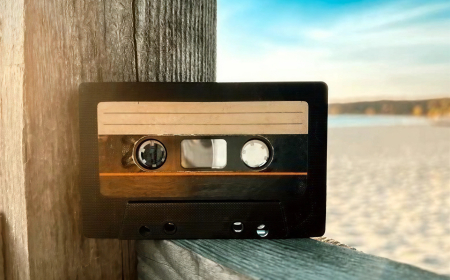
Almost 40 years ago, during my boyhood, some of my most prized possessions were a shelf full of audio cassettes, many recorded at studios such as Rainbow, Rhythm, Shur Bichitra, and Ganer Dali on Elephant Road. For music lovers of my generation in Bangladesh, those names bring back fond memories.
Music then required effort. Albums had to be found, borrowed, bought, or recorded, and collections grew slowly.
There was anticipation in discovering something new and satisfaction in finally possessing it. Discovery itself was a more personal experience. I still remember Kabeer Bhai of Rainbow music shop, who became something of a mentor and a trusted source of musical knowledge.
Before deciding whether to dub a particular album onto a cassette, I would often seek his advice: Was the album worth recording? Would it go with my musical taste? Over time, he knew enough about my preferences to suggest what I might enjoy, and occasionally what I should probably leave alone.
Looking back, I think those human recommendations were better. Kabeer Bhai did not arrive at them by analyzing my listening history or calculating what people with similar tastes were playing. There was human judgement and real conversation. Now and then, he would persuade me to listen to something outside my usual preferences.
Perhaps that is one of the subtle differences between recommendation and prediction. An algorithm can become remarkably good at predicting what I am likely to listen to next. Kabeer Bhai was sometimes more interested in what he thought I ought to hear.
Those conversations became part of the enjoyment. Discovering music was not simply about gaining access to another album. It involved people, curiosity, conversation, and the possibility of being surprised.
Then technology transformed almost everything. Cassettes gave way to CDs, CDs to MP3s and increasingly sophisticated digital formats, and eventually physical collections gave way to streaming. Today I can hear almost anything I want, whenever I want it.
And something else happened along the way, at least to me. With almost unlimited choice at my fingertips, I became restless. I would start an album, then remember another song.
A few minutes later I might move to something else. Sometimes I would listen to only part of a track before curiosity took me elsewhere. Music became easier to access but harder to stay with. I found myself consuming it in fragments.
I cannot say exactly when this happened, nor can I blame streaming for it. The choice is ultimately mine. But I have become conscious that the way I listen today is often quite different from the way I used to listen. That has made me think about something beyond music.
There was a time when listening to an album meant listening to the album. Side A came before Side B. Songs arrived in the sequence in which the musicians had placed them. Some became immediate favorites; others required repeated listening before I began to appreciate them. There was no effortless skipping through an endless universe of alternatives.
Perhaps that changes something in us, or, more cautiously, perhaps it has changed something in me. I sometimes wonder whether my growing habit of surface listening has influenced the way I approach other things. When I become accustomed to moving quickly from one piece of information, topic, or thought to another, does it become more difficult to remain deeply engaged with one thing for an extended period?
There is another dimension to this that matters to me increasingly. A piece of music represents years of learning, practice, experimentation, and creative struggle. An album may require months, sometimes years, of work by musicians, composers, and many others.
When someone has invested that degree of creativity and passion in creating something, giving it our full attention is not merely a way of enjoying it more completely. It is also an act of respect. That thought has begun changing the way I listen again.
Against this backdrop, the revival of vinyl becomes particularly interesting. A format once considered almost prehistoric has returned. In March 2026, Forbes reported that annual U.S. vinyl sales had exceeded $1 billion for the first time this century.
Even more interestingly, physical music is attracting people who have little reason to be nostalgic about it. Younger listeners, including those who have grown up entirely in the age of smartphones, streaming and algorithm-driven recommendations, are buying records and turntables.
Why? Perhaps it is the album artwork. Perhaps it is ownership, the simple satisfaction of possessing something rather than merely having access to it. Perhaps it is the tactile experience. Perhaps it is fashion. Or perhaps, for some, the limitations themselves have become part of the attraction.
A vinyl record is remarkably inconvenient compared with streaming.
You have to choose an album. You have to remove the record from its sleeve, place it on the turntable, and lower the needle. You cannot carry thousands of albums in your pocket. You cannot shuffle everything. After 20 minutes or so, the music stops, and you have to get up and flip the record over.
Yet those inconveniences do something rather interesting. They make me participate. More importantly, they make me slow down. When I put on an LP, I am much more likely to listen from beginning to end. I hear songs I might otherwise have skipped. I begin to notice arrangements, instruments, and small details that often escaped me during more casual listening. The difference is not really between analogue and digital. It is between listening and merely hearing.
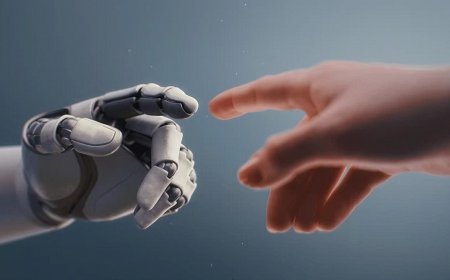
Artificial intelligence is now entering areas of creativity we once instinctively regarded as uniquely human. Music is being generated without musicians creating it in the traditional sense. Images, writing and other creative works can increasingly be produced within seconds. Some of the results are astonishing, and the technology will undoubtedly become far more sophisticated.
I do not see this as a reason to reject technology. Quite the opposite. Technology has enriched my life in countless ways, and I continue to embrace it. But its accelerating capabilities make me think more carefully about what technology cannot give me simply by making things faster, easier, or more abundant. Attention may be one of them.
Perhaps this is why Orsino came to mind. His excess was music. Ours is something much larger: An almost limitless abundance of information, entertainment, images, music, and increasingly even creativity itself, all competing for a share of our attention.
I am very much part of that world. I enjoy the convenience of streaming. I discover music through it. I use technology every day. I certainly do not want to return to a time when finding a particular album required days of searching. Yet I have also started returning more frequently to my vinyl shelf.
Why I do so is not quite easy to explain. There is nostalgia, certainly. There is perhaps also a sense of purity in returning to something more natural and warm-sounding, something physical, deliberate and unhurried. But increasingly I feel there is something more to it.
I have embraced much of technology willingly, and I will continue to do so. Yet somewhere within me there is also an instinct not to allow its enormous convenience to change everything about the person I have become over the years: The way I enjoy things, the way I connect with them, and some of the small rituals and habits that have accompanied me through life. Perhaps returning to vinyl is one small expression of that instinct.
Taking a record from its sleeve, looking at the artwork, placing it on the turntable, lowering the needle and, eventually, getting up to turn it from Side A to Side B may seem insignificant. But these small rituals have a wonderful way of making life pleasant. They require a little effort, a little involvement and, importantly, something of ourselves.
I sometimes wonder whether preserving a few such rituals may matter more than we realize. Not because they belong to an analogue past, or because the past was necessarily better, but because our habits, behaviors and little pleasures are part of what we gradually become over a lifetime.
I will continue to use technology to explore music, but I will also keep turning the record over. Side A, Side B. There is something in that simple act that I cannot fully explain: Something nostalgic, something pure, perhaps even something reassuringly timeless. And for now, I am quite happy to leave it unexplained.
Warisul Abid is a writer, photographer, and HR professional based in Dhaka, Bangladesh. He writes about music, coffee, and the small rituals that quietly shape a life. His email address is [email protected].