


























































The Rooppur Meter is Running. The Electricity is Not.
After the 2024 uprising, there was a genuine window to order a forensic audit of Rooppur's finances. That window was not used. The interim government moved on. The contracting architecture remained intact.

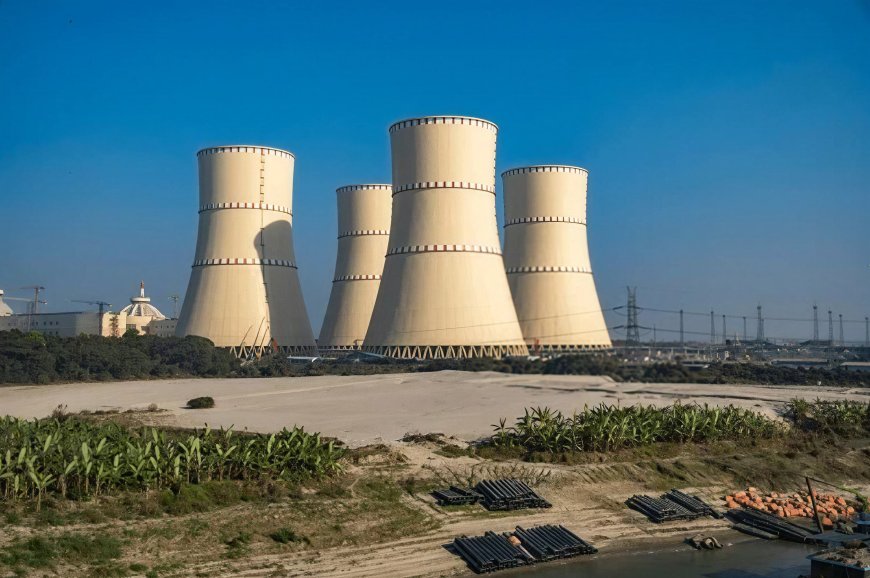
Fuel loading at Rooppur Unit 1 began on April 28. I am glad. Bangladesh needed baseload power. The Adani dependency was a structural vulnerability that one tripped unit exposed brutally, costing the grid 700 MW overnight. Nuclear diversifies that risk. A 60-year clean energy asset is real value.
But none of that is what this piece is about.
This piece is about a gap. A specific, documented, never-publicly-explained gap between what Bangladesh's own experts said this project should have cost and what the government actually signed.
That gap matters regardless of whether you support nuclear power, regardless of which party you blame, and regardless of whether the plant eventually works.
The Deal, Plainly Stated
In December 2015, Bangladesh signed a $12.65 billion contract with Russia for two VVER-1200 reactors at Rooppur. Russia financed 90% through an $11.38 billion credit facility, at LIBOR plus 1.75%, capped at 4%, repayable over 28 years with a 10-year grace period.
The debt belongs to Bangladesh. The repayment risk belongs to Bangladesh. As the dollar gained roughly 43% against the taka since 2021, the real domestic cost of that debt has grown without anyone stealing a single taka.
This was also not purely an energy deal.
During the same 2013 Moscow visit where the nuclear framework was agreed, Bangladesh signed a separate $1 billion Russian weapons loan. Bundling a nuclear plant with a weapons purchase is not development financing. It is a state-to-state strategic alignment dressed in the language of infrastructure.
India entered through the transmission side. Bangladesh's grid evacuation infrastructure was financed through India's Line of Credit, which required a minimum of 75% of materials and services to be sourced from Indian firms.
When Indian contractor bids for one critical package exceeded estimated costs, India pulled LoC funding for that package entirely. The delays this created are part of why Bangladesh is currently paying roughly Tk 10 to 12 crore per day in loan interest on a project that has not yet delivered a single unit of electricity to a home.
The meter is running. The electricity is not.
The Price Problem
Each Rooppur reactor unit cost approximately $6.33 billion, the highest per-unit price Rosatom has charged for this technology in any comparable export deal.
Belarus, also a first-time nuclear nation, paid roughly $5.5 billion per unit for the same VVER-1200 model.
Hungary's Paks II, a mature nuclear state with four operating reactors and an established domestic supply chain, paid approximately $6.25 billion per unit under a similar Russian export credit.
India's Kudankulam Units 3 and 4, which began construction in 2016 under a different and older reactor model, cost $2.98 billion per unit.
The comparison to India is not perfectly clean. The reactor models differ, India had decades of existing nuclear infrastructure, and India handled its own construction management. These are legitimate cost factors.
But here is what does not move regardless of those caveats.
Rosatom's own published specifications for the VVER-1200 list an overnight construction cost of $1,200 per kilowatt, with 35% fewer operational personnel required than the VVER-1000 due to automation. The reactor was designed to be more cost-efficient than its predecessor, not more expensive.
Bangladesh was charged $5,500 per kilowatt.
Dr. Abdul Matin, a nuclear engineer who advised Bangladesh's Atomic Energy Commission and personally recommended switching to the VVER-1200 design, wrote in The Daily Star in 2017 that this price was "simply unreasonable and unacceptable."
He concluded that even accounting for cooling towers and poor soil conditions at the Rooppur site, the price should not have exceeded $4,000 per kilowatt, and that "we are paying this price because our negotiators didn't have the expertise to properly scrutinise the quoted price."
That is not a foreign critic. That is the government's own nuclear engineering adviser.
Dhaka Tribune's independent cost analysis concluded that after applying generous premiums for every legitimate cost factor, including first-of-a-kind infrastructure, EPC turnkey scope, post-Fukushima safety additions, and financing risk, the expected total for both units should have been between $6 and $8 billion.
Bangladesh signed at $12.65 billion. When Dhaka Tribune asked project officials to explain the gap, not one went on record.
The Corruption Environment
In 2019, the Anti-Corruption Commission filed cases against 14 people, including Public Works Department engineers and contractors, over procurement irregularities in Rooppur staff housing. Among the documented items: a pillow invoiced at Tk 5,957, plus a separate charge to carry it upstairs. Total irregularities in the housing procurement amounted to roughly Tk 36 crore.
That is the visible layer. The small corruption that leaves a paper trail because the amounts are too modest for anyone to properly conceal.
In December 2024, the ACC opened a formal inquiry into allegations of approximately $5 billion in embezzlement and money laundering linked to the broader Rooppur project, naming members of the former ruling family. These remain allegations. No charges have been filed specifically on the nuclear project corruption case as of publication.
What the pillow scam proves is not the scale of the corruption. It proves the environment. A procurement culture where a government-linked contractor invoiced a pillow at ten times market value, inside one of the most scrutinized infrastructure projects in Bangladesh, tells you something important about what larger procurement decisions looked like when nobody was watching.
The Fair Objections
Several technically informed critics of this analysis have raised points worth acknowledging honestly.
The peer-reviewed study by researchers at North South University and Bournemouth University estimated Rooppur's levelized electricity cost at 9.36 cents per kilowatt-hour against Kudankulam's 5.36 cents. That comparison is real.
But the study's own conclusion is that policymakers should still prefer nuclear power for Bangladesh because Rooppur is cost-competitive against Bangladesh's existing electricity alternatives, including diesel, furnace oil, and imported LNG. Using the comparison figure without stating the conclusion was an omission I have publicly corrected.
Turkey's Akkuyu plant has been raised as evidence that Bangladesh's pricing is not unusual. Turkey's deal is a build-own-operate model: Rosatom owns the plant and sells electricity to Turkey under a guaranteed 15-year tariff of 12.35 cents per kilowatt-hour. Turkey avoided sovereign debt but locked into a tariff higher than Rooppur's projected generation cost. These are different risk structures, not a direct comparison.
The strongest objection is the structural one. Bangladesh was building from scratch, with no nuclear ecosystem, no trained domestic workforce, no existing grid capacity, full Russian EPC scope including training and initial fuel, and a difficult inland site requiring cooling towers.
These all add cost legitimately. Dhaka Tribune's analysis incorporated all of them. They still could not close the gap to $12.65 billion.
The Unanswered Question
The argument that a project can be overpriced and still be strategically necessary is correct. Nuclear baseload improves Bangladesh's energy security compared to continued dependence on imported hydrocarbons. Both things are true.
But "strategically necessary" cannot be used to close the pricing question. Necessary projects are precisely the ones where accountability matters most, because they are the ones where governments know the public cannot say no.
Bangladesh will repay this debt for 28 years. The World Bank's April 2026 Bangladesh Development Update reported rising poverty for three consecutive years. Education spending has remained stuck below 2% of GDP for years, well below UNESCO's minimum recommendation of 4%.
Out-of-pocket health costs account for roughly 73-74% of total health expenditure in Bangladesh, among the highest in the region. These fiscal pressures and the Rooppur debt service are not separate stories. They compete for the same public resources.
After the 2024 uprising, there was a genuine window to order a forensic audit of Rooppur's finances. That window was not used. The interim government moved on. The contracting architecture remained intact. A new government has now taken office. Whether it will conduct the audit that should have happened two governments ago is an open question.
The project is real. The debt is real. The unexplained gap between what it should have cost and what was signed is real. The public paid for all three.
That is the question worth asking, regardless of how the lights come on.
Mahtab Mashuq Tonmoy is the Founder and CEO of Scalisage, an AI infrastructure and services agency based in Dhaka.