































![A Ledger of the Soul: Navigating the Allah-Bhagavant Nexus in a 19th-Century Puruṣākāra Jñāna Caupara [Gyan Chauper]](https://counterpointbd.com/uploads/images/202608/image_430x256_6a93baa3b09a7.jpg)


















When the Body Becomes the Last Ballot
Democracy is ultimately sustained not merely by constitutions or institutions but by public trust. Once that trust begins to starve, feeding the body alone is never enough. The institutions themselves must learn to nourish hope before protest becomes the only language left.
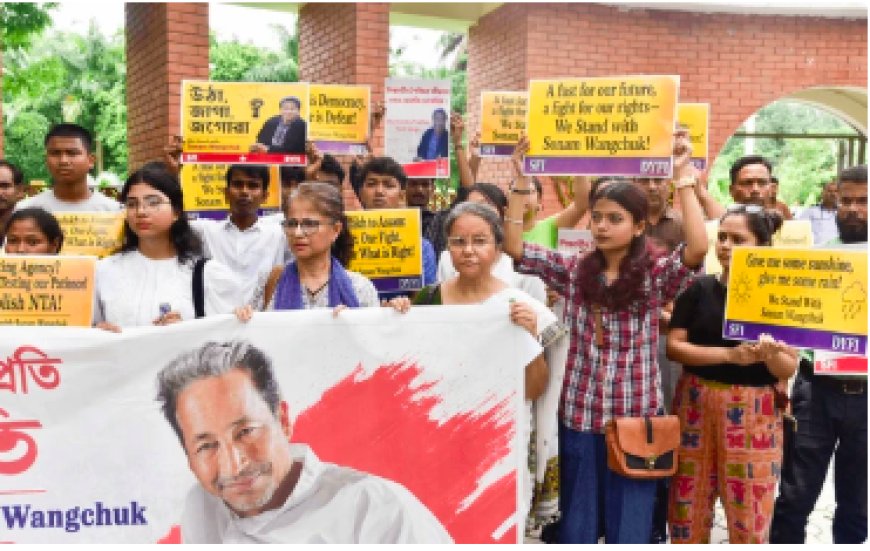
When a citizen stops eating to make the state listen, democracy faces an uncomfortable question. Is the hunger striker exposing the moral strength of a free society or revealing the weakness of its institutions?
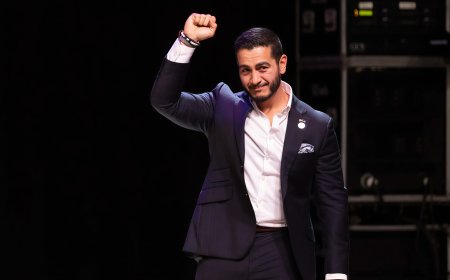
The recently concluded fast by Indian education reform activist Sonam Wangchuk forces us to confront this paradox. His deteriorating body has become more than a symbol of solidarity with students protesting examination irregularities.
It has become an indictment of a political culture where physical suffering appears more effective than reasoned argument.
Modern democracies are built on the assumption that disagreement can be resolved through elections, courts, legislatures, public debate and a free press. These institutions are meant to transform outrage into policy without demanding extraordinary personal sacrifice.
Yet history repeatedly demonstrates that when these channels lose credibility or become painfully slow, citizens search for another language. Hunger becomes that language. The body turns into a petition that cannot be ignored. Every passing day without food becomes another sentence in an argument that words alone could no longer communicate.
Wangchuk's protest emerged from growing frustration over alleged irregularities surrounding India's medical entrance examinations.
What began as anger over one examination quickly evolved into a broader demand for accountability and educational reform. That transformation is perhaps the most significant aspect of the movement. It is no longer merely about leaked papers or administrative failures. It is about trust.
Examinations represent the promise that talent and hard work will determine opportunity. When that promise appears compromised, an entire generation begins questioning the fairness of the system itself.
Education occupies a unique place in South Asian societies. For millions of families, it is neither an abstract ideal nor simply another public service. It is the primary route out of poverty and social limitation.
Parents invest savings, students sacrifice leisure and families place extraordinary emotional expectations upon examinations.
Consequently, when the integrity of competitive tests is questioned, the resulting anger extends far beyond disappointed candidates. It shakes public confidence in meritocracy itself.
This explains why Wangchuk's hunger strike resonates despite criticism of fasting as a political tactic. His protest touches a deeper anxiety shared by countless young people who fear that their future depends not only on ability but also on administrative competence, transparency and fairness.
The issue transcends one government or one examination. It concerns the moral contract between citizens and the institutions responsible for rewarding merit.
Ironically, hunger strikes expose both the strengths and weaknesses of democracy at the same time. They flourish because democratic societies generally permit peaceful protest.
Yet they become necessary because protesters believe ordinary democratic mechanisms have failed to produce meaningful responses.
This contradiction deserves closer examination. A healthy democracy should encourage passionate disagreement without requiring individuals to endanger their own lives simply to attract official attention.
India possesses one of the richest traditions of political fasting in modern history. Mahatma Gandhi transformed voluntary suffering into an instrument of moral persuasion during the struggle against colonial rule. Potti Sriramulu's death after fifty eight days without food accelerated the creation of Andhra State and reshaped India's linguistic map.
Anna Hazare revived the technique during the anti corruption movement. Irom Sharmila sustained perhaps the longest hunger strike in contemporary politics. Each episode reflected different causes, but all shared one essential assumption. The moral authority of suffering could achieve what conventional politics could not.
Yet independent democracies should be cautious before celebrating this tradition. Hunger strikes possess undeniable emotional power precisely because they place governments in impossible situations. Ignoring the protest appears heartless. Responding only after physical deterioration risks encouraging future fasts.
Intervening medically may be interpreted as state coercion. Every available option carries political costs.
The ethical dilemma extends beyond governments. Citizens and media also bear responsibility. Modern information ecosystems reward dramatic images more readily than careful policy discussions. A starving activist inevitably attracts greater public attention than an expert report on examination reform.
Television cameras gravitate toward visible suffering because suffering tells an immediate story. Complex institutional reforms require patience, nuance and sustained public engagement. Spectacle often defeats substance.
This imbalance creates troubling incentives. If meaningful reform depends upon increasingly dramatic acts of self sacrifice, societies may unintentionally encourage citizens to risk their health merely to secure political visibility. Democracy should amplify reasoned arguments because of their evidence, not because their advocates are willing to suffer the greatest physical pain.
There is another lesson embedded within Wangchuk's protest. Institutions derive legitimacy not only from legal authority but from public confidence. Once confidence begins eroding, procedural correctness alone rarely restores trust. Governments frequently respond to controversies by emphasising technical compliance with existing rules. Citizens, however, seek something deeper.
They seek reassurance that institutions recognise the moral significance of their concerns rather than merely defending bureaucratic procedures.
This distinction matters enormously in education. Students do not simply demand successful examinations. They demand belief that the competition itself is fair. Confidence cannot be manufactured through official statements alone. It emerges through transparency, accountability and independent oversight. When these qualities weaken, suspicion quickly fills the resulting vacuum.
Wangchuk's fast therefore invites reflection beyond India. Across South Asia, young populations increasingly judge governments by their ability to deliver credible education, employment opportunities and institutional integrity. Demographic advantage becomes a liability when talented graduates lose faith in systems meant to reward effort. Economic growth alone cannot compensate for collapsing public trust.
Perhaps the most uncomfortable question is whether democracies have become better at counting votes than hearing voices. Elections remain essential, but they occur periodically.
Public frustration develops continuously. When ordinary conversations between citizens and the state break down, extraordinary forms of communication inevitably emerge. Hunger strikes represent one such language.
They are simultaneously acts of hope and despair. Hope that conscience still matters. Despair that ordinary speech no longer does.
No democracy should measure its health by the number of elections it conducts alone. It should also ask how many citizens feel compelled to place their bodies on the negotiating table before anyone begins listening. When political systems respond only after silence becomes starvation, they may preserve procedural legitimacy while losing moral authority.
Whether Sonam Wangchuk's fast succeeds politically remains uncertain. Governments change, movements fade and headlines disappear. Yet the image of an educator wagering his health to defend students will outlast the immediate controversy. It reminds us that democracy is ultimately sustained not merely by constitutions or institutions but by public trust.
Once that trust begins to starve, feeding the body alone is never enough. The institutions themselves must learn to nourish hope before protest becomes the only language left.
H. M. Nazmul Alam is an Academic, journalist, and political analyst based in Dhaka, Bangladesh. Currently he teaches at IUBAT. He can be reached at [email protected].