








































![A Ledger of the Soul: Navigating the Allah-Bhagavant Nexus in a 19th-Century Puruṣākāra Jñāna Caupara [Gyan Chauper]](https://counterpointbd.com/uploads/images/202608/image_430x256_6a93baa3b09a7.jpg)




















Understanding the New Immigration Reality
In the twenty-first century, the most successful nations will not necessarily be those that simply build higher walls. They will be those that build wiser and wider gates.

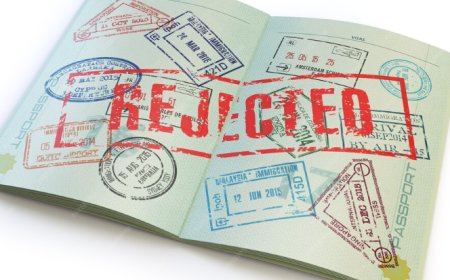
A quiet transformation is reshaping international education and migration. Countries that once competed aggressively to attract international students are now tightening immigration rules, strengthening visa compliance, and reassessing post-study migration pathways.
From London and Ottawa to Canberra and Washington, governments are sending a clear message: attracting global talent remains important, but immigration systems must also command public confidence.
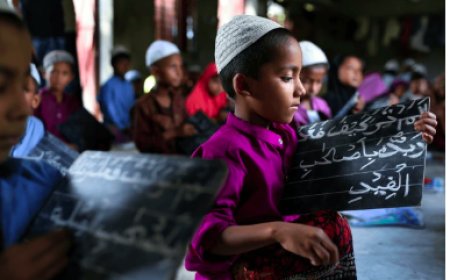
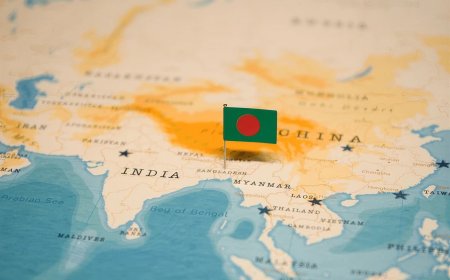
For Bangladesh, this shift matters enormously. According to the UNESCO Institute for Statistics, more than 52,000 Bangladeshi students are pursuing tertiary education overseas -- a figure that has more than tripled over the past fifteen years.
The educational journey also represents a remarkable financial commitment, with Bangladeshi families spending an estimated $670-730 million annually through formal banking channels on tuition fees and living expenses. For many families, studying abroad represents one of the largest financial investments they will ever make.
These figures demonstrate that international education is not merely a personal ambition. It is also an investment in human capital.
Yet the countries receiving these students are changing the rules.
The United Kingdom provides a clear example. In the year ending March 2026, 409,954 sponsored study visas were granted, 37% fewer than the peak recorded in the year ending June 2023. The decline follows measures restricting dependants, strengthening compliance and placing greater responsibility on universities to ensure that students genuinely undertake their studies.
Canada has taken an even more deliberate approach to reducing temporary migration. Its 2026 plan provides for up to 408,000 study permits, including 155,000 for newly arriving international students. That is 16% below the 2024 issuance target of 485,000.
Australia, too, is experiencing a significant slowdown. By May 2026, 680,582 international students had studied in Australia year to date, a 6.9% decline from the same period in 2025. New students were down by 6%.
The United States presents a somewhat different picture. It hosted 1,177,766 international students during the 2024-25 academic year, underlining the extraordinary scale of America's international education sector.
The broader pattern is therefore not simply one of countries abandoning international students. It is more complicated. Governments are attempting to reduce abuse, control population pressures and restore confidence in immigration systems while still retaining access to the talent that international education brings.
There is a legitimate case for stronger enforcement. Immigration systems can be exploited, and institutions may recruit students without adequate regard for whether courses genuinely serve their educational needs.
Some applicants may use education routes primarily as a means of entering a country rather than studying. Governments also face concerns about visa abuse, document fraud, overstaying, pressure on housing and public services, and the credibility of immigration rules.
Canada's experience illustrates the challenge, and its verification processes identified thousands of potentially fraudulent letters of acceptance in recent years, demonstrating why governments cannot simply return to the policies of a decade ago.
Nevertheless, this is precisely where intelligent immigration policy becomes important. Genuine migrants, whether international students, researchers or skilled professionals, are fundamentally different from those who deliberately exploit immigration systems. Treating them as though they are the same risks solving one problem while creating another.
Countries are no longer competing merely for immigrants. They are competing for the right immigrants. A student who pays international tuition, rents accommodation, spends money locally and eventually contributes skills to the economy is not simply a person entering a country.
For universities and economies, international students can represent a source of revenue, research capacity, cultural exchange and future skilled workers. The United States’ 1.18 million international students illustrate the scale of this global market.
Meanwhile, the declines being recorded in Britain, Canada, and Australia show how quickly international students can reconsider their destinations when immigration rules, costs and post-study opportunities change.
There is, however, another dimension that governments must consider: Law. International students do not surrender all legal protections simply because they cross a border for education.
The Universal Declaration of Human Rights recognises freedom of movement and the right to leave any country, while the International Covenant on Civil and Political Rights protects liberty of movement subject to lawful and necessary restrictions. International human rights law also recognises education as a fundamental right.
These principles do not create an unrestricted right to enter or remain in another country for study; states retain substantial authority to determine admission and immigration conditions, but restrictions should nevertheless be lawful, rational, proportionate and administered fairly.
This distinction matters because sovereignty and international legal responsibility are not necessarily opposing principles. A state can maintain strong borders while respecting the rule of law. The challenge is ensuring that immigration controls are directed at genuine risks rather than becoming unnecessarily broad barriers for legitimate students and researchers.
This creates an arduous policy equation. Governments understandably want stricter borders and more control over migration. Universities and businesses, meanwhile, want access to international students, researchers, and skilled professionals. Both objectives can be legitimate, but the challenge is ensuring that one does not undermine the other.
For countries such as Bangladesh, the consequences are particularly essential, because students and their families make decisions based not only on university rankings and tuition fees, but also on whether a country appears welcoming, predictable and fair.
Sudden changes to visa rules, dependent rights or post-study pathways can therefore influence where the next generation chooses to study.
This does not mean immigration rules should remain permanently unchanged simply to attract students, nor should governments hesitate to act strongly against fraud or abuse.
A well-designed and strong immigration system can actually benefit genuine migrants by protecting the credibility of the system they depend upon. The better approach is targeted rather than indiscriminate.
Governments should identify institutions, agents, and applicants associated with abuse while avoiding policies that unnecessarily burden legitimate students and researchers. Universities should be held accountable for recruitment practices.
Visa systems should be efficient as well as rigorous. And policy changes should be sufficiently predictable that families making major educational investments can understand the rules before they commit their savings.
Yet behind these policy debates are individuals making consequential decisions about their futures. Bangladeshi students are not simply numbers in immigration statistics.
They are young people investing years of their lives, and often their families' savings, in the hope of acquiring knowledge, skills and opportunities that can change the course of their lives. Many have demonstrated that they can compete successfully in demanding international academic and professional environments, contributing to universities, businesses and research communities far beyond Bangladesh.
Others return home carrying knowledge, experience and international networks that can benefit the country itself. The question, therefore, is not whether Bangladesh has the talent to participate in this global competition. It does.
The more important question is whether the world's leading destinations will maintain immigration systems that are sufficiently open, predictable and merit-based to recognize and attract that talent.
The global talent competition has not disappeared because immigration has become politically more difficult. If anything, it has become more important.
The question is no longer whether countries should control immigration. They plainly will. However, the more crucial question is whether they can do so without closing the door on the very people they hope to attract.
In the twenty-first century, the most successful nations will not necessarily be those that simply build higher walls. They will be those that build wiser and wider gates -- secure enough to protect public confidence, yet open enough to welcome the students, researchers, and innovators whose ideas will shape tomorrow's prosperity.
For Bangladesh, understanding this new immigration reality is no longer optional. It is essential.
Mahir Tajwar Khan Herok is a Barrister, Legal Consultant, Researcher & Policy Analyst.