










































































The Crisis of Coherent Foreign Policy
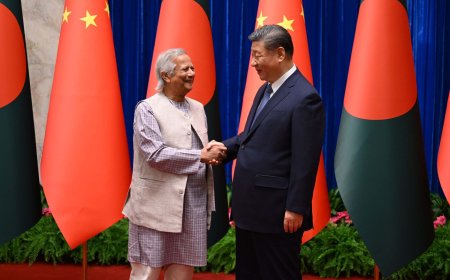
Engagement with China is presented as proof of resistance against Western dominance. Good relations with India become synonymous with regional stability. Foreign policy becomes a performance of political identity rather than a framework for advancing long-term national interests.

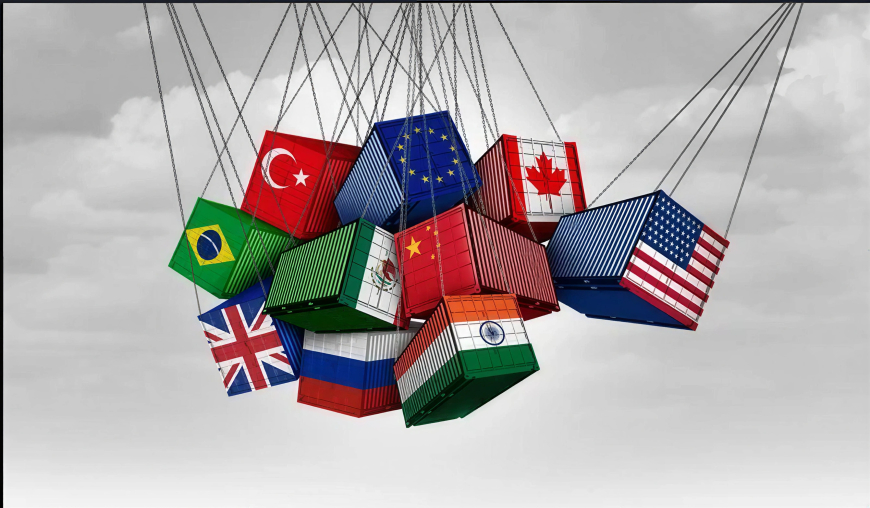
Bangladesh's political discourse has increasingly become defined by a peculiar contradiction. Political actors simultaneously invoke anti-imperialist rhetoric while enthusiastically seeking strategic proximity to the very powers they publicly denounce.
This is not strategic autonomy. Nor is it pragmatic diplomacy. It is what might be called strategic polygamy, the attempt to maintain multiple, often contradictory, geo-political identities without articulating a coherent national strategy.
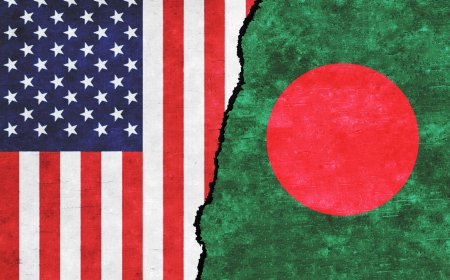
Recent celebrations surrounding the appointment of a Bangladeshi Member of Parliament to the executive committee of the Bangladesh-United States Parliamentary Caucus illustrate this contradiction. Membership in such a caucus is not, in itself, problematic.
Parliamentary caucuses exist in many democracies as informal platforms for legislative dialogue, policy exchange, and diplomatic engagement. States inevitably require productive relationships with major powers, including the United States, across trade, security, migration, education, technology, and investment.
The problem, therefore, is not engagement. The problem is the absence of a clearly articulated conception of whose interests that engagement ultimately serves.
This distinction is often overlooked in Bangladesh. Parliamentary caucuses are frequently portrayed as symbols of diplomatic prestige or political access rather than as instruments of carefully negotiated national interests.
In practice, congressional caucuses within the United States function as important mechanisms for legislative coordination, agenda setting, lobbying, and coalition building around specific policy priorities.
They are not merely ceremonial friendship clubs. Consequently, participation in such institutions raises an important question: Is Bangladesh entering these networks with its own strategic agenda, or simply participating in someone else's?
Unfortunately, Bangladesh's foreign policy debate rarely asks this question. Instead, international relationships are increasingly interpreted through symbolism rather than strategy.
A photograph with American officials is portrayed as evidence of geopolitical success. Engagement with China is presented as proof of resistance against Western dominance. Good relations with India become synonymous with regional stability.
Foreign policy becomes a performance of political identity rather than a framework for advancing long-term national interests.
This tendency becomes even more striking when examined alongside contemporary political rhetoric. Political groups that regularly denounce American imperialism frequently celebrate closer engagement with Washington when it offers political legitimacy or institutional access.
Simultaneously, many of these same actors continue to present themselves as defenders of political Islam against Western cultural influence.
Yet within the United States itself, movements such as the Sharia-Free America Caucus have gained increasing political visibility by framing Islamic law and, more broadly, Muslim identity as potential security concerns.
This raises an obvious question. What exactly is the ideological position being advanced? Is the objective resistance to Western hegemony? Integration into American political networks? Representation of political Islam? Or simply political convenience?
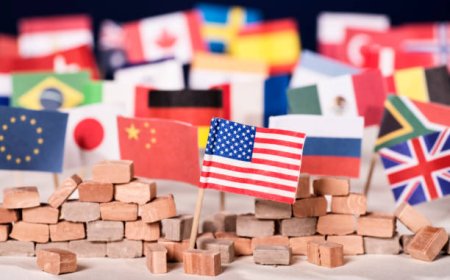
Mature states routinely pursue relationships with competing powers. They cooperate with multiple actors while preserving independent decision-making. International Relations literature describes this as strategic balancing or hedging.
What Bangladesh increasingly exhibits, however, appears less like strategic balancing than political opportunism, simultaneously presenting different narratives to different audiences without a coherent underlying doctrine.
This inconsistency becomes even more problematic when historical narratives are selectively reconstructed to fit contemporary political needs. Recent claims by senior political figures describing the United States as Bangladesh's "trusted friend since 1971" exemplify this tendency.
Such statements are historically difficult to sustain. During the Bangladesh Liberation War, the foreign policy of the Nixon administration strongly supported Pakistan, viewing Islamabad as an indispensable strategic partner during the Cold War and as an important diplomatic channel to China.
The deployment of elements of the US Seventh Fleet into the Bay of Bengal remains one of the most controversial episodes of American foreign policy during the conflict.
This does not diminish the extraordinary solidarity shown by many American citizens, journalists, academics, musicians, and activists. George Harrison and Ravi Shankar's Concert for Bangladesh, which took place in Madison Square Garden in New York City, featuring many American artists and performed before a supportive and largely American audience, remains one of the most significant humanitarian mobilizations in modern cultural history.
However, American civil society and American foreign policy were never identical. Conflating the two obscures history rather than illuminating it. Nor should contemporary engagement be romanticised.
If Washington deepens its relationship with Bangladesh today, it is unlikely to be driven by sentiment. Rather, it reflects evolving geopolitical calculations concerning the Indo-Pacific, supply-chain resilience, maritime security, strategic competition with China, and regional stability.
States do not possess permanent friends. They possess permanent interests. This principle applies equally to Bangladesh. Indeed, recent developments surrounding the Bangladesh-United States trade agreement illustrate why strategic clarity matters.
The agreement has generated significant debate regarding future regulatory autonomy in sectors including agriculture, pharmaceuticals, biotechnology, digital governance, and intellectual property. Whether one ultimately supports or opposes the agreement, it raises legitimate questions regarding Bangladesh's future policy space.
These questions deserve careful public debate. Instead, discussion frequently degenerates into simplistic binaries: Pro-American versus anti-American; pro-India versus anti-India; pro-China versus anti-China.
Such binaries impoverish democratic foreign policy discourse. The central issue should never be whether Bangladesh engages with Washington, Beijing, Delhi, Brussels, or Riyadh.
The central issue is whether Bangladesh enters those relationships from a position of strategic clarity and institutional confidence. A mature foreign policy neither worships great powers nor defines itself through permanent hostility towards them.
It negotiates. It bargains. It protects policy autonomy. It maximizes national interests. Bangladesh, therefore, does not need anti-Americanism. Nor does it require American exceptionalism. It needs mature statecraft. One in which relations with the United States, China, India, Japan, the European Union, and the wider Muslim world are all pursued through a single organizing principle: Bangladesh's national interest comes first. Because in international politics, influence is never free.
Access is never neutral. Every strategic partnership carries obligations. Every geo-political friendship comes with conditions.
The essential task of diplomacy is not merely to secure invitations to influential rooms, but to ensure that when Bangladesh enters those rooms, it does so with its own agenda -- and leaves without surrendering its strategic autonomy.
Dr. Lubna Ferdowsi is an academic and researcher based in England.