




































































The US-Zionist War of Aggression in West Asia: What's Next?
The US is out of options with bombs and blockades. A blockade is partial. The bombs have been shown not to work. We see diminishing rate of sorties all the time, now a tiny fraction of the sortie rate that the US is usually accustomed to.

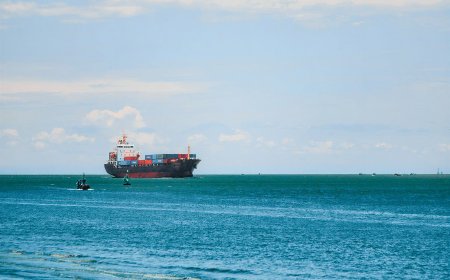
We have oil prices spiking. The Strait of Hormuz still very much in a huge debate about who controls it, and who doesn't. And of course, the Yemen front is on fire. And all of this is the backdrop for US hegemony and the myriads of challenges it faces.
It has been a whirlwind whiplash over the course of the last 24 hours or so. First, we heard that Trump was considering a plan to strike Iran before the midterm elections. This was reported in late evening on October 8 by every corporate media outlet including the Atlantic and the New York Times.
Then predictably just a few hours later, as oil went to US$105 a barrel and the markets started to spasm, Trump said that he will not be attacking Iran at any time prior to the midterm elections to be held on November 3.
But Channels 12 and 14 in Israel reported, quoting IDF chief Eyal Zamir, that they’re preparing for another kinetic confrontation, because the Pentagon had reportedly issued military directives for these preparations for large cale operations against Iran.
We should understand that the seriousness of such whiplash depends on how frequently we're hearing them. It is a deliberate form of psychological warfare. The intent to attack is doubtful at best in light of the facts on the ground. The US-Zionist nexus would need at least a year of buildup, vast logistical preparation, and much larger deployment of troops.
It’s not going to get very far with only 10,000 replacement troops on rotation, and an aircraft carrier that’s yet to reach the battlefield.
There's a large dimension of war that’s theater, even when we use the term the theater of war. We’ve seen this unjust war of aggression to be largely theater over the past few months. This is a way of bullying Iran, trying to see if they can demoralize Iranians.
It’s a little bit like what they always do with North Korea twice a year, now almost constantly with war games, constantly applying pressure like a full-court press, making them think that at any moment they're about to be attacked, and then forcing their economy, their government, and everybody's nervous system to go into overdrive. This is an incessant probe to see if they can exhaust Iran that way.
That said, once we come back to the basics, we uncover fundamental asymmetries that make it almost impossible for the US-Zionist nexus to prevail against Iran. The first one is the greater Iranian resolve to resist aggression against their homeland and fight. The second one is the strategic advantage of Iran’s geography.
This is Iran’s Jackie Chan strategy. Jackie Chan beats his opponents not because he's a better fighter per se, but because he knows how to use the environment to his advantage. And we have seen over and over again, the environment is 99% in favor of Iran. Those mountains create a fractal labyrinth of advantage that the US-Zionist nexus simply cannot overcome. And the Strait of Hormuz itself is an amphitheater firmly controlled by Iran.
They have the bleachers and the skybox. The nexus only has the flat alluvial plain. The waterway itself forces a hairpin turn around which essentially makes it a kill-box for the United States. Popular resolve, difficult geography, and superior strategy will continue to favor Iran.
The US is out of options with bombs and blockades. A blockade is partial. The bombs have been shown not to work. We see diminishing rate of sorties all the time, now a tiny fraction of the sortie rate that the US is usually accustomed to. The nexus is running out of missiles both interceptors and offensive missiles. And of course, boots on the ground would be a catastrophic attempt at a suicide run.
Additionally, the economics do not favor the United States. Once again uh the US uses expensive interceptors against Iran's very cheap munitions. This asymmetric ratio of a hundred to a thousand to one is the fundamental asymmetry between a Global North economy and the resilience of a heavily sanctioned economy that has learned to survive and build structures around those sanctions.
The different learning curves in battle show that Iran has the definitive advantage, and primarily what we're seeing here is psychological warfare to see if they can wear Iran down in order to engineer a collapse.
One of the interesting things that has not been discussed as it should is how the USS George HW Bush is now in Thailand for repairs after the USS Abraham Lincoln was in Thailand. The USS Theodore Roosevelt still needs at least a couple weeks if not more to get to the region. And that doesn't mean that it's ready to engage. Any preparations to use it for any kind of serious attack might take some additional time.
That means the October 27 elections in Israel and the November 3 midterm elections in the US. In the meantime, the USS George Washington is all by itself on that blockade line with the attended destroyers.
We don't have the insider track into the nexus. So, we have to look back at the structural constraints in light of real-world facts. We know the US bases in the Gulf has been severely diminished. The US is not simply geared up for a massive invasion. It doesn't have the forward posturing.
All the bases have been knocked out of commission. Currently US is replenishing from Diego Garcia. It was bombing from Fairford in the UK, and now it seems to have been pulling its bombers out of the country because it feels they're vulnerable. That means that the US is running out of safe options to project critical types of conventional power.
Unless the US has an immediate plan to execute a nuclear strike, further escalation doesn't make sense from a conventional standpoint. The US has aircraft carriers. Some of them are in commission, some out of commission.
Most of them are vastly overstretched. Clearly, they're rusting from the inside out. So, it’s safe to assume that contingency plans are taking shape. But the structural constraints don't indicate that the actual boots on the ground or massive invasion are possible. It would take at least 11 months to build up enough force to be able to project.
Sohel Nadeem Rahman is an Industrial Psychologist specializing in Neurocognitive Systems, Behavioral Finance, and Strategy.