






































































Why Bangladesh’s Bad Loans are Up Again
The shift from nearly 36% in September to 30.60% in December, then rising to 32.78% by June, serves as a crucial reminder. While a decrease in the reported NPL ratio may seem positive, it is only meaningful if it reflects real improvement in credit quality.


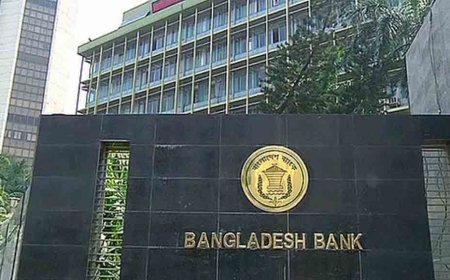
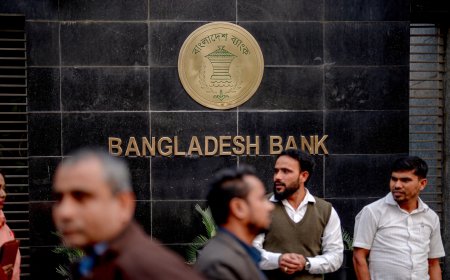
Last winter, Bangladesh's banking sector seemed to improve. Bangladesh Bank data indicated the gross non-performing loan ratio decreased from nearly 36% in September 2025 to 30.60% in December. In absolute figures, defaulted loans dropped from approximately Tk 6.44 trillion to Tk 5.57 trillion within a quarter.
It seemed like progress at first, but after six months, much of that visible improvement has faded.
By June 2026, non-performing loans had climbed back to Tk 6.07 trillion, equivalent to 32.78% of outstanding loans. That was up from Tk 5.89 trillion, or 32.26%, in March.
Put simply, nearly Tk 33 out of every Tk 100 lent by Bangladesh's banking system is now classified as non-performing.
International comparisons should be approached cautiously because countries have different loan classification rules and reporting periods. Despite this caveat, Bangladesh's NPL ratio is now among the highest worldwide, surpassing the most recent ratios reported by several countries that faced serious economic or political crises.
The more critical question, however, isn't Bangladesh's international ranking but why the NPL ratio declined so steeply in late 2025 and then began to increase again.
As a professional in credit risk and model validation, I recognize an important distinction. A declining NPL ratio might indicate real progress, such as borrowers resuming payments, banks recovering bad debts, or healthier new loans increasing the denominator.
However, the ratio can also appear better if loans are rescheduled, restructured, or reclassified outside of the classified category.
The two outcomes may look similar in a headline. Economically, they are very different.
The notable decline at the end of 2025 was partly due to special rescheduling and restructuring facilities introduced by Bangladesh Bank.
According to the September 2025 policy, eligible distressed borrowers could reschedule classified loans for up to ten years, with a 2% cash down payment and a grace period of up to two years. These terms were later relaxed further for qualifying borrowers, reducing the initial down payment to 1%, with another 1% payable within six months.
The intent was clear: A business can face difficulties beyond its owners' control. Factors like political instability, energy shortages, exchange-rate fluctuations, or production disruptions can temporarily hinder even a viable company from meeting its debt obligations.
In these cases, restructuring helps maintain the company's productive capacity and increases the likelihood that the bank will recover its funds.
The risk arises when substitutes are rescheduled without a proper assessment of the borrower's repayment capacity.
Extending a loan's repayment schedule does not automatically make it economically healthier. Unless the borrower's cash flow, business outlook, and willingness to repay have significantly improved, altering the repayment timeline primarily affects the loan's accounting status rather than its actual credit risk.
In terms of credit risk, this poses a measurement challenge. The reported NPL ratio might appear better, even if the underlying economic risk in the loan portfolio remains largely unchanged.
The numbers highlight this concern. After dropping to 30.60% in December, the NPL ratio increased to 32.26% in March and 32.78% in June. Although June's level remains below the notable September 2025 peak, the reversal shows how quickly the apparent improvement can fade if borrower weakness persists.
Bangladesh has experienced this problem previously.
In 2019, Bangladesh Bank launched a special program that allowed defaulters to reschedule loans with a minimal 2% down payment and extended repayment periods. The goal was to provide borrowers with more flexibility and improve loan recovery.
The policy also raised worries about moral hazard. If borrowers think that serious repayment issues will lead to more rescheduling opportunities, they might lose the motivation to repay promptly. Even those who are financially able might reason that it's better to wait for more favorable terms, making timely repayment less likely.
This issue ranks among the most challenging in credit policy. Although relief is intended for truly distressed borrowers, it can inadvertently benefit those unwilling to pay rather than those unable to do so.
The latest NPL figures are concerning not just because of the high ratio, but also because they reveal underlying weaknesses in banks' balance sheets.
By the end of 2025, the banking sector's total capital adequacy ratio dropped to about -2.9%, well below the 12.5% regulatory benchmark. Certain specialized banks were in even worse shape. These figures show that accumulated losses have significantly depleted the banking system's capital buffers.
This difference between NPLs and capital is important.
A non-performing loan indicates an asset-quality issue, while insufficient capital signifies a solvency concern. Rescheduling can temporarily change the classification of the non-performing loan, but it does not inherently address the solvency problem.
If a Tk 100 loan probably won't be fully recovered, extending its maturity doesn't bring back the lost economic value. In the end, the loss must be borne by someone, whether through bank profits, current shareholders, new capital, government recapitalization, or a mix of these.
Bangladesh Bank has implemented multiple measures to improve the recognition of these issues. Recent reforms involve stricter loan classification criteria, bans on counting uncollected interest as income, updates to write-off policies, asset quality assessments, and initiatives to differentiate between deliberate defaulters and borrowers in genuine financial trouble.
These actions are a step forward. However, the success of banking reform ultimately depends on effective implementation rather than on issuing circulars alone.
The leadership change at Bangladesh Bank introduces a new factor. Ahsan H. Mansur was governor from August 2024 to February 25, 2026, and Md Mostaqur Rahman took over the next day. While leadership changes don't inherently disrupt reform efforts, they highlight the need for consistent policy continuity.
The success of the current program hinges on maintaining high standards in classification, provisioning, governance, and enforcement over time.
Bangladesh's priority should not be to eliminate loan restructuring. Restructuring remains an important and valid banking tool. If a company is viable but temporarily struggling financially, it should not be forced to liquidate just because its initial repayment plan is no longer feasible.
The main challenge is identifying the borrower who is truly capable.
This calls for an independent evaluation at the loan level. Banks should assess cash flow, leverage, collateral, management quality, industry conditions, and true repayment ability before making concessions. It's important to differentiate between willful defaulters and companies that are fundamentally healthy but facing temporary difficulties.
Provisioning should accurately mirror expected losses. A loan should not be considered economically restored just because its contractual status has changed. If losses are likely, they must be recognized and properly provisioned.
For assets with severe impairments, Bangladesh might also require mechanisms to divide troubled loans from regular banking activities.
An asset management framework could be helpful, but it is effective only if distressed assets are transferred at fair values and losses are openly acknowledged. Simply shifting a bad asset from one balance sheet to another without recognizing its economic loss just shifts the issue elsewhere.
Most importantly, loan classification standards must be consistent. Regulatory forbearance should be rare, transparent, and based on clear evidence of borrower viability, rather than being repeatedly employed to boost headline figures.
The effects of not addressing the issue are now evident beyond just the financial statements.
In June, private-sector credit growth declined to just 4.47%, marking the lowest in 33 years. Meanwhile, banking-system liquidity has increased significantly, as banks have deposited record levels of excess funds with Bangladesh Bank.
This combination reveals a significant story. Bangladesh isn't just dealing with a lack of funds. While banks have liquidity, their cautious approach to issuing new credit stems from poor asset quality, limited capital, and borrower uncertainty. Conversely, businesses are hesitant to borrow because of high financing costs, energy shortages, and economic instability.
The outcome is a banking system in which high liquidity levels coexist with very limited growth in private-sector credit.
This is why the NPL debate extends beyond banks. When banks are weighed down by bad loans, it becomes harder and costlier for productive businesses to access credit. As a result, investment decreases, employment declines, and monetary policy loses some effectiveness.
Therefore, Bangladesh's banking issue cannot be resolved just by improving the NPL ratio from one quarter to the next.
The real challenge lies in whether borrowers are truly repaying, whether banks are honestly recognizing losses, whether provisions are adequate, whether capital is being rebuilt, and whether willful defaulters are treated differently from viable distressed businesses.
Most importantly, it questions whether the banking system is regaining the ability to channel savings into productive enterprises.
The shift from nearly 36% in September to 30.60% in December, then rising to 32.78% by June, serves as a crucial reminder. While a decrease in the reported NPL ratio may seem positive, it is only meaningful if it reflects real improvement in credit quality.
Otherwise, the decline is only temporary.
Bangladesh doesn't require improved bad-loan figures; it needs a reduction in bad loans.
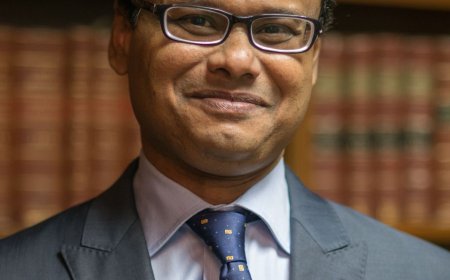
Dr. Mohammed A. Rab is a US-based economist and freelance consultant on banking and financial risk management.