



































































Sellafield, Chernobyl, Fukushima ... Rooppur?
Bangladesh has switched on its first nuclear reactor, on a monsoon floodplain, with no plan for when things go wrong. And in Bangladesh, Murphy’s Law seems to rule supreme. Anything that can go wrong will go wrong.

I have recently begun teaching a master’s course in development studies, on the logical framework approach to project problem-solving and design.
Last week I joined the class for a field trip to Cox’s Bazar, where we visited a wind power project in which only one of ten turbines was running. One student suggested we use it as a problem-solving exercise in class, dissecting how it had failed.
On paper, in the neat logic of the framework, it should have worked. On the ground, nine in ten stood still.
As I drove back to the university, I went through my playlists and found a live recording of Kraftwerk’s “Radioactivity.” I played it loud in the car. For those who haven’t heard it, the band chants a litany of names: “Sellafield, Harrisburg, Chernobyl, Fukushima.” This recording was from a concert in Japan after the Fukushima disaster.
In Tokyo, sung in Japanese, the crowd went wild. I found it chilling, the roar rising to music about such a disaster. It set me thinking about another project, far larger than a wind farm, where failure would not mean a few idle turbines.
In 1986, I was eleven and lived in a small town about an hour north-east of Stockholm. We kept a vegetable garden, with carrots I loved, and we kids ate the wild berries that grew in the forest beside the house. That year we were forbidden to eat any of it.
Rain had come from Chernobyl, some 1,500 kilometres away. Staff at Forsmark, a nuclear plant on Sweden’s east coast, detected the radiation on their own clothing and were the first to alert the world, and the authorities warned us over radio and television to stop eating a whole range of local produce: game, mushrooms, berries.
The ban ran into the following summer, because the contamination sat in the soil and came back with the next growing season. The Sami, the indigenous people of the far north, saw their reindeer culled for years, because the animals graze on lichen that had soaked up the fallout.
A nuclear accident is not a single event. The contamination returns, season after season, for years.
On Sunday October 11, at around 3:30 in the afternoon, the first nuclear reaction began at the Rooppur Nuclear Power Plant. I found the news the next morning on an inside page of the Dhaka Tribune: A grey-shaded notice of about a hundred words.
An event like this, I would have thought, deserved the front page. I have followed this project for some ten years and, somewhat naively, never believed it would come this far. I expected protests at home and objections from neighbouring countries. The foreign missions in Dhaka have been strikingly silent.
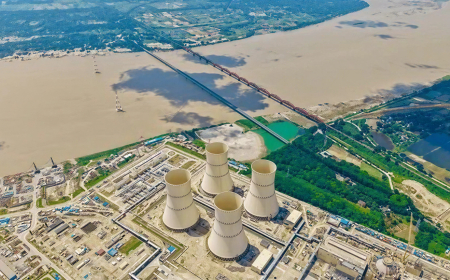
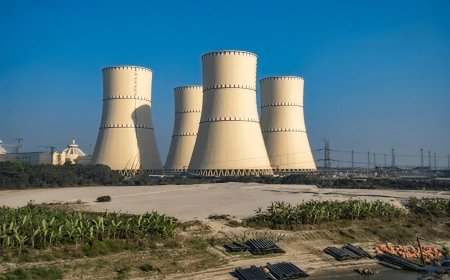
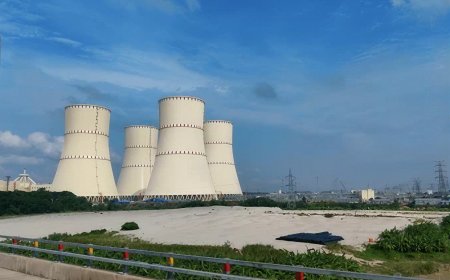
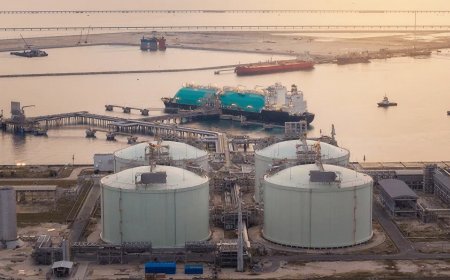
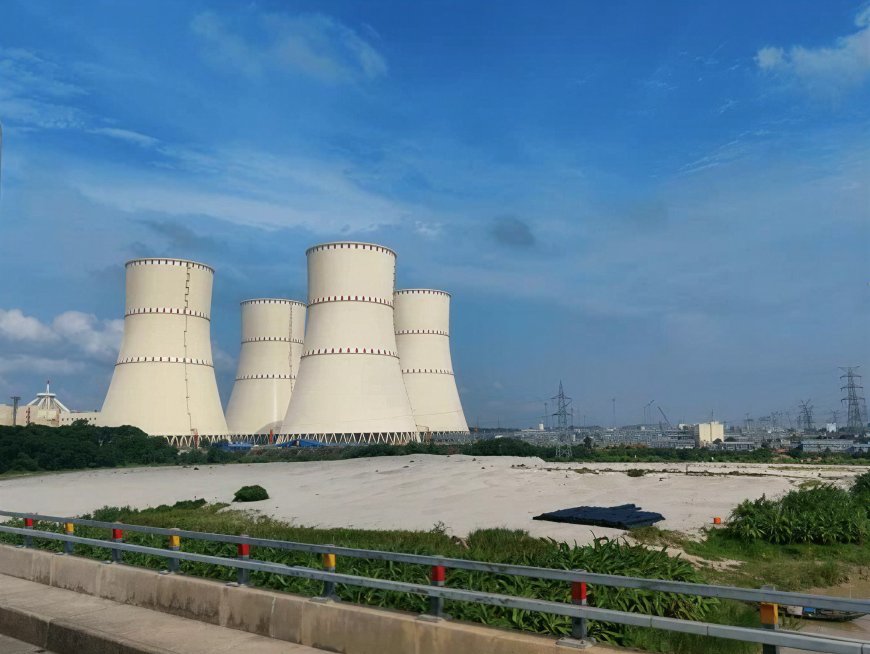
Rooppur, in Ishwardi, Pabna, on the Padma River about 160 kilometres north-west of Dhaka, has two Russian VVER-1200 reactors, 2,400 MW combined.
It is the largest single installation the country has ever built, and sits among the most crowded land on Earth. In the event of a critical failure, on the scale of Fukushima, who would take in tens of millions of refugees?
A Reactor Designed For Fukushima, Not for Bangladesh
At Fukushima in 2011 the plant survived the earthquake; the tsunami flooded 12 of its 13 backup diesel generators, and three reactors melted down.
Rooppur’s design answers that failure with what its proponents call passive safety: water tanks above the reactor and natural circulation that cool it by gravity, without pumps. It removes the “forgot to fuel the generator” kind of failure.
But passive safety buys about 72 hours (Wikipedia, “VVER”). After that, fuel, staff and spare parts must reach the site. And this design has never been tested by nature.
The operating units, Novovoronezh and Leningrad in Russia and Ostrovets in Belarus, sit inland on quiet, low-flood ground. None sits on a monsoon delta.
A Floodplain that Severs the Reactor’s Support Systems
Rooppur’s defenders point to how high the reactor sits above the river. But the water does not need to reach the reactor. At nearby Hardinge Bridge, in Kushtia, the Padma crosses its danger level regularly, as it did in 2013, 2016 and 2019.
At those ordinary levels the reactor stays dry, but roads and rail go under, switchyards flood and shift crews are cut off.
Duration matters more than depth. In Pakistan in 2022 vast areas lay under water averaging less than a metre deep, but for weeks. In 1988 and 1998 the water stayed above danger level at Hardinge Bridge for about a month. Floods like those will come again. Passive safety buys 72 hours.
A monsoon flood can last three weeks. If the plant stood inside such a flood, how would routine maintenance proceed? By air?
Meanwhile two decades of urbanisation have filled in the wetlands and waterways that once absorbed the water. Bangkok learned in 2011 what that costs, when its new airport stayed dry behind its walls while the districts around it drowned.
Last month, in September 2026, the floods reached the airport itself: crews stranded and flights cancelled.
A Bureaucracy that Severs the Same Lifelines
Murphy’s Law seems to rule supreme in Bangladesh. Anything that can go wrong will go wrong. The engineers designed Rooppur for everything that can go wrong inside the reactor. The more relevant question is everything that can go wrong around it.
During the COVID-19 pandemic I witnessed firsthand the blunt effects of rent-seeking in a national emergency. I worked on a disaster management support team to the UN Resident Coordinator in Bangladesh, preparing the weekly emergencies and action points for UN and government principals.
In one of those meetings the problem was simple: protective suits, oxygen tanks and medicines imported for the health sector sat uncleared at Chittagong port.
The Resident Coordinator was furious. The government representative had no answer, but everyone in the room knew it: someone in customs had not been paid.
Even in a national emergency, with lives at stake, institutionalized corruption kept life-saving equipment from reaching the medical sector. Murphy’s Law held: When it mattered most, what could go wrong, did.
Rooppur needs imported spare parts, honest inspections and honest reporting for sixty years. The same institutionalized corruption that held up oxygen tanks in a pandemic will hold up the parts a flooded reactor depends on.
Nor is oversight reassuring. The regulator, BAERA, licenses a plant that the state owns, operates and financed with about eleven billion dollars of Russian credit.
As The Daily Star pointed out in September 2025 (“What must change before Rooppur nuclear plant goes live”), BAERA operates under the Ministry of Science and Technology, a composite structure that undermines the very independence a nuclear regulator must have. The contracts, the safety case and the accident studies remain largely closed.
The Worst Case No One has Modelled
The accident studies I have seen for Rooppur focus on the airborne plume in the first days. I have found none that models what contaminated water does over decades. At Fukushima the contamination did not simply blow away.
As National Geographic reported on the tenth anniversary (March 2021), caesium-137 “comprises the majority of the long-term contamination, lingering in the environment for decades.”
Rivers and floods then carry it and lay it back on the land. Japan’s rivers are short. The Padma is vast and slow, and floods tens of thousands of square kilometres a year.
Most troubling, Rooppur sits upstream of the entire delta, the most densely populated farmland in the country. An accident would send contaminated water from the Padma to the Meghna and into the Bay of Bengal.
With a half-life of about 30 years, caesium-137 takes roughly 300 years to decay. Groundwater is no fallback: wells already carry arsenic, and the aquifers refill from the same floodwater. Farmland contaminated, rivers, ponds and canals contaminated, the last fallback already poisoned.
There are no public estimates of how many people that would affect. In Sweden it cost us a garden for two summers. Here it would be the rice, the fish and the water, for generations.
Who Pays?
Under the agreement between the Bangladesh Atomic Energy Commission and Atomstroyexport, liability for nuclear damage lies with the Bangladesh state. Under the Bangladesh Atomic Energy Regulatory Act 2012, the operator’s liability for a single accident is capped at 300 million SDR, roughly 3,300 crore taka (approximately 410 million US dollars).
Any damage beyond that falls to the public (The Business Standard, July 2, 2023). For comparison, Japan’s government has put the total bill for Fukushima, cleanup, decommissioning and compensation, at roughly 188 billion US dollars, more than 450 times Rooppur’s cap (Bloomberg, December 2016).
The Russian credit is reportedly repayable even if the plant is destroyed. And Russia is to take back the spent fuel under a 2017 agreement. But will it, and at what cost?
The Next Name in the Song
Since the 1970s Bangladesh has been regarded as the world’s experimental ground for development initiatives. Rooppur is the newest experiment: A reactor never tested by flood or earthquake, placed on a monsoon delta above active tectonic plates.
Kraftwerk, the band whose name is simply German for power plant, chant their litany of ruined places. Bangladesh should think hard before it lets Rooppur become the next name in that song. This is one experiment it cannot afford to get wrong.
Jens Stanislawski (Ph.D.) is a Professor (Research) in the Department of Development Studies at Daffodil International University.