































































Are We Paying Attention Yet?
The lesson from Bangladesh, Nepal, and now India is not that students have become unusually rebellious. It is that the region's political class has become unusually incapable of seeing them.


Every time students take to the streets, public debate is consumed by the immediate trigger.
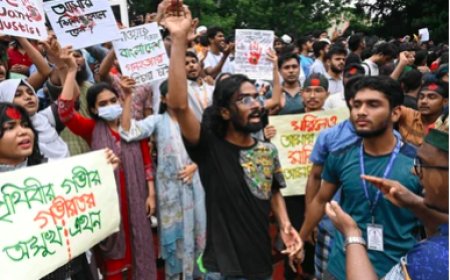
Attention turns to the policy that was announced, the law that was passed, the court verdict that was delivered, or the violence that unfolded, while the much more uncomfortable question of why an entire generation had become so angered in the first place is left unasked, let alone answered.
India is the latest example of a pattern that is becoming all too familiar.
The immediate circumstances may differ from Bangladesh or Nepal. Every country carries its own political history and institutional failures. Yet the emotional landscape feels remarkably familiar.
Young people are increasingly governed by a political class that neither understands their anxieties nor appears interested in doing so. The distance is no longer merely ideological, but generational.
Much of South Asia continues to be governed by men who built their political instincts in a different century. Their understanding of authority was shaped by a world where information travelled slowly, institutions carried unquestioned legitimacy, and youth politics could be managed through patronage or force.
The generation they govern inhabits a completely different reality. They are more educated, more connected, more aware, and far less willing to accept inherited hierarchies simply because they exist.
Yet our politics has barely changed.
Students continue to appear in political discourse only when elections approach, when rallies need crowds, or when unrest has already spilled onto the streets.
Between those moments, they remain largely invisible as stakeholders in the decisions that will define their future. Policies concerning education, employment, digital freedoms, public space, or civil liberties are routinely made without treating young people as participants in the conversation.
Eventually, invisibility becomes its own form of provocation. It is profoundly destabilizing to be told that you represent the future while discovering that you have almost no place in discussions about the present. The result is alienation, which, left unattended, eventually transforms into frustration and anger.
Bangladesh has already witnessed this trajectory. Nepal has experienced its own cycle of youth-led discontent. India now confronts many of the same warning signs.
Different governments, different slogans, different immediate grievances, but an almost identical failure to recognize that students are not merely another interest group.
They are often the first to detect when institutions begin losing legitimacy because they encounter those institutions every day, in classrooms, examinations, job markets, police responses, and administrative systems.
What makes this disconnect particularly dangerous is that governments continue responding to political discontent as though it were fundamentally a law-and-order problem.
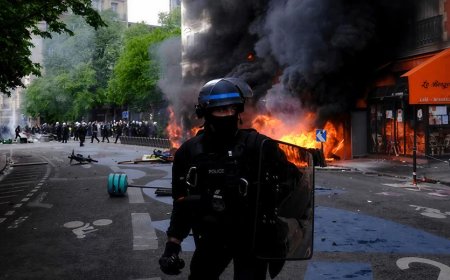
Demonstrations are contained, campuses are monitored, arrests are made, and official statements urge restraint. Yet none of these measures address the question that produced the unrest in the first place.
Order can be imposed temporarily, legitimacy cannot.
This is not an argument that students are always right. Student movements have their own excesses, contradictions, and moments of poor judgement.
Nor does every demand deserve immediate acceptance. Democracies cannot function by surrendering policy to whichever group shouts the loudest.
But democracies also cannot function when those in power consistently mistake disagreement for indiscipline.
Perhaps the greatest irony is that many of today's political leaders built their own careers through movements that challenged authority. They once understood what it meant to feel excluded from decision-making.
Somewhere along the way, they became the very establishment they once opposed, convinced that experience alone guarantees wisdom and that age naturally confers political clarity.
It does not.
A widening age gap in leadership is not inherently a democratic problem.
A widening imagination gap is.
When those making decisions cannot recognize the lived realities of those who must live with them, every policy begins carrying the risk of miscalculation. Governments stop anticipating public sentiment because they have stopped listening to it.
South Asia has now produced enough examples to recognize the pattern before it repeats itself again. Student unrest rarely erupts overnight. It accumulates through years of dismissal, condescension, and political deafness.
Every ignored concern becomes another layer of resentment until one day a seemingly ordinary event breaks the surface and everyone pretends to be surprised.
The lesson from Bangladesh, Nepal, and now India is not that students have become unusually rebellious. It is that the region's political class has become unusually incapable of seeing them.
And when an entire generation begins to feel invisible, it will eventually find a way to make itself impossible to ignore.