








































Babel, The Politics of Words and A Frankenstein Vernacular
The novel ends with a revolution. It ends with violence, bloodshed, and irreparable loss. But in that loss, lies a freedom, a sense of ownership of one’s identity, of standing with what one believes in.

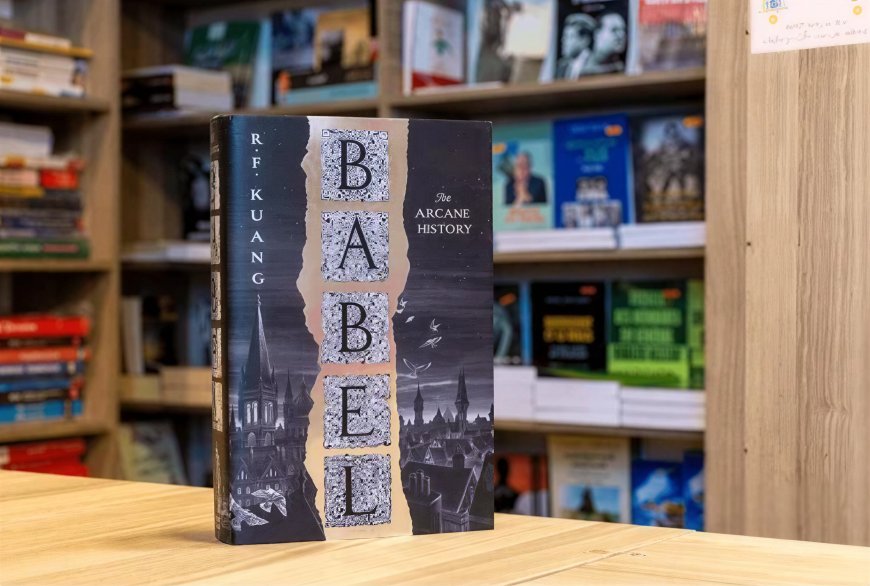
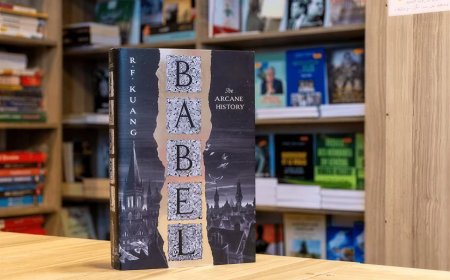
In the second chapter of R. F. Kuang’s Babel or The Necessity of Violence, there is a dialogue: “But that’s the beauty of learning a new language. It should feel like an enormous undertaking. It ought to intimidate you. It makes you appreciate the complexity of the ones you know already.”
Language is perhaps one of the most political assets of the human kind. What are we without our words? What is our history, revolution, and destruction without our language?
As its title suggests, Babel invokes the biblical story of the Tower of Babel in Genesis, in which God confounds humanity’s single language and scatters people across the earth, thus leading to the creation of different languages. However, Kuang takes this myth into new heights, tying it with very contemporary themes of imperialism, agency, and identity.
Robin, the story’s protagonist, is a young Cantonese boy who is taken to England by the enigmatic Professor Lovell, the man who leaves no stone unturned to make sure Robin gets admitted to the prestigious (and fictional) school in Oxford, the Royal Institute of Translation, also known as Babel.
The novel is tagged under fantasy -- it was even nominated for Reader's Favourite Fantasy in the 2022 Goodreads Choice Award -- but at its heart, it carries the very real and authentic experiences of marginality, language, and power, portrayed through the novel's fantastical silver-working system.
One of the central focuses of the novel is language and the art of translation, through which one question is repeatedly raised: Who gets to produce knowledge about a language? The scholars of Babel study Latin, Chinese, Sanskrit, Arabic and other languages, yet none of it benefits the natives of these languages but the Crown.
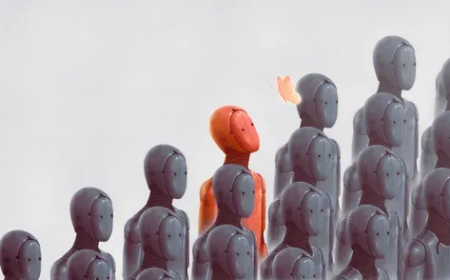
The empire needs linguistic knowledge to expand and conquer and Robin, like his friends, becomes a mere tool, a stepping stone for the Crown to profit off.
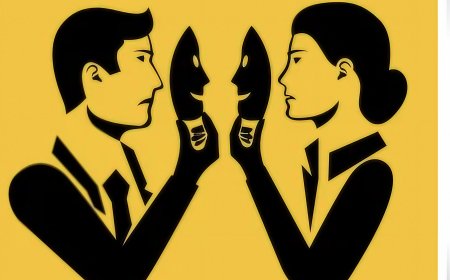
Robin himself is translated -- in many ways literally. He is not only forced to change his birth name but also he is forced to swear loyalty to Oxford and actively betray his own people for the gain of Britain -- the very place that calls his blood polluted.
The irony is glaring -- the empire is nothing without the power of linguistic differences or translation, yet it acts high and mighty, eager and prideful to suppress the very people it is benefitting from.
Perhaps one of the most striking dialogues from the novel comes in the second book: “Translation means doing violence upon the original, means warping and distorting it for foreign, unintended eyes. So then where does that leave us? How can we conclude, except by acknowledging that an act of translation is then necessarily always an act of betrayal?”
The subtitle of the novel, The Necessity of Violence gains particular significance here. Kuang does not only talk about the violence that colonizers inflict upon the colonized and the inevitable violence taken up by the colonized to free themselves, but also, the literary violence between words of different languages.
Interestingly, the discussion around linguistic power does not remain constrained within the pages of the book. In today’s climate, it pops up everywhere -- even in places where the speaker claims they are being apolitical. When Ed Sheeran says he does not use his professional platform for politics, he is not any less political than Macklemore who explicitly says “Free Palestine.”
When discussing her song “World on Fire” back in 2023, Dolly Parton said she was not a feminist yet was actively working in spaces that question patriarchal structures.
She too was being political, but choosing not to fall under any label. The politics of language once again comes into play because herein lies the power of words -- we prefer to claim neutrality because sometimes, the weight of our own words become too much.
In Babel, Kuang calls English a “Frankenstein vernacular” and as I write this article in this Frankenstein vernacular, I admit that parts of me have fallen prey to the linguistic imperialism of the West, yet at the same time, I believe that the English I write in is not the colonial English -- it is a new type of English, my own, full of my quirks, sorrows, and insecurities. As Kamala Das says in An Introduction, “The language I speak/Becomes mine, its distortions, its queernesses/ All mine, mine alone.”
In Babel, the Empire thinks it owns English, it owns knowledge, it owns institutions and people. Robin eventually rejects that ownership and shatters the tradition of submissiveness and compliance. In a lot of ways, he uses the master’s tools to dismantle the master’s house.
Hence, the novel ends with a revolution. It ends with violence, bloodshed, and irreparable loss. But in that loss, lies a freedom, a sense of ownership of one’s identity, of standing with what one believes in.
And so, in the age of globalization, assimilation, and hybridity, I leave the readers with a question to ponder about: If language is truly never neutral, what do we choose to do with the magnificent power of the words we have inherited and continue to claim ownership over?
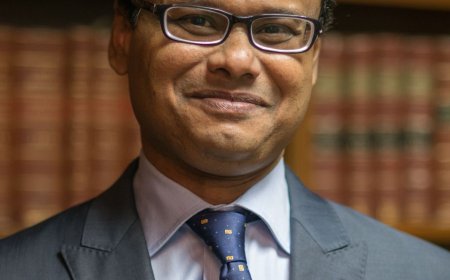
Raisa Anan is currently doing her dissertation on literature and cultural studies at the Department of English and Humanities at ULAB. She is also working as a Teaching Assistant for the department.