






























































Our Misplaced Priorities in South Asia
Treating such risks as specialist environmental concerns leaves the main political conversation disconnected from the foundations of national stability.

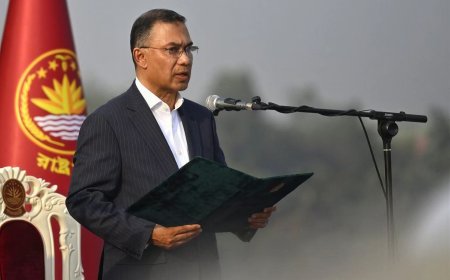
South Asia devotes intense attention to who holds power. Leadership contests, coalition arithmetic and rival claims to national history can become the organising concerns of public life.
These questions matter. But a political culture centred on who controls the state risks giving too little weight to the conditions in which its citizens must live. Climate change and energy insecurity are among the region's gravest threats to everyday life and demand a much larger place in that conversation.
Historical sacrifice remains part of political legitimacy across the region, though each country's history differs. Contributions to anti-colonial movements, liberation struggles, or resistance to authoritarianism deserve recognition. The difficulty begins when those contributions become a continuing claim to authority, or reverence for a leader substitutes for scrutiny of government. A party's place in history cannot determine its ability to protect people from today's threats.
This power concentration has practical incentives. UNDP's Pakistan National Human Development Report 2020 examined how privileged groups use networks and policies for their benefit. In Bangladesh, Transparency International's 2025 review raised concerns about transparency and alleged political affiliation in university leadership appointments.
Where political connections influence opportunity, businesspeople and academics have reasons to follow every transition closely. The problem is what happens when this pursuit of access becomes more rewarding than confronting risks shared by the wider population.
Democratic competition is essential to holding governments accountable. It should also force a debate about what governing is for. An election victory does not make a city less exposed to flooding or an electricity system less vulnerable to imported fuel prices. Those tasks require work across electoral terms. A public conversation absorbed by succession can recognise a change of rulers more readily than continuity in the dangers facing citizens.
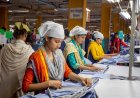
The dangers are already measurable. A World Bank study estimated that heat-related physical and mental health conditions cost Bangladesh 250 million workdays in 2024, with economic losses of up to $1.78 billion. Lost working time can mean lost income for families with little financial protection. Climate damage belongs in the central debate over employment and economic security.
Pakistan's 2022 floods caused more than $30 billion in damages and economic losses, according to a government-led assessment. Destruction on that scale weakens the livelihoods and public finances on which any government depends. Treating such risks as specialist environmental concerns leaves the main political conversation disconnected from the foundations of national stability.
Nepal's August 26, 2026 catastrophe makes the regional stakes equally difficult to dismiss. A collapse of rock and ice developed into a destructive debris flood. World Weather Attribution identified warming as a possible destabilising influence alongside geological conditions, without establishing whether the collapse would have occurred without human-caused warming.
The event exceeded existing protective capacity. Nepal illustrates the seriousness of the risks confronting the region, including hazards that domestic preparedness alone cannot contain.
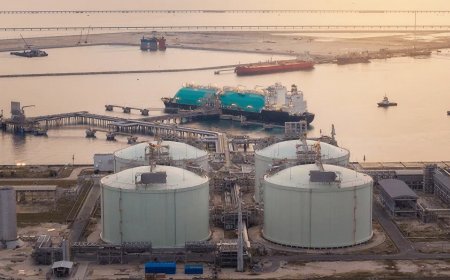
Energy insecurity adds another source of vulnerability. The International Energy Agency's third-quarter 2026 gas report found that disrupted gas supplies had reduced fertiliser production in Bangladesh, India and Pakistan. A fuel shock can therefore reach beyond electricity bills into agriculture and food security.
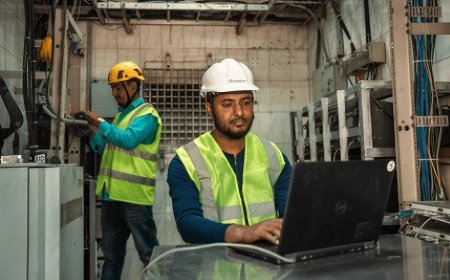
The ability to supply affordable energy is part of the state's capacity to protect livelihoods. Political control offers little reassurance to households or businesses when essential supplies become unreliable or unaffordable.
The connection between climate and energy also creates opportunities for protection. Ember's 2026 regional analysis found that solar growth was reducing exposure to imported fossil fuels, with different results across South Asian countries.
This is evidence of action already under way. It also raises questions that deserve sustained political scrutiny: Whether investment reduces dependence, whether grids remain reliable, and who can afford the benefits. Adding generation capacity is insufficient if the system remains financially fragile or vulnerable to external shocks.
Underlying these pressures is a profound injustice. The IPCC's 2023 synthesis concluded that communities with the smallest historical contributions to warming suffer disproportionately. For Bangladesh, the World Bank's 2022 climate report put its share of global greenhouse-gas emissions at just 0.4%. South Asia's countries have different emissions profiles and responsibilities. Yet many of its poorest people must now protect themselves against a warming world they did very little to create.
That injustice demands international climate finance and faster emissions cuts by major polluters. It should also sharpen domestic political priorities. Limited control over global warming makes careful use of local resources more consequential. Citizens should be able to demand international fairness while questioning whether their own governments are protecting them effectively.
The immediate political demand is straightforward. Parties should explain how they will protect livelihoods from climate hazards and reduce exposure to energy shocks, identifying funding and responsibilities.
Parliamentary scrutiny should follow implementation between disasters, while universities, business associations and the media examine results. These responsibilities need continuity when governments change. They should carry weight alongside the promises through which parties seek office.
Bangladesh and its neighbours will continue to disagree about leadership, history and the distribution of power. Those disagreements are part of public life. But political debate becomes dangerously incomplete when it treats winning the state as the central achievement while the conditions that sustain society grow less secure.
The people of this region need more than certainty about who governs them. They need a serious account of how they will live in a warming world whose dangers extend far beyond the next change of government.
Md. Sajid Hasan is an electrical engineering researcher working on renewable energy and sustainable development, a research intern at King's College London, and an Energy Intelligence Associate at Lontana Consulting.