
































































A New Day in Bangladesh–India Relations
For Bangladesh, diplomacy has now become more important than ever before. It will require a sophisticated neighbourhood policy that combines realism with prudence. Emotional reactions or reactive nationalism unlikely to serve Bangladesh’s long-term interests well.

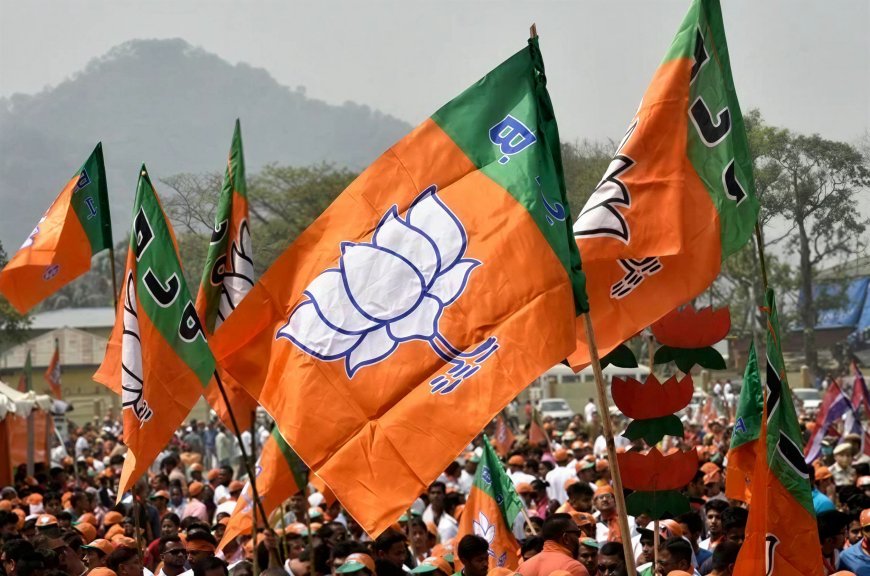
The recent West Bengal election marks one of the most consequential political developments in eastern India in decades.
After years of persistent campaigning and repeated setbacks, the BJP has finally captured India’s politically symbolic and strategically sensitive border state.
After Assam, this victory further reshapes the political geography of India’s eastern frontier and inevitably carries consequences for Bangladesh.
Having observed Indian politics closely during two diplomatic assignments -- first in Kolkata during the historic transition from the Left Front to the Trinamool Congress (TMC), and later in New Delhi during a period of increasing political centralization -- I find this election significant not simply because a government has changed, but because the political ecosystem of eastern India has transformed.
For years, West Bengal remained an exception within India’s broader political direction. Even as the BJP consolidated power nationally under Prime Minister Narendra Modi, Bengal resisted.
Mamata Banerjee’s TMC functioned not only as a regional political force but also as a counterweight to New Delhi on several sensitive issues.
On matters involving Bangladesh -- migration, border management, citizenship, and river water-sharing -- Kolkata occasionally slowed, softened, or complicated central policies.
That buffer, for better or worse, has now weakened, if not disappeared.
One must not think the BJP’s victory emerged overnight. It was the result of years of organizational consolidation, ideological mobilization, and carefully crafted political messaging.
The party steadily transformed Bengal’s political discourse by framing the state as a frontline in a larger national struggle on identity, citizenship, and security.
The election campaign itself was highly polarized and emotionally charged. Religion featured prominently. The rhetoric around “illegal infiltration,” demographic anxiety, border security, and citizenship became central themes. Bangladesh repeatedly appeared, directly or indirectly, in political speeches and campaign narratives. The anti-Bangladesh undertone was often nuanced yet obvious.
This is nothing new. The political language used in Bengal increasingly mirrored narratives previously seen in Assam and other BJP-governed regions. Concerns over alleged migration, demographic change, and religious identity were embedded in electoral politics.
This wasn't merely about mobilizing Hindu voters. It was also about generating the perception that eastern India’s security and identity were inseparable from developments across the border.
Still, ideology alone does not explain the election result.
The TMC was facing substantial anti-incumbency pressures after nearly fifteen years in power. Allegations of corruption, political patronage, governance fatigue, unemployment, and local-level violence weakened the ruling party’s image. The fragmentation of the TMC’s traditional vote bank also played an important role.
Minority votes appeared more divided in several constituencies, while sections of rural and lower-middle-class Hindu voters increasingly shifted toward the BJP. TMC supporters, meanwhile, attribute part of their defeat to the role of the Election Commission and the controversial SIR issue.
For Bangladesh, the implications are likely to be significant.
On the one hand, there may now be greater policy alignment between New Delhi and Kolkata. Since the BJP rules both the centre and West Bengal, decisions that used to meet resistance from the state government may no longer persist. This could potentially reopen discussions on long-stalled bilateral issues, including the Teesta water-sharing agreement. For years, the Teesta deal remained frozen largely because of objections from the West Bengal government despite New Delhi’s interest in moving forward.
There is, therefore, some reason for optimism.
At the same time, optimism should remain measured. Water politics in India is deeply domestic and politically sensitive. Northern districts of West Bengal remain heavily dependent on Teesta waters.
Even a BJP-led state government is likely to remain responsive to local electoral pressures. If domestic political considerations continue to dominate water discourse, the deadlock may endure under a changed political arrangement.
The more immediate concern for Bangladesh may emerge along the border.
There is a real possibility that stricter border enforcement, tougher surveillance measures, and “push-in” incidents may increase in the coming years.
Bangladesh has periodically experienced tensions relating to border killings, illegal migration allegations, and cross-border security narratives. The concern now is that such issues may become more frequent and more pronounced.
Historically, whenever governance pressures intensify in states, be it economic difficulties, unemployment, community tensions, or administrative failures, migration and border security become politically convenient issues.
The temptation to invoke “illegal infiltration” or demographic anxieties will likely remain strong because those stories have already proven electorally effective.
Experience, however, suggests that election rhetoric does not always translate into long-term policy. Political language used during campaigns many times softens once governments assume office. Recent diplomatic moves also indicate that Bangladesh-India relations may be gradually getting back on track after a period of strain.
The real danger is if campaign rhetoric continues beyond the election cycle.
If anti-Bangladesh narratives remain politically profitable and are used in West Bengal, reactions within Bangladesh are likely to follow. Mutual suspicion can gradually harden public opinion on both sides and create space for more extreme voices.
This would be unfortunate because Bangladesh and West Bengal share far more than a border.
The shadow of partition, refugee movements, the 1971 Liberation War, migration debates, enclave politics, and citizenship controversies have long moulded the political psychology of the region. Yet the two sides also remain connected through language, culture, commerce, literature, and firmly intertwined human relationships.
At moments of political transition, it is easy for societies to give in to radical nationalism and religious intolerance. History shows that such tendencies can quickly drag neighbours into a spiral of suspicion and reaction. Bangladesh and India must consciously resist these impulses.
Trust-building has therefore become essential.
Both countries should avoid using media narratives to amplify imaginary or exaggerated threats to mobilize domestic audiences. Greater attention should rather be placed on issues directly affecting peace, livelihoods, economic opportunities, and stability in the region.
The encouraging reality is that, despite periods of political tension and diplomatic unease, the economic dimension of Bangladesh–India relations has remained largely resilient.
Bilateral trade continued without major disruption even when political relations became strained. Ultimately, these economic realities may compel both sides toward pragmatic engagement for the benefit of their peoples.
Water-sharing of common rivers remains one of the most important concerns for ordinary people on this side of the border. Renewing the Ganges Water Treaty and resolving the Teesta deadlock could greatly improve popular sentiments and strengthen trust between the two countries.
Likewise, keeping healthcare, education, and humanitarian mobility above politics -- including simplifying visa procedures for students, patients, and families -- would strengthen people-to-people ties in valuable ways.
For Bangladesh, diplomacy has now become more important than ever before. It will require a sophisticated neighbourhood policy that combines realism with prudence. Emotional reactions or reactive nationalism unlikely to serve Bangladesh’s long-term interests well.
The election in West Bengal, therefore, is not only about who governs Kolkata. It signals a deeper shift in the political imagination of eastern India.
Whether this new reality leads to friction or to constructive engagement will depend, in the final analysis, on the political maturity, strategic restraint, and diplomatic wisdom that both sides are able to bring to the relationship in the years ahead.
Md Mustafizur Rahman was a career diplomat who served, among other postings, as the Bangladesh High Commissioner to India.