


































































Is Hyperpolitics the Future of Bangladesh?
Bangladesh is now a clear battleground in the clash between traditional politics and hyperpolitics, because the party in power is wedded to the old school politics and its opponents rely on the new politics more and more.

A new book by young European leftist academic Anton Jäger on a theory of current state of politics in the world today, has attracted lots of attention among political analysts.
A review by New York Times of the book Hyperpolitics: Extreme Politicization Without Political Consequences -- wrote that, it’s “among the best and most dazzling efforts to model the political present in all its maddening strangeness.”
According to Jäger, contemporary politics in developed democracies are characterized by intense, short-lived widespread mass political activity with high moral fervor, which he termed a hyperpolitics, that is accompanied by declining institutional activity and change; in short high politicization with low institutionalization.
Mass hyperpolitical activities include large protests, widespread outrage, culture wars, and social media activism, while low institutionalization is demonstrated by declining membership and durable activities of political parties, unions, civic organizations, etc.
A large part of hyperpolitics occurs in the online space but Jäger argues that internet and social media are not just causes of such trends in politics but symptoms as well. The underlying cause is late 20th century capitalism, but we will elaborate this a little later in this article.
Hyperpolitics reflects the fluidity and ephemerality of the online world, virality, digital echo chambers, quick rise and fall of public attention and seeking the next novelty or grand crusade. The online and temporary character of hyperpolitics results in low barriers to entry and low maintenance cost in work and resources.
This has opened up opportunities for all kinds of political entrepreneurs.
This hyperpolitics is resulting in nonprogrammatic, flash-in-the-pan movements which, although generating plenty of heat and buzz of the moment, are failing to provide meaningful change or lasting political mobilizations. This is further accelerating the gradual ‘loss of meaning’ that is afflicting the world, people are feeling that politics and hyperpolitics are inconsequential; nothing ever changes.
Origin of Hyperpolitics
Jäger traces the beginning of the hyperpolitics phase in the west to the end of the Cold War in 1989. During the Cold War, political parties were highly institutionalized, channeled active participation from grass roots to the top and were ideologically distinct and defined. Parties had committees, regional chapters, executives, and elections with institutionalized roles in all political decisions and directions.
Parties were flagships in politics, but the political arena was densely populated by civic organizations like unions, religious groups, special interest groups on environment, women’s empowerment, etc.
When the Cold War ended with an emphatic victory for market-capitalist democracy, politics in the Western world suffered rapid ideological depolarization and organizational deinstitutionalization. It seemed that with the 'End of History,' the fundamental questions of politics on distribution of power (democracy) and resources (market capitalism) were answered.
Moreover, during the 1990s globalization of capital, production and products became an inexorable natural force, weaving cross-border networks of power and privilege.
Embracing the inevitability, formally socialist parties became social liberals or ‘center left’. Conservative parties, previously by no means market-fundamentalists, ditched their social conservatism and became ‘center right’ defenders of global capital. Along with ideological depolarization, national power-contending parties went through gradual deinstitutionalization also.
Political parties were still networks of power, patronage and political careers but they increasingly became ‘para-state vehicles’ of donor class and organized interests and decreasingly of popular political representation.
The Universal Solvent
Faced with these inevitable market economic forces that seemingly made everyday life decoupled from ideological contention and deinstitutionalization of political parties, there was a marked retreat of citizens from the political sphere and into the private.
According to Jäger: “Politics is no longer something that you see as effecting large-scale social change, and the forms of liberty that are available to you are now more private, more intimate, more individual. At the same time, the idea that you can collectively bundle together with other individuals and change society starts to appear very, very remote.”
The period from 1989 to 2009 marked a ‘anti-politics’ phase in Western democracies marked by low politicization and low institutionalization. Not only did voting percentages fall significantly in national and local elections but membership in civic organizations, trade unions, social associations also fell drastically. Society was getting atomized and demobilized.
The famous quote in The Communist Manifesto written in 1848 about the pervasive solvent effect of rampant capitalism seemed prophetic.
"All fixed, fast-frozen relations, with their train of ancient and venerable prejudices and opinions, are swept away, all new-formed ones become antiquated before they can ossify. All that is solid melts into air, all that is holy is profaned, and man is at last compelled to face with sober senses his real conditions of life, and his relations with his kind."
The 2008-09 Global Financial Crisis, coupled with economic and social destabilization caused by globalization and immigration, heralded a new era of mass politics of popular discontent. The Tea Party movement that flared up in US in 2009 was harbinger of a new age of hyperpolitics.
This was characterized by countrywide large public protests, spreading and organizing through social media and campaigns to increase turnouts in elections. Voter participation in elections has increased significantly since 2010 but the deinstitutionalization of political sphere that took place in the previous decades only became further entrenched.
Hyperpolitics of the Elites and the Masses
Hyperpolitics of the current era affected the two levels of society, influential elites and general masses in different ways. The period of globalization and IT revolution that began in the 1990s have, by the 2010s, expanded and diversified different classes of asset-owners greatly but also fractured previous national links among asset-owners and state elites. The fracture is evident along both horizontal and vertical dimensions.
While elites are horizontally fractured within and among different classes of assets and expertise, they are also finding it difficult to build enduring vertical political coalitions with the general people. The resulting incoherence has prevented national elites from developing strategies to meet the destabilizations caused by globalization and rise of Asian economies.
Incoherence among elites in the current era has made political parties, the traditional vehicles of influence of elites, hollowed-out shells of their previous selves. Less bureaucratic and less structured than their previous selves, political parties in the west have become incapable of long-term planning and programs and resorting to immediatism of expediency.
Elite incoherence is also demonstrated in transiency of new political entities and movements that quickly rise and then fade away within a few short years. Political scenery of the western world is strewn with relics of meteors like Syriza, Podemos, Corbyn, Black Lives Matter, La France insoumise, Golden Dawn, Vox, Farage, etc.
Transient nature of today’s hyperpolitics is represented most directly by a new type of political actor, that of political entrepreneurs and influencers. Their mode of politics is short-termism; intermittent bursts of activity, feverish cycles of mass outrage and flame-out, while always focused on increasing followers and power of influence. Just like ‘pump and dump’ stock traders, they flame hypes on current issues, crest high on follower frenzy and then abandon the issue searching for the next one.
Meanwhile most classes of capital and asset-owners are happy with this hyper politics because this doesn’t threaten the status quo with meaningful change and influencers are easy to buy off with wealth and privilege. This is why, according to Jäger, social media is a tool of hyperpolitics not the cause.
General citizens have become disoriented through the relentless hype cycles and transient politics. Media and influencers have brought politics into everyday life but people’s mass outrage and sentiments, lacking institutional power, are not generating any systemic power to change.
The disjoint among people’s everyday knowledge of politics, rise and fall of emotions through hype-cycles, and actual change is creating a feeling of powerlessness. People feel that intense political activity is taking place without their consent or participation. In this way hyperpolitics has made politics of change difficult from the ground below as well as from the top.
Post-Hasina Hyperpolitics in Bangladesh
Bangladesh lags behind developed democracies in political and economic development so the post 1989 stages of anti-politics, mass-politics and then hyperpolitics do not map here cleanly. Moreover, political freedom was severely curtailed here during the last two decades.
However, globalization and emigration have also fractured elites of Bangladesh in last three decades. Curiously, during the long Hasina-regime, the ‘I hate politics generation’ epithet was widely used to describe the seemingly politically apathetic younger generations.
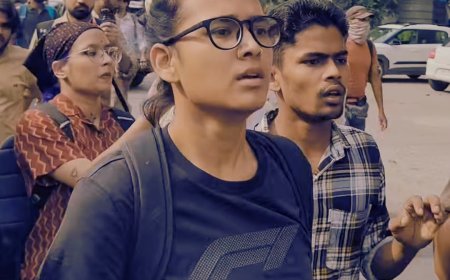
Fall of the Hasina regime through the July Uprising in 2024 opened up the political space in Bangladesh. The post-Hasina landscape clearly demonstrates hyperpolitical characteristics of transiency, hype cycles; intense but short mass-mobilization without lasting impact and deinstitutionalization of politics.
Rather than settling in a stable transition of democracy consolidation and state-building, we experienced continuous issue eruptions, mob violence against political, religious, professional opponents, competing claims of legitimacy among the interim government, political parties and new organizations, domination of news cycles by influencers and new political entrepreneurs.
The period between the uprising and the election was the golden age for social media influencers probably because hyperpolitics is eminently suited to elite aspirants of today. Saturated digital coverage intensified political engagement dramatically while simultaneously ensuring that engagement remained fragmented across competing narratives, viral rumors, and disinformation and resulted in little impact beyond the immediate.
These influencers and entrepreneurs are little interested in institution-building, their main priority is to increase own power and influence through the hype-cycles to occupy valuable real estate in the elite space of Bangladesh that was abruptly vacated by fallen Awami regime.
BNP, Jamaat and NCP in Hyperpolitics
The interim government was installed with the blessing and backing of student-leaders from the uprising and the government returned the favor by immediately embarking on an ambitious project to turn the students into leaders of a viable national party. However, the newly founded National citizen’s Party (NCP) has yet to turn into an institutionalized national party despite the generous backing.
There are many explanations for this overdetermined outcome but surely one of the most prominent is that, for the student-leaders, allure of hyperpolitics has proven to be too strong and the incentive to do the grind for party institution-building, too weak. More so because Jamaat was happy to take up the job of the institutional support.
Among the three main parties in contention today, NCP is the most hyperpolitics focused. Each leader is pursuing own agenda of power and influence accumulation and their favored hyperpolitical tactics seem to be exploiting every hype-cycle to launch stinging attacks upon the ruling-party establishment.
The difficulty or failure of NCP in building political institutions maybe direct results of their leadership failings but this could also be simply the sign of the times. In this age of hyperpolitics, it may be just very difficult to do long-term, offline party building.
Among the mainstream political parties, Jamaat has traditionally been most adept in building and nurturing party institutions. However, its ideological rigidity and historical development meant that the main party elites are quite unable to exploit the high frequency hyperpolitics of today. Fortunately for Jamaat, its associate organizations like Shibir and others, have proven more than capable of mastering hyperpolitics.
Jamaat’s partnership with NCP also proved to be highly complementary. This is one of the reasons why the Jamaat-led coalition did far better than expected in the February national election. However, the fundamental disjoint between Jamaat’s ideological rigidity and hyperpolitics is hard to overcome and can affect party politics of the coming years in curious ways.
BNP and Awami League have been personalistic, clientelist-patronage network-based parties traditionally and this structure has proven to be the most politically successful in Bangladesh. Clientelist-patronage networks are made of formal and informal institutions, and they operate on longer time frames than the short-termism of hyperpolitics.
Since August 5, 2024, BNP has shown itself to be very laggard and reactive to hyperpolitics but its interest-aggregating clientelist networks have been more than adequate for success in the power and politics arena.
Future of Hyperpolitics in Bangladesh
Bangladesh is now a clear battleground in the clash between traditional politics and hyperpolitics, because the party in power is wedded to the old school politics and its opponents rely on the new politics more and more.
So far traditional politics has proven to be more successful because the general people living beyond the metropolises remain largely unaffected and unconcerned with hyperpolitics.
In the Innovision Pulse Opinion Polls conducted before the election, we have seen that the general citizens were largely uninformed about the hyperpolitics issues of the day. They were also not enthusiastic about mass politics because turnout in the election was much lower than expected. Of course, absence of Awami League in ballot was a big factor but the disorientation from frantic hyperpolitics after the July Uprising cannot be ruled out as a contributing factor.
We are thereby into an unfortunate place where the everyday battle between traditional and hyperpolitics is taking place in an environment of popular apathy. Critically needed democracy consolidation and state-building are suffering in neglect in this political environment.
In Bangladesh, hyperpolitics is here to stay. Globalization, elite fracture, technology revolution will further transform Bangladesh as they have already transformed the world. Growth in information and communication technology adoption means that more and more of our people will be drawn into the realm of hyperpolitics. However, the value of traditional politics, though transformed, should remain high.
In the US, the gradual and patient political success of Democratic Socialists of America (DSA) platform has shown that even the Gen Z and Millennials can be mobilized through a mix of traditional and hyperpolitics.
Politics, as in Athenian democracy 2500 years ago, is still mainly regular physical association of people for common purposes.
Shafiqur Rahman is a Political Economist and Executive Director of Bangladesh Research Analysis & Information Network (BRAIN).