






























































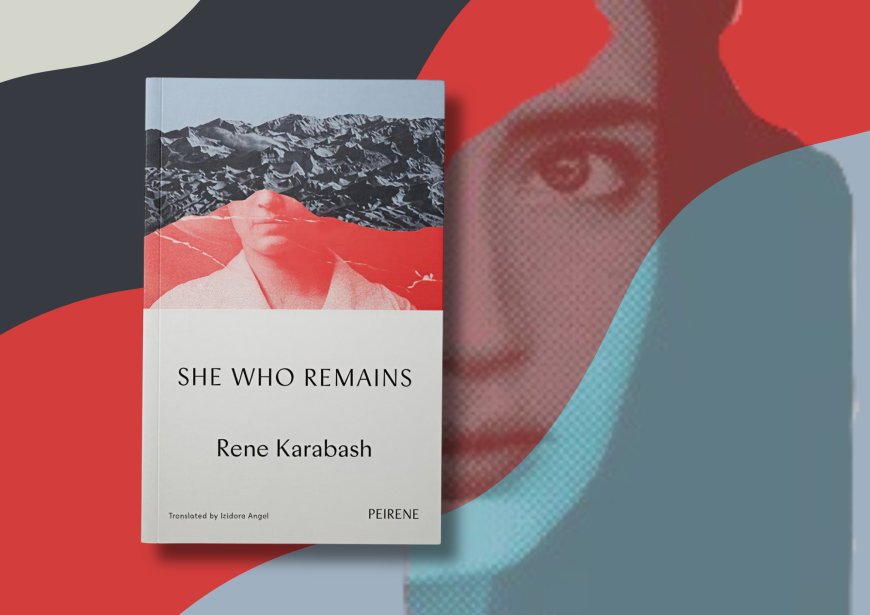
The Unmaking of a Girl in Rene Karabash’s She Who Remains
The irony is brutal. The same patriarchal system that renders her life intolerable also provides the only sanctioned route out of it.
all desperately desired things materialize
one way or another
inescapably
Desires do materialize in Rene Karabash's novel, but rarely in the shape in which they were desired. They have been altered by deprivation, obedience and fear. Reading this book produced a peculiar physical unease in me. I kept feeling the pressure of a life in which there is no acceptable way to be entirely oneself.
The suffocation belongs to Bekija, certainly, but after a while it begins to belong to the reader too.
Bekija does not escape womanhood so much as enter another kind of captivity. In Rene Karabash's She Who Remains, a girl is born into a world that would have preferred a son. Bekija grows up in the Accursed Mountains of Albania, under the dominion of the Kanun, an ancient customary code that dictates marriage, inheritance, honour and blood vengeance.
When confronted with an arranged marriage, she takes an oath of celibacy and becomes a sworn virgin, abandoning her name for Matija and acquiring the privileges accorded to men. She escapes one form of captivity only to enter another, exchanging the restrictions imposed upon her as a woman for the austere obligations of a life she must now perform.
Karabash's novel is a sombre meditation on survival, and on the terrible arithmetic by which a person may preserve their life only by relinquishing so much of what makes it their own.
Bekija's childhood is marked by her father's disappointment, while her younger brother Sále suffers because he is too gentle, too sensitive, too unlike the boy his father believes he ought to be. Both children learn that affection has conditions.
Bekija must become sufficiently masculine to be valued; Sále must suppress the tenderness that makes him himself. Their childhood becomes an education in self-abnegation.
Karabash is attentive to the insidious manner in which patriarchal authority insinuates itself into domestic life. The Kanun is not merely a code enforced from without; it inhabits the language, gestures and assumptions through which people come to understand themselves. Its cruelties have acquired the familiarity of custom, making obedience appear almost indistinguishable from virtue.
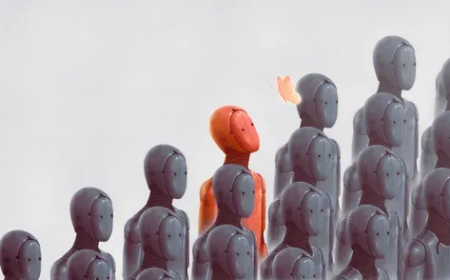
Bekija does not merely encounter these rules; she absorbs them. She learns to anticipate disapproval, to edit herself, to renounce before she is asked. That gradual inwardness of oppression is what I found hardest to bear.
Home is where they clip your wings.
The sentence carries an ache far beyond its brevity. Home, in this novel, is not simply where Bekija belongs. The cruelty of home is precisely that it is intimate. To reject it can feel like rejecting oneself.
Bekija's relationship with Dhana, a neighbouring girl who reads to her at the watermill, offers a brief reprieve from this suffocating order. Through Dhana, books become apertures onto lives beyond the narrow confines of the village, while their intimacy gives Bekija a relationship in which she does not have to perform. Their love possesses a tenderness that feels almost insurgent in its quietness.
Yet it remains vulnerable to the world surrounding them. When Bekija's marriage is arranged, the possibility of a life with Dhana begins to recede, and the novel's sorrow acquires its particular shape. What is taken from Bekija is not simply a beloved, but the prospect of a future in which she might have belonged to herself.
Her transformation into Matija therefore carries a peculiar doubleness. It is rebellion, but rebellion on the terms of the order she is resisting. She evades marriage by accepting an oath that prohibits sexual intimacy and binds her to the obligations of a man. The irony is brutal. The same patriarchal system that renders her life intolerable also provides the only sanctioned route out of it.
The fractured structure of the novel intensifies that feeling of divided existence. Matija recounts her past years later to a visiting journalist, and memory arrives in fragments, letters, recollections and shifting voices.
There is no clean progression to her memories. One memory summons another, a letter opens an old wound, and the years between them seem to collapse without warning. This worked for me because Matija herself seems divided between several lives.
Karabash's prose moves between starkness and lyricism, at times lending the novel the atmosphere of a dark folktale transmitted through generations. The landscape and its inherited customs acquire an almost mythic weight. This quality is often compelling, though it occasionally comes at the expense of psychological complexity.
Nevertheless, Matija's survival remains the novel's most affecting and difficult achievement. The title carries a quiet desolation: To remain is not necessarily to triumph. She survives, but survival does not restore anything. Dhana is lost to her. Her family has fractured. And the person Bekija might have become remains unknowable, mourned only through her absence.
I finished She Who Remains with the sense that Bekija's life had been subjected to a series of quiet amputations. Everything in her life has been relinquished and yet nothing is entirely gone. I found that far more devastating than a conventional tragedy. Death would have closed the account. Survival leaves it open.
Azeema Anhar is an English Language Instructor at ULAB and member of the editorial team at the weekly Counterpoint.