


























































The Akhtaruzzaman Airport Show
A serious opposition does not merely show that something is broken. It identifies who is responsible, produces evidence, demands a remedy, and keeps the issue alive after the cameras leave. That is harder than shouting. It is also politics.

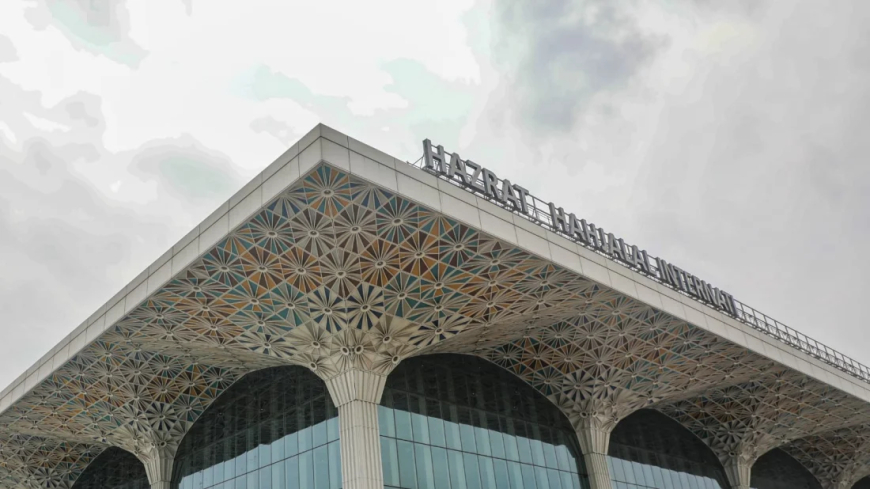
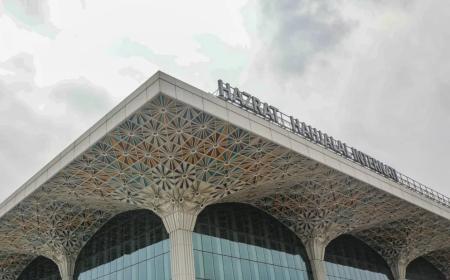
Anyone who has waited at Shahjalal Airport for a baggage trolley knows the frustration is real. The shortage has stranded passengers for hours, and in February the state minister for civil aviation pushed for the purchase of 1,000 new trolleys.
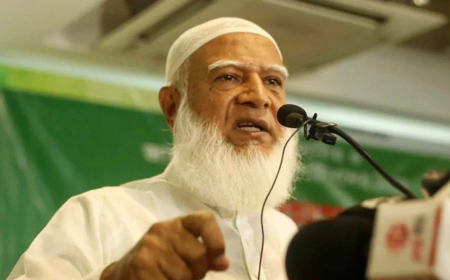
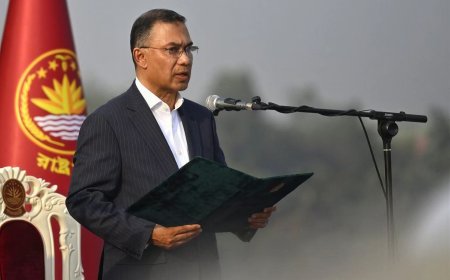
So when Major (retd) Akhtaruzzaman, a Jamaat-e-Islami leader and former MP, landed from Madinah on October 1 and met long delays for luggage and Zamzam water, he had a genuine grievance and a sympathetic audience. What he did with it is the problem.
According to the FIR, he told the airport’s executive director: “I’ll grab you by the neck and throw you out,” and allegedly used offensive language about the civil aviation minister.
The case also accuses him of assaulting a security supervisor who asked his protocol assistants to stop filming inside a restricted area. It even alleges that he threw other passengers’ bottles off their trolleys, and that some of his group’s protocol assistants tried to collect trolleys by breaking the queue.
The champion of ordinary passengers, if the allegations hold, did not treat them very ordinarily.
Under which law is he being held? The ordinary Penal Code of 1860. The case was filed by airport security officer Md Shahriar Alam Sajib under Sections 186, 189, 294, 323, 352, 353, 504 and 506.
Together these cover obstructing a public servant, threatening a public servant with injury, obscene words in public, causing hurt, assault and criminal force (including to deter an official from his duty), intentional insult and criminal intimidation. The maximum sentences run from three months to two years.
That distinction matters. The case is built on alleged conduct: Threats, a physical assault on a supervisor, and obstruction inside a security-sensitive installation.
It is not about an opinion, a slogan, or a Facebook post. The procedure so far also looks orthodox. The Detective Branch arrested him on Friday evening and he was produced before a magistrate the next day, inside the 24 hours the Constitution requires.
The magistrate granted one day of remand when police had asked for five, and he was then sent to jail while the investigation continues.
Two cautions apply.
First, he has not been convicted of anything. He is an accused, entitled to the presumption of innocence, and whether each section actually applies is for the court to decide.
Second, the state is not above criticism. For offences with maximum sentences measured in months, a remand application that, as Ajker Patrika reports it, asks whether “conspiratorial circles” instigated him is the kind of language that invites the persecution story.
The law is on the state’s side here. The rhetoric did not have to be. But this argument doesn’t depend on the verdict. It depends on the public record: What happened in front of cameras, and what followed.
To see why that record matters, let's look at the man himself. He is not a newcomer, and his biography shows what he responds to.
He was expelled from BNP five times: Over statements on the caretaker government, for defying a parliamentary boycott, over remarks about Tarique Rahman, for criticizing senior leaders, and finally after a 2022 talk-show tirade in which he said the party had no shame and no vision. The first four expulsions were later withdrawn. The fifth was not.
In June 2023 he met Sheikh Hasina at Ganabhaban, carrying an application for a solar plant promoted by his son’s company, and afterwards praised her lavishly while attacking Tarique Rahman on talk shows. He then stood as an independent in the 2024 election that the BNP boycotted, widely dismissed as a “dummy” poll, and lost his deposit.
Before that vote he warned BNP workers against Jamaat, calling it a “rog katar dol”. During the July uprising he called the protesters “razakarer sontan”.
On December 13, 2025, ahead of the latest election, he joined Jamaat, the party that now speaks of July at every rally.
People are free to change parties and minds. But when positions reverse this completely, and each reversal brings a fresh round of airtime, it is fair to ask whether conviction or visibility is driving the politics.
He is a near-regular on talk shows, where he has been seen lashing out at co-panellists, once telling a rival party’s leader that his tongue should be torn out. For a politician of that temperament, a viral confrontation is not a risk. It is currency.
There is a simple way to tell whether a protest is still about its original cause by watching what happens to the cause afterwards. Within 48 hours, the trolleys had almost disappeared from the story.
On October 3, he threw away his helmet in court, saying he wasn’t from the Awami League, and shouted slogans on the way to the courtroom while Jamaat workers chanted outside.
The next day, Jamaat chief and Opposition Leader Shafiqur Rahman called him a leader of all victims and persecuted people.
He also described a phone call after the case was filed, in which Akhtaruzzaman, asked whether to seek anticipatory bail, refused and said “I want to be arrested,” so the whole country could see him arrested for protesting.
Jamaat presented this as courage. Read plainly, it describes someone who treated arrest as an outcome to be welcomed rather than a risk to be avoided. Whatever the intent, the effect is clear: the arrest, not the airport, became the story. The passengers who started all this still didn’t have trolleys.
A politician confronting an official over a real public failure is not inherently wrong. But accountability is not intimidation, and protest is not theatre. Once the confrontation becomes the main event, the people whose grievance started it disappear from the picture.
Consider, too, who can afford this kind of protest. An ordinary passenger who threatened an airport executive director would not become a political symbol. He would be a name on a charge sheet that nobody reads. A politically connected figure has a title, an organization, supporters, and a ready-made narrative.
The ordinary passenger supplies the grievance. The politician supplies the confrontation. The party supplies the narrative. And the cameras turn the whole thing into political content.
Calling this “standing up for the people” may be effective, but it is worth asking whether the people are being represented or merely used as the justification for a performance.
Nor is this a one-off. If it were one man’s temper, it wouldn’t merit an op-ed. But filmed confrontation inside state institutions is becoming an increasingly recognizable opposition tactic.
In August, NCP central executive member Jubairul Alam, speaking at an 11-party alliance rally in Chattogram’s Anwara, asked the UNO and the OC whether they had forgotten how people beat the police until they bled during the uprising.
On September 28, NCP’s Narayanganj convener Jubair Sardar stood outside the OC’s room inside Fatullah Model Police Station and said he would “take away even the bricks of the police station” if another activist was attacked.
His party’s grievance was real: An NCP leader had been attacked, and a case had been filed. Filing the case was the right move. The threat inside the police station added nothing but a viral video.
A legitimate grievance does not automatically legitimize every method used to express it. A carefully worded press statement gets a few paragraphs in a newspaper but a politician shouting at an official produces a 30-second clip that travels across thousands of phones.
Confrontation produces footage, footage produces attention, and attention becomes political capital. The cost is low. Either nothing happens, or the government arrests you and hands you a martyr’s script. Heads they win, tails the government loses.
The government deserves criticism here too, because it keeps supplying the second half of the script.
Sifat Abdullah, a 20-year-old college student in Gazipur, posted a Facebook video using abusive language about the prime minister, the home minister and the government over his electricity bills. He was arrested under the Anti-Terrorism Act and sent to jail, and then refused bail; his lawyer calls the case politically motivated harassment.
In August, Gazi Salahuddin Tanvir, a suspended NCP leader, was jailed under the Cyber Security Act 2026 over a Facebook post about the prime minister, on a complaint by a local BNP leader. His own party had suspended him, and he had deleted the post and apologized.
The intent is not to defend that kind of language. Abuse is not dissent, and a culture of cursing leaders online makes serious criticism harder to hear.
But Sifat is no political strategist, he was an angry customer with a phone. Using an anti-terror law on him is out of proportion, and it teaches every opportunist the same lesson: Insult, get arrested, collect sympathy. A government that wants to stop the performances should stop building the stage.
None of this means the opposition should stay quiet about airport failures. Jamaat leads the opposition in parliament and has tools an ordinary passenger doesn’t.
It can ask why the trolley procurement stalled, demand a standing committee hearing, and put the numbers on the record. It can submit a written complaint to the civil aviation authority with passenger testimony attached. It can hold a peaceful press event at the airport with data on waiting times. These routes are slower and much less cinematic. But they target the people who make the decisions.
That is the other thing the airport scene got wrong. The executive director is an official, not the author of procurement policy. If the problem is a stalled tender, the address is the ministry, not the man at the counter.
Shouting at the most visible official in the room doesn’t bring the decision-maker any closer to accountability. It just makes the video more dramatic.
There is also a longer-term cost. Civil servants cannot answer back the way politicians can. If threats and public humiliation become routine, officials will either bend to whoever shouts loudest or become so defensive that they stop making decisions.
And today’s opposition may be tomorrow’s government, inheriting a bureaucracy that has learned to expect intimidation from politicians.
The language of persecution pays a price as well. Bangladesh has a genuine history of political harassment, and those cases deserve serious attention.
But if every arrest after a confrontation is automatically labelled persecution, the word loses its force, and people who are truly persecuted find the public has stopped listening.
Jamaat had a choice after October 2. It could have said that the grievance was real, the language was wrong, and the court should decide. It chose to crown him a leader of the persecuted. That tells us what the party thinks these confrontations are for.
A serious opposition does not merely show that something is broken. It identifies who is responsible, produces evidence, demands a remedy, and keeps the issue alive after the cameras leave. That is harder than shouting. It is also politics.
Akhtaruzzaman’s case will be decided by the courts. But the episode already raises a larger question: When does standing up for ordinary people stop being representation and start becoming performance?
It matters because political parties don’t only compete for power. They also teach citizens what politics looks like. If politics becomes a contest over who can confront an official most dramatically, the winner is not the passenger.
The passenger is still waiting for the trolley. And the protest has forgotten why it started.
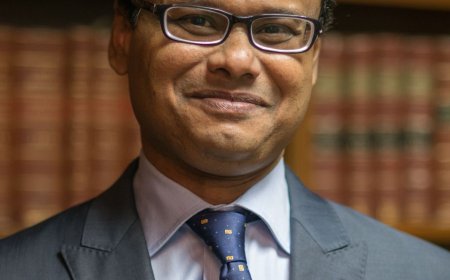
Md. Abrar Galib is a student of Economics at the University of Chittagong. His writing interests include politics, governance, economic affairs, and human rights. He can be reached at [email protected].