


































































As Long as Elections Remain Winner Takes All, Nothing Will Change
Prof Riaz is right that elections alone cannot sustain democracy. The further point is that institutions cannot remain independent if parties refuse to accept limits on their own power. Bangladesh will break its political cycle when we agree that winning power does not confer ownership of the state.

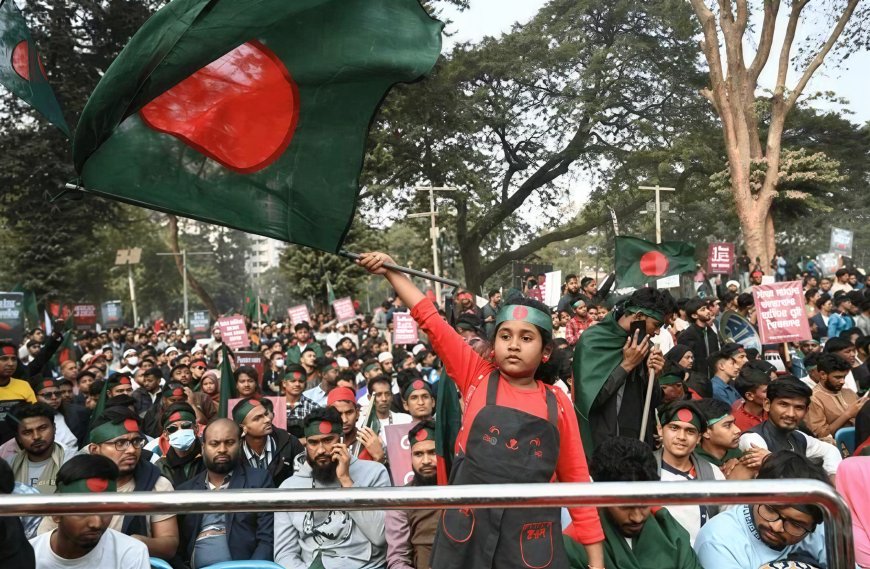
Bangladesh cannot break its political cycle without parties willing to limit their own power. Constitutional reform and an independent administration are essential, but their durability depends on political ownership and public scrutiny.
Professor Ali Riaz’s remarks at the Bay of Bengal Conversation in Dhaka on October 4 bring this issue into focus. The former head of the Constitution Reform Commission criticized bureaucratic resistance, partisan institutions, and the concentration of executive power.
These concerns warrant attention. He also acknowledged that change depends on the willingness of political forces. The disagreement, therefore, concerns emphasis: that willingness must serve as the organizing principle of reform, rather than as a condition appended at the end.
Bangladesh’s institutions have repeatedly served those in office rather than the public. Parties demand neutrality while in opposition and often abandon it when in government. Unless this behavior changes, even carefully designed rules may become instruments of another dominant party.
The Constitution matters because it allocates authority and determines how power may be checked. Executive influence over appointments, weak parliamentary oversight, and restrictive party discipline can undermine accountability. However, constitutional provisions do not explain everything.
Parties decide whether to respect institutional boundaries, tolerate scrutiny, and accept electoral defeat. Better rules and better political incentives must develop together.
The 1991 restoration of parliamentary government through the Twelfth Amendment illustrates the value of agreement between political rivals. Yet the survival of the parliamentary framework did not prevent authoritarian practices. Formal continuity is not equivalent to democratic quality.
The caretaker system offers a more complex lesson than its contested origins alone suggest. Introduced in 1996 following an opposition-led movement, it was enacted by the BNP-dominated parliament elected in the boycotted February election. The opposition’s absence from that parliament did not indicate opposition to the reform; it had demanded it.
The arrangement supported competitive elections before political conflict and the prolonged military-backed interlude exposed its vulnerabilities.
Its abolition in 2011 demonstrated how a parliamentary majority could dismantle an electoral safeguard that its rivals considered essential.
Subsequent litigation further complicates the account: in November 2025, the Supreme Court restored the caretaker framework for future elections, excluding the thirteenth national election. The lesson is that electoral rules require durable agreement, legal safeguards, and limits on unilateral alteration.
The same logic applies to the bureaucracy. When political loyalty leads to favorable postings, promotions, or protection, officials are incentivized to serve the ruling party.
This constitutes a principal-agent problem; however, officials also exercise discretion and have their own interests and professional obligations. They may resist lawful reform or willingly participate in abuses.
Political leaders must cease rewarding partisanship, while officials must be held accountable for unlawful conduct. Transparent personnel decisions, protection from arbitrary transfers, and credible reviews of misconduct would make neutrality more than a promise.
Civil servants should be accountable to the law, not to party offices.
Riaz’s characterization of the July Uprising as a rejection of political parties is debatable. The movement rejected repression and expressed profound dissatisfaction with established politics. However, this does not establish that Bangladeshis rejected representative party politics itself. Nor can an entire movement be reduced to a single intention shared by every participant.
The parliamentary election and reform referendum held on February 12, 2026, suggest that demands for institutional change can co-exist with support for elected parties.
Riaz referred to roughly five crore votes for reform, but that aggregate cannot establish how each referendum voter cast their vote in the parliamentary contest. It is evidence of support for reform, not proof that any one party holds the mandate.
The military-backed caretaker government’s attempt in 2007 and 2008 to sideline the leaders of the two largest parties also offers a warning. Political engineering outside elected institutions did not produce a durable alternative. Expert advice remains necessary, but it cannot substitute for legitimate representation.
Equally, ownership by major parties must not become permission to exclude smaller parties, civic organizations, or dissenting citizens.
The most difficult question concerns the Awami League. Its former leadership must confront the record of repression, disputed elections, and abuses committed under its rule. Accountability for the violence of July and August 2024 is indispensable.
The UN human rights office estimated that as many as 1,400 people may have been killed between July 1 and August 15, 2024. Its findings described systematic repression by the former government, security agencies, and violent elements associated with the party.
The estimate is not a judicial determination of responsibility for every death, but the inclusion of the period after August 5 does not invalidate the report’s findings on state repression.
The report also documented revenge violence and attacks on minorities. These incidents require investigation on their own merits. A transparent record should identify victims, dates, circumstances, and perpetrators wherever the evidence permits.
Equal concern for victims does not require treating different acts, perpetrators, or chains of command as identical. Accountability for one crime cannot negate accountability for another.
The violence following the government’s fall also raises questions about whether the new order protected citizens and national heritage. ASK’s year-end assessment, reported in January 2026, recorded at least 293 mob deaths from the interim government’s assumption of office through December 2025. This is a dated monitoring figure, not a final total for the government’s entire tenure.
Prothom Alo’s investigation documented roughly 1,500 damaged sculptures, murals, and memorials across 59 districts between August 5 and 14, 2024. It reported that at least 303 sculptures were vandalized at Mujibnagar.
The demolition of the Bangabandhu Memorial Museum at Dhanmondi 32 in February 2025 deepened these concerns. Preserving the history of the Liberation War is a national obligation, regardless of which party claims it.
Such destruction should not be attributed to every participant in the uprising; however, the authorities had a duty to prevent it and prosecute those responsible.
Restrictions on Awami League activities raise a separate democratic question. The interim government imposed the ban in May 2025, and the Election Commission suspended the party’s registration.
The February 2026 election proceeded without the party. On April 8, Parliament enacted the anti-terrorism amendment, which retained the legal basis for prohibiting its activities.
The measure was framed in relation to pending tribunal proceedings, so describing it as an explicitly permanent ban would be inaccurate.
Nevertheless, its breadth and the absence of a clear political pathway merit scrutiny. Restrictions require a demonstrable legal basis, proportionality, and effective judicial review. Ordinary supporters should not lose their civic rights solely because of their party affiliation.
The party, in turn, cannot claim democratic legitimacy while refusing accountability for its own conduct. Credible renewal requires acknowledging abuses, holding leaders accountable, rejecting violence, and pursuing meaningful internal reform. Any lawful return to political competition must coexist with criminal proceedings, not replace them.
Trials require reliable evidence, the right to a defense, and meaningful appeal, regardless of the accused’s political identity.
The BNP-led government has a particular opportunity to break the cycle. Having spent years in opposition, it should understand the value of institutions that cannot be captured by whoever wins next. Neutral administration and independent courts protect political competitors as well as citizens.
Parliament should establish a cross-party mechanism to monitor the implementation of reforms, publish progress, and explain any departures from agreed commitments.
Appointment procedures should include transparent qualifications, cross-party scrutiny, and safeguards against both executive capture and partisan deadlock. Parties should disclose their finances, improve candidate selection, and discipline members involved in intimidation or violence.
A lawful process for reviewing restrictions on political activity and an impartial account of killings before and after August 5 are equally necessary. These measures would connect constitutional promises with citizens’ daily experiences.
Riaz is right that elections alone cannot sustain democracy. The further point is that institutions cannot remain independent if parties refuse to accept limits on their own power. Reform commissions and the July Charter can guide change, but Parliament, political organizations, and an active civil society must ensure that it continues.
Bangladesh will break its political cycle when those competing for office agree that winning power does not confer ownership of the state.
Dr. Mohammed A. Rab is an economist and policy analyst based in the USA.