
























































Can a Modern Society Still Be Uncivilized?
Freedom was never merely the achievement of a flag, a territory or a government of our own. Its deeper promise was the creation of a society in which human dignity would not depend on political affiliation, religious identity, social status or the mood of a crowd.
A century ago, a journey from one country to another could take weeks, information travelled at the speed of ships and letters, and diseases that are routinely treated today could end lives without warning.
Much of Asia, Africa, and Latin America was still trapped in colonial rule, poverty and illiteracy. Europe, meanwhile, was demonstrating that scientific advancement did not necessarily make human beings less destructive.
The same civilization that produced extraordinary discoveries also produced two world wars, industrialized killing, and an imperial system that subjected millions to foreign rule.
The irony of the last hundred years is that humanity has become extraordinarily good at controlling the world around it without necessarily becoming equally good at controlling itself. We have conquered distance, decoded diseases, multiplied food production, placed information in the palm of a child’s hand and entered the age of artificial intelligence.
A person sitting in a village in Bangladesh can now watch an event taking place thousands of miles away almost simultaneously. Yet the more interesting question is not whether we have become technologically advanced. It is whether we have become better human beings.
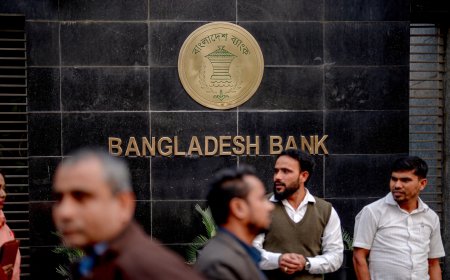
That question becomes uncomfortable when we look at Bangladesh.
We often describe development through roads, bridges, electricity, internet penetration, mobile phones, GDP and technological adoption. These are important measures of material progress, but none of them can tell us whether a society has developed a stronger instinct for restraint.
A smartphone can carry a university lecture, a medical consultation and a scientific paper. The same smartphone can carry a rumour that destroys someone’s reputation before the person even learns what he or she has supposedly done. Technology has accelerated communication. It has not automatically accelerated wisdom.
The distinction matters because civilization is not simply the ability to produce more sophisticated things. It is also the ability to restrain ourselves when we possess the power to hurt someone else.
A civilized society does not become civilized because its citizens have expensive devices or because its cities have taller buildings. It becomes civilized when anger encounters restraint, accusation encounters due process and disagreement encounters conversation rather than violence.
Our recent experience suggests that this is precisely where the deeper crisis lies. Ain o Salish Kendra reported at least 197 deaths in mob violence in Bangladesh in 2025, considerably higher than the previous year’s figure. The Human Rights Support Society separately recorded 914 incidents of political violence in the same year, leaving 133 people dead and 7,511 injured.
In the first six months of 2026, HRSS recorded another 133 deaths in 261 incidents of mob violence. These figures are collected by rights organizations through media monitoring, field information and fact-finding, so they should be understood as documented counts rather than a perfect census of every incident. But even with that qualification, the pattern is impossible to dismiss.
Behind every number is a person who had a name, a mother or father, perhaps a spouse or a child, perhaps an unfinished plan for tomorrow. Statistics can make violence look abstract. A number does not cry, bleed or leave behind an empty chair at the dinner table.
That is why the growing normalization of mob violence should concern us beyond the question of law and order. It reveals something about the moral temperature of society.
The most disturbing feature of mob justice is not merely that an innocent person may be killed. It is that a crowd can gradually convince itself that the ordinary rules of civilization no longer apply.
Someone is accused, anger spreads, a rumour becomes a fact, and punishment arrives before evidence. The crowd then assumes the roles of investigator, judge and executioner. Once that habit becomes socially acceptable, nobody remains completely safe. The accusation may be false today and directed at someone else tomorrow.
John Stuart Mill warned about the “tyranny of the majority,” recognizing that freedom can be threatened not only by an authoritarian ruler but also by the collective pressure of society. His insight remains remarkably relevant in the age of social media. A majority can be wrong. A crowd can be angry. Popular opinion can be manipulated. Numbers do not transform an allegation into truth, and collective outrage does not create a legal verdict.
Politics presents a similar problem. We have changed governments, slogans, alliances and political vocabularies many times, but our political imagination often remains trapped in the language of possession. Politics is too frequently treated as a contest over who gets to control the state, rather than a debate over how the state should serve citizens.
The opponent becomes an enemy, disagreement becomes betrayal and political victory becomes a justification for humiliating the defeated.
This is where democracy becomes more demanding than elections. An election can determine who receives authority. It cannot by itself determine how that authority will be exercised. Democracy requires habits that begin long before voting and continue long after the ballot boxes are closed.
Can a political party tolerate criticism from within? Can a citizen disagree with a powerful person without fearing retaliation? Can a journalist investigate those in power without becoming a target? Can a minority feel that the law belongs to them as much as it belongs to the majority?
Hannah Arendt made an important distinction between power and violence. For her, genuine political power comes from people acting together, whereas violence is an instrument that can be used when other forms of power fail. That distinction should make us suspicious whenever violence is presented as evidence of strength. Violence can force silence. It cannot manufacture legitimacy. It can make a person disappear. It cannot make an argument correct.
Perhaps this is why the most revealing test of a society is not how it treats its strongest citizens but how it treats those who have little power. The real test is the accused person who cannot defend himself, the minority citizen who is unpopular, the journalist who asks an inconvenient question, the student who challenges an accepted idea, the political opponent who has lost, and the ordinary citizen who happens to stand on the wrong side of a powerful crowd.
Bangladesh has every reason to take pride in its transformation. A country born amid enormous deprivation has made extraordinary advances in education, infrastructure, communications, public health and access to technology. But development should not become a reason to stop asking difficult questions about ourselves. Material progress and moral progress are not interchangeable currencies.
We may soon have machines capable of producing answers faster than any human being. Artificial intelligence may transform education, medicine, journalism and employment. But no machine can solve the oldest human problem for us: What should we do with our anger, our fear and our power over one another? That remains a human responsibility.
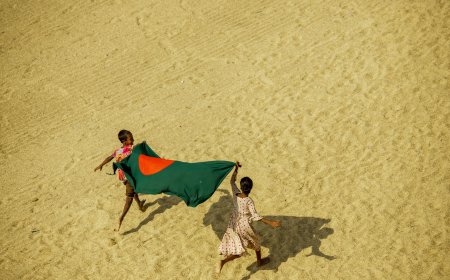
Perhaps the unfinished project of our independence lies here. Freedom was never merely the achievement of a flag, a territory or a government of our own. Its deeper promise was the creation of a society in which human dignity would not depend on political affiliation, religious identity, social status or the mood of a crowd. The rule of law was supposed to mean that justice would not depend on who shouted the loudest.
A hundred years from now, historians will probably be astonished by how rapidly humanity transformed its material world during our time. They may marvel at artificial intelligence, space exploration and technologies that we cannot yet imagine.
But they may ask a simpler question about us: When human beings acquired unprecedented power over information, technology and one another, did they also learn greater restraint?
That is the question Bangladesh must answer. We have certainly modernized. The harder task is to prove that we have also learned how to live together.
H. M. Nazmul Alam is an Academic, Journalist, and Political Analyst based in Dhaka, Bangladesh. Currently he teaches at IUBAT. He can be reached at [email protected]