





























![A Ledger of the Soul: Navigating the Allah-Bhagavant Nexus in a 19th-Century Puruṣākāra Jñāna Caupara [Gyan Chauper]](https://counterpointbd.com/uploads/images/202608/image_430x256_6a93baa3b09a7.jpg)





















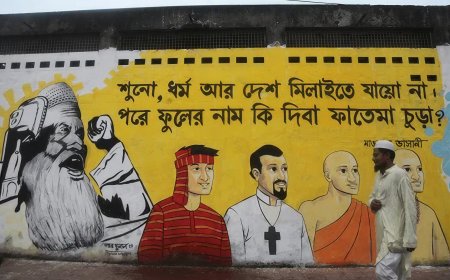
Bangladesh does not need to choose between religion and secularism. It must choose between a democratic political system, where diverse beliefs co-exist under shared constitutional rules, and a politics where identity is weaponized to determine belonging.
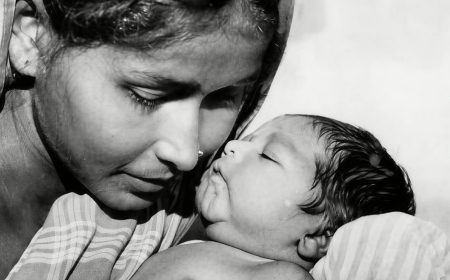
Behind every martyr stood a family, and behind every survivor often lay wounds that no medal, citation or official recognition could ever heal.
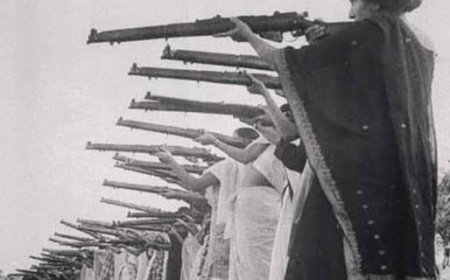
Women were not mere supporters; they were shapers of conditions, bearers of risk, and, in many cases, decisive actors. The war cannot be imagined without them, but its written history has often proceeded as though it could.

Seeking a clearer understanding of history does not diminish the legacy of the Liberation War, but honors it more completely. A nation willing to examine its past with honesty shows confidence in its own story.
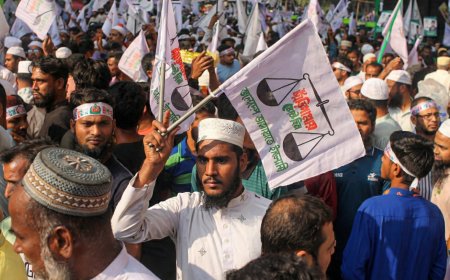
On the question of 1971 and apology, Jamaat’s tone was arrogant. Had they shown even minimal reconciliation, people might have celebrated August 5’s victory with them on the election day, specially given their alliance with the student movement.
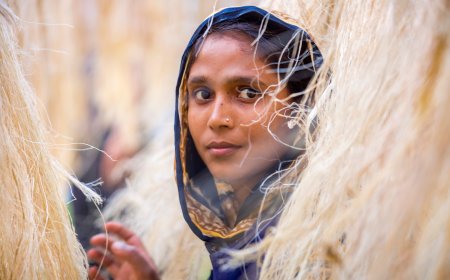
Bangladesh has held many elections since independence in 1971. But few have carried the weight of this week’s vote. Now comes the harder test: Proving that victory does not mean domination.
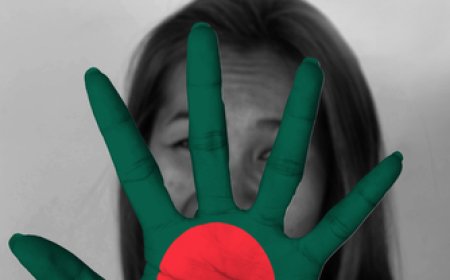
A democracy matures not when one party wins, but when citizens quietly redraw the boundaries of power. In this election, women redrew those boundaries. The republic now stands on ballots they cast.
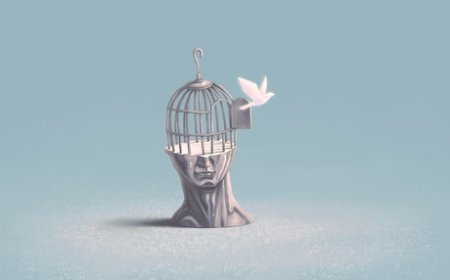
Whether it is a party that markets itself as the sole heir of 1971, or a hardline movement that once mocked that struggle and now sanitizes its record, the exploitation is the same. Both seek to convert freedom into political capital. Both demand that citizens forget what they saw and felt. Both ask us to trade memory for myth.

Bangladesh rejected Israel’s recognition not because it could afford to be principled -- but because it could not afford not to be strategic. Somaliland should take note. The lesson is clear: recognition divorced from coalition-building and regional consensus can be worse than no recognition at all.
Debate is one thing. Disinformation is quite another. Let us have an open, honest, nuanced conversation about the Liberation War, but let us always be guided by the truth.

In the past decade, a number of books have appeared on Bangladesh’s Liberation War. This essay covers three volumes focusing on the war from within the lens of conflict studies and great game manuevering -- by Gary J Bass, Srinath Raghavan, and Salil Tripathi.

Our Liberation War was basically about human rights and dignity. It was a call to refuse to be oppressed, to fight on behalf of the right of self-government, and to struggle in support of the values that unite us as a people: freedom, justice and equality. We must take pride in this history on Victory Day, as it represents not only a past victory but also a promise for the future.
If 1971 is to remain meaningful, it cannot be owned. It must be debated, carried with care, and opened to complexity. Otherwise, the Liberation War risks becoming either a party banner or a demolition tool. In both cases, the injury is the same: a past turned into a weapon rather than a shared ground on which a plural future might be negotiated.
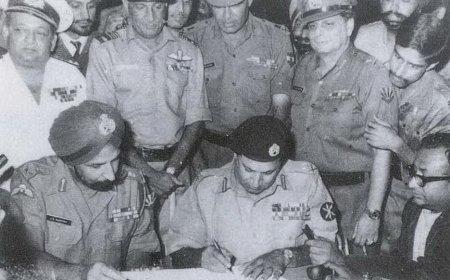
On this day, Bangladesh did not yet know what it would become. It only knew what it had endured. The newspapers recorded surrender, denial, diplomacy, return, and rebirth. The people carried something else entirely -- a heavy, wordless knowledge of survival. That knowledge, more than any headline, is what remains.
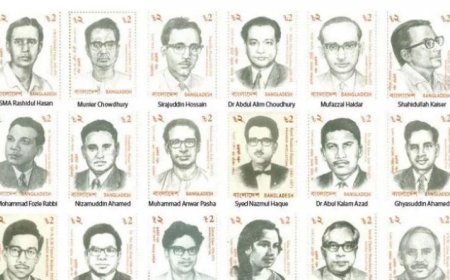
On this December 14 we should neither forgive nor forget the atrocities that were committed against the Bangladeshi people, not just on that day in 1971 but throughout the nine months of the Liberation War. Some sins are unforgivable, and December 14, 1971 is one of them.